
Switzerland’s Unpunished Cultural Genocide vs. Its Human Rights Lectures to India

Poonam Sharma
In recent months Switzerland’s foreign policy voices and European-based NGOs have taken to lecturing India on its treatment of minorities, questioning Delhi’s human-rights record and pressing for international scrutiny. But first, Switzerland should address its own unresolved history: the cultural genocide inflicted upon the Yenish people, a nomadic group who for hundreds of years lived in Switzerland, Germany, Austria and Alsace. This crime—known but largely forgotten beyond the Alpine country—remains one of Europe’s darkest but least-punished acts of the 20th century.
A Hidden Genocide
Between 1926 and 1972, the Swiss Confederation-supported and -financed private children’s charity Pro Juventute conducted a systematic programme for the annihilation of Yenish culture. Over 600 children were being torn from their parents purely on the grounds that they were “Travellers”. Police raided caravans. Social workers labeled their families “antisocial” and “detrimental to society”. Children were dispersed into distant foster homes, religious orders and psychiatric hospitals. This was not far-off medieval history—it was still occurring when the Beatles were making Abbey Road.
Policy was one of assimilation by disruption. Yenish children were forbidden to use their language, beaten, humiliated, and sent to do forced labor on farms. Historian Willi Wottreng, head of Radgenossenschaft der Landstrasse, describes it as a systematic cultural erasure in the guise of social action. Girls were even sterilized to avoid the “transmission” of their culture. Girls and women were given electroshocks, placed in psychiatric confinement, and stamped “abnormal since birth” in files evoking Nazi eugenics. As Swiss historian Thomas Huonker has documented, these phenomena represented an institutionalized anti-Gypsyism and pseudo-science of “mental hygiene” that the Swiss elites continued to adopt long after its discrediting elsewhere.
Impunity and Silence
Pro Juventute’s offenses were not revealed until 1972, when journalist Hans Caprez uncovered them. By this time, thousands of childhoods were irreparably lost. However, no director of the foundation, even its scandalous founder Alfred Siegfried—a paedophile charged with abusing the very children he had kidnapped—was brought to trial. Siegfried passed away in 1973 without trial or apology. His replacement, the nun Clara Reust, whose letters reveal blatant racism, was never scrutinized.
Switzerland finally offered lip service to victims. In 1987 the archives were moved under federal control and a victims’ association was acknowledged. But the compensation fund did not arrive until 2017—300 million Swiss francs shared out between the survivors, many now elderly or dead. The top payment was 20,000 francs per individual: an amount which cannot remove decades of pain. No court has yet adjudicated whether such crimes fit the Genocide Convention’s definition of “forcibly transferring children of one group to another”—a definition that Switzerland itself subscribed to only in 1999.
This is the context in which Switzerland now points a finger at India for minority rights.
The Irony of Moral Lecturing
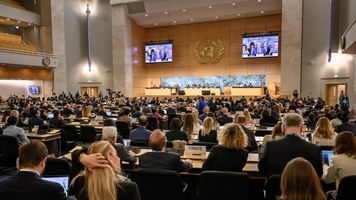
In the halls of Geneva’s UN Human Rights Council, Swiss diplomats are regularly found posing as defenders of minority rights. India’s internal matters are the topic of reports and conferences galore: Kashmir, tribal well-being, or religious freedom. European think tanks, largely Swiss-funded, demand “accountability” overseas while hardly ever challenging the mountain of unresolved abuse locally. The hypocrisy is overwhelming.
India, multi-religious and multi-lingual and yet still fighting its own record of colonial legislation, has nevertheless ended indentured servitude, widened tribal rights, and constructed one of the world’s most sophisticated affirmative-action systems. Switzerland, on the other hand, still refuses to accord the Yenish full recognition as an indigenous minority entitled to assured caravan sites. As recently as 2022, the Future for the Swiss Travelling Community foundation reported a “serious shortage of pitch and parking facilities” that rendered it practically impossible for nomadic families to continue their traditional lifestyle. The trauma of enforced separation remains a legacy that resounds across generations.
When a government with such an unresolved record of history accuses India of having undemocratic debates, it risks making human rights a geopolitical bludgeon instead of a universal principle.
A Crime With No Statute of Limitations
Human rights activists contend that there is “no statute of limitations” on cultural genocide. Wottreng specifically cites the 1948 UN Convention. But Switzerland never conducted an official trial, never prosecuted those accountable, and never issued a national commission of truth like post-apartheid South Africa or Canada’s residential school inquiry. The Swiss state has a preference for bureaucratic compensation programs over public accountability.
Compare this with India’s raucous democracy, where each policy—whether on citizenship law or tribal growth—is subject to parliamentary grillings, judicial review and a vociferously independent press. India’s record is far from clean, but it is open and disputed in the public domain. Switzerland’s decades of Yenish persecution, on the other hand, took place under the cover of moral paternalism, “child protection”, and an almost complete media blockade until the 1970s.
The Need for Honest Self-Reflection
Before they lecture India on pluralism, Switzerland might begin by facing these questions:
Why were Yenish children sterilised, institutionalised and separated against their will as late as the 1970s?
Why have no Swiss officials or church leaders ever faced trial?
Why does the state continue to fail to provide proper caravan sites for a designated minority?
Why are Swiss textbooks mum about Pro Juventute in contrast to the wide coverage given to Nazi atrocities overseas?
Answering them would not undermine Switzerland’s moral ground; it would reinforce it. Hypocrisy undermines credibility more than any disagreement over policy.
Europe’s Selective Memory
This is not exclusively Swiss. Throughout Europe, “civilised” nations accumulated wealth by oppressing minorities on their own continent or elsewhere. Treatment of the Roma in Eastern Europe, sterilization of Indigenous women in Scandinavia, and Canada’s residential schools all demonstrate a pattern of forced assimilation disguised as protection. Europe rarely calls these “human-rights crises” as it does when criticising nations of the Global South.
Switzerland’s instance is particularly poignant due to its neutral, humanitarian reputation—the Red Cross, Geneva Conventions, banking tact. But neutrality without responsibility can slip into moral detachment. When Swiss diplomats lecture India on minority rights while their victims remain unheeded, it indicates double standards and not universal principles.
Turning the Mirror Around
The Yenish are still around—30,000 in Switzerland, 5,000 living a nomadic existence in spite of regulatory hurdles. They continue to be living proof of survival in the wake of an attempted erasure of culture. “Notwithstanding what Pro Juventute wished, the crimes inflicted on the Yenish have increased their awareness of being Yenish,” declares Wottreng. This strength needs acknowledgment and apology, not silence and token compensation.
Switzerland, meanwhile, might lead by example: a parliamentary investigation, a national apology at the federal level, the construction of monuments, education in schools, and criminal investigations where there is evidence. Only then would its championing of minority rights overseas have moral authority.
A Call for Consistency
India doesn’t require a European certificate of good conduct. It requires allies who appreciate the intricacy of plural societies and the sweat of reconciliation. Switzerland can be one such ally if it harmonizes its foreign policy with its domestic practice. Otherwise, its censure of India will ring with less of human rights concern and more of the sound of a lecture hall constructed on unredeemed suffering.
The Yenish lesson is unequivocal: cultural genocide is not a phrase for textbooks alone. It is living truth for survivors and their children. It undermines the moral capital of any state that turns a blind eye to it. Switzerland’s reputation hangs in the balance on whether it keeps looking away—or at last gazes into the mirror.
