

Poonam Sharma
A Strong Signal for the Mamata Government
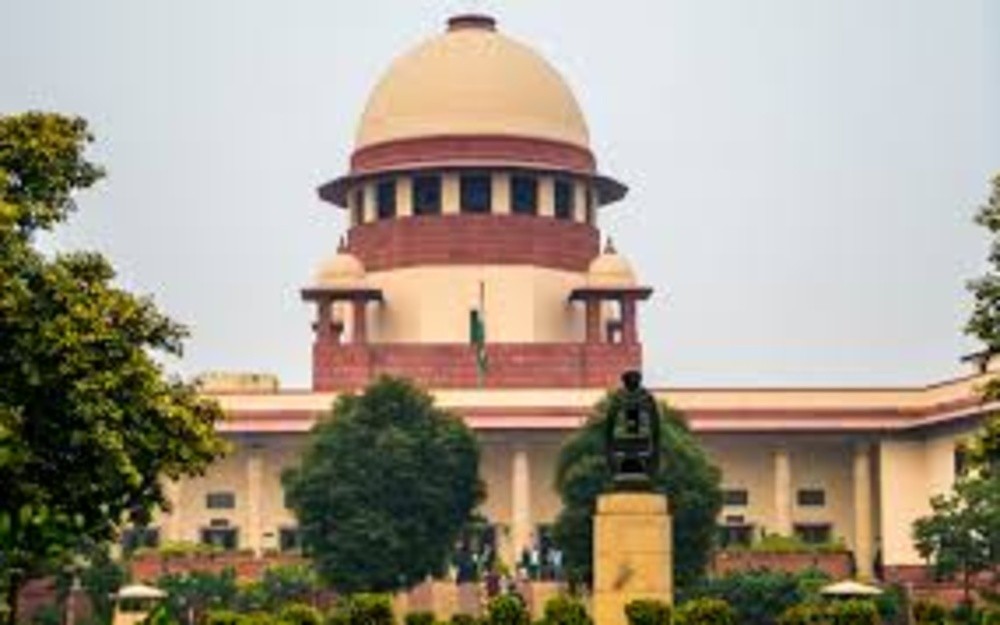
In a significant development with political and administrative implications, the Supreme Court of India has taken an unprecedented step regarding the “Special Intensive Revision” of the electoral rolls in West Bengal. The matter was heard by a Bench comprising the Chief Justice of India along with Justices Surya Kant, Joymalya Bagchi, and Vipul M. Pancholi.
The hearing was conducted on a petition filed on behalf of the West Bengal government. However, the court’s observations and directions made it clear that any delay or obstruction in the electoral revision process would not be tolerated. The Bench underlined that a clean and updated voters’ list is fundamental to the integrity of democratic elections.
1. Special Intensive Revision and Judicial Oversight
At the heart of the matter lies the Special Intensive Revision (SIR) of the voter list. The proceedings indicated concerns over lack of cooperation and delays in implementing the revision process. The court categorically stated that electoral integrity cannot be compromised and that procedural timelines must be respected.
The Bench observed that attempts to prolong the process would not be accepted. It stressed that if the revision process is not completed properly, serious consequences may follow. Importantly, the court acknowledged an apparent lack of trust between the state government and constitutional institutions, describing the situation as “extraordinary.”
In response, the court directed the Calcutta High Court to play an active supervisory role. This effectively places day-to-day monitoring within the state’s judicial framework, rather than relying solely on oversight from New Delhi. The move signals the Supreme Court’s intent to ensure implementation at the ground level.
The Bench also emphasized that issuing directions alone is not sufficient—tangible results must follow within a defined timeframe.
2. Deployment of Judicial Officers and Administrative Accountability
One of the most consequential aspects of the order is the directive to appoint District Judges and Additional District Judges to assist in the Special Intensive Revision process. Both serving and retired judicial officers with unblemished records may be considered.
This measure appears designed to insulate the revision process from potential administrative or political interference. By placing judicial officers in charge of resolving objections and claims related to the voter list, the court has strengthened the neutrality of the exercise.
The court acknowledged that assigning judicial officers to this task could impact pending casework in the High Court system. However, it signaled that safeguarding the integrity of elections takes precedence over administrative convenience.
This move significantly raises the accountability threshold. Judicial supervision means that disputes arising from the revision process will be handled independently, reducing scope for discretionary administrative decisions.
3. Personal Affidavit from the DGP and Clear Warning
In a notable direction, the court ordered the state’s Director General of Police (DGP) to file a personal affidavit responding to concerns raised by the Election Commission regarding alleged threats, violence, and non-cooperation faced by officials involved in the revision process.
Seeking a personal affidavit from the DGP underscores the seriousness of the matter. It places direct responsibility on the state’s top police authority to ensure that election-related officials are protected and that law and order is maintained.
During the hearing, senior counsel representing various parties discussed delays in compliance with earlier directions, including documentation requirements and procedural timelines. The Bench reportedly expressed disappointment over the perceived lack of cooperation from the state government.
The court remarked that statements and conduct reflecting distrust between the Election Commission and the state government are unfortunate, particularly during an electoral process. It reinforced that such institutional friction cannot be allowed to derail democratic procedures.
Broader Institutional Implications
This case goes beyond a routine administrative dispute. It reflects a complex dynamic involving the state government, the Election Commission, and the judiciary. The Supreme Court’s intervention demonstrates that when constitutional institutions appear to be at odds, the judiciary may step in to restore balance.
The court has made it clear that the Special Intensive Revision will continue uninterrupted. The emphasis on a transparent and updated voter list indicates that electoral credibility is being treated as paramount.
By involving the High Court directly and demanding personal accountability from senior administrative officials, the Supreme Court has signaled a structured and sustained oversight mechanism rather than a one-time directive.
Further hearings are scheduled after March, but the immediate orders already carry significant administrative and political weight. For the West Bengal government, the message is unambiguous: electoral processes must proceed transparently, efficiently, and in strict adherence to constitutional norms.
The developments underscore the judiciary’s role as a stabilizing force when trust deficits arise between institutions. In the context of West Bengal, the implications of this order may extend beyond the current revision exercise, shaping future interactions between the state administration and constitutional bodies.
**Slug (English):**
**Meta (English, 155 characters):**
**Keywords (English, 5 long-tail, comma separated):**
