

GG News Bureau
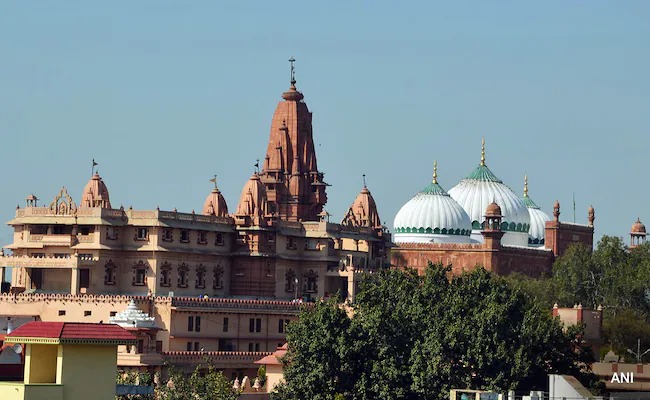
New Delhi, 16th Jan. The survey of a 17th-century mosque in Uttar Pradesh, amid claims that it was built at Lord Krishna’s birthplace, has been put on hold by the Supreme Court.
The Allahabad High Court had appointed a commissioner to conduct a survey at the Shahi Idgah mosque in Mathura, similar to the assessment done at the Gyanvapi Mosque in Varanasi. However, the Supreme Court paused this order, stating that the purpose of appointing the commissioner was unclear.
The court emphasized the need for specific instructions and clarity in the request.
“The prayer (for commissioner), it is so vague. It has to be specific. This is wrong, you have to be very clear what you want him for. You can’t leave everything to the court to look into,” said a bench of Justices Sanjiv Khanna and Dipankar Datta.
There are multiple ongoing cases regarding the Shahi Idgah-Krishna Janmabhoomi dispute, with Hindu petitioners seeking ownership of the land on which the mosque stands. Hindu groups argue that the mosque was built on the remains of a temple that marked Lord Krishna’s birthplace.
In December, a local court accepted the plea of Hindu petitioners who requested a survey of a disputed land. However, the Uttar Pradesh Sunni Wakf Board and the Idgah committee challenged this decision in the High Court.
The Hindu petitioners are claiming full ownership of the 13.37 acres of land in question. They argue that the mosque, which has been standing for centuries, was constructed by demolishing the Katra Keshav Dev temple that previously occupied the site. They believe that Mughal emperor Aurangzeb ordered the destruction of the temple. To support their claim, the petitioners point to lotus carvings on the mosque and shapes resembling the sheshnag, a snake demigod in Hindu mythology.
They argue that these are evidence that the mosque was built on top of a temple.
The mosque committee has asked the court to dismiss the petition by referring to the Places of Worship Act of 1991. This act maintains the religious status of any place of worship as it was on August 15, 1947, the day of India’s independence.
