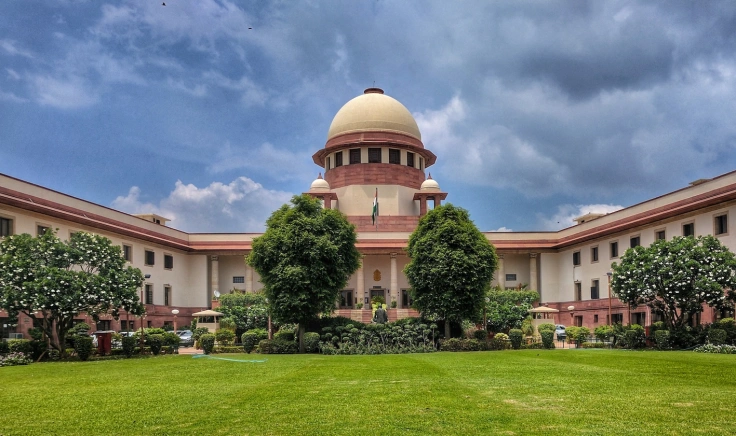
Supreme Court Hears Crucial Case on Voter List Purification and Bangladeshi Infiltrators

Poonam Sharam
In a case with far-reaching political and national security implications, the Supreme Court is currently hearing a critical plea involving the Election Commission’s decision to conduct an intensive verification of voter rolls ahead of upcoming Assembly elections. The core issue revolves around the inclusion of illegal Bangladeshi infiltrators in India’s electoral rolls and the fear of genuine Indian citizens—particularly the poor and marginalized—being arbitrarily excluded from the voter list.
This voter list verification is not a new exercise. According to the Election Commission (EC), such operations have taken place nine times before, the last major one being in 2003. The EC argues that periodic audits of electoral rolls are necessary to maintain their integrity. However, this time, the political temperature has soared due to the highly sensitive nature of the region—especially Assam and certain border districts in Bihar—where concerns about illegal immigration are rampant.
The Heart of the Controversy
At the center of the controversy is the EC’s directive requiring citizens to prove their identity and nationality through documentation—especially Aadhaar, voter ID, and other official papers. The EC maintains that the goal is not to exclude any legitimate citizen but to weed out non-citizens from the voter rolls.
However, critics, including several opposition leaders and civil society organizations, argue that the process is hasty, opaque, and disproportionately affects the poor and migrant populations who may not have immediate access to valid documentation. They allege that the move is politically motivated, aiming to suppress voter turnout in opposition strongholds.
A total of 11 petitions were filed—ten opposing the EC’s move and only one supporting it. The opposition fears that names of thousands of genuine citizens may be arbitrarily removed under the guise of a verification drive. The petitioners have demanded a stay on the verification exercise, citing concerns over transparency and the timeline of execution.
Supreme Court’s Balanced Approach
During the hearings, the Supreme Court has tried to maintain a balanced approach. While it acknowledged that voter list purification is within the EC’s domain, it also recognized the petitioners’ concerns about timing, transparency, and possible disenfranchisement.
The Court declined to stall the ongoing exercise, respecting the EC’s constitutional autonomy. However, it strongly urged the Commission to be “cautious and consultative” in its approach. The Supreme Court emphasized that the EC must ensure due process and must not allow any form of arbitrary or discriminatory exclusion.
The next date of hearing is set for 30 July 2025, after which the EC is expected to finalize the draft electoral rolls in the first week of August. The EC has been directed to allow sufficient time for citizens to respond to any discrepancies and to provide necessary documents.
Why Aadhaar Became the Flashpoint
One of the major points of contention is the role of Aadhaar in voter verification. While Aadhaar is not legally a proof of citizenship, the EC has included it in the list of 11 acceptable documents. Critics argue that this creates confusion, as Aadhaar can be held by non-citizens as well. The Supreme Court echoed this concern and stated that only citizenship-authenticating documents should be considered valid for inclusion or exclusion in the electoral rolls.
A government-linked organization, whose credibility is under question, was also named during the hearings for allegedly promoting a dubious verification process in Assam. This has further complicated the political and legal dimensions of the issue.
National Ramifications
This case isn’t just about Assam or Bihar; its verdict will have a national ripple effect. With Assembly elections approaching in multiple states and the 2029 General Elections on the horizon, the outcome could redefine the mechanics of electoral democracy in India.
The BJP and its allies maintain that illegal immigration, particularly from Bangladesh, has distorted demographics and enabled voter fraud in key border states. They argue that regular audits are necessary to safeguard national security and democratic fairness.
On the other hand, opposition leaders claim that this is a “selective cleansing operation” designed to disenfranchise specific communities. They cite instances where ration cards, Aadhaar, and even electricity bills were not considered sufficient to prove identity or citizenship in previous exercises.
A Technical and Emotional Battle
At its core, the case is about more than just voter IDs or documents—it’s about trust in institutions. The Supreme Court’s final ruling must strike a delicate balance: empowering the Election Commission to ensure clean, fraud-free elections while also protecting the rights of India’s most vulnerable citizens.
The verdict will also likely set a precedent on the use of Aadhaar and other identity proofs in determining voting eligibility. If the Court insists on a more rigorous citizenship criterion, it could result in large-scale exclusions, further inflaming tensions in politically sensitive regions.
As India continues to grapple with the dual challenges of illegal immigration and ensuring universal adult franchise, this case may become a landmark moment. It will test the resilience of India’s democratic framework and could lead to systemic reforms in the way electoral rolls are managed across the country.
Conclusion
The Supreme Court’s involvement in this voter verification controversy highlights the fragile balance between electoral integrity and citizen rights. As the hearings continue and the political stakes rise, the country watches closely. The final judgment will not only impact the upcoming elections but will also define how India secures its democratic process in an age of demographic flux and geopolitical challenges.