
Stubble Fires Shift to Evenings, Complicating Pollution Tracking: NASA
Satellite data shows crop burning moving to later hours, posing fresh challenges for air quality monitoring

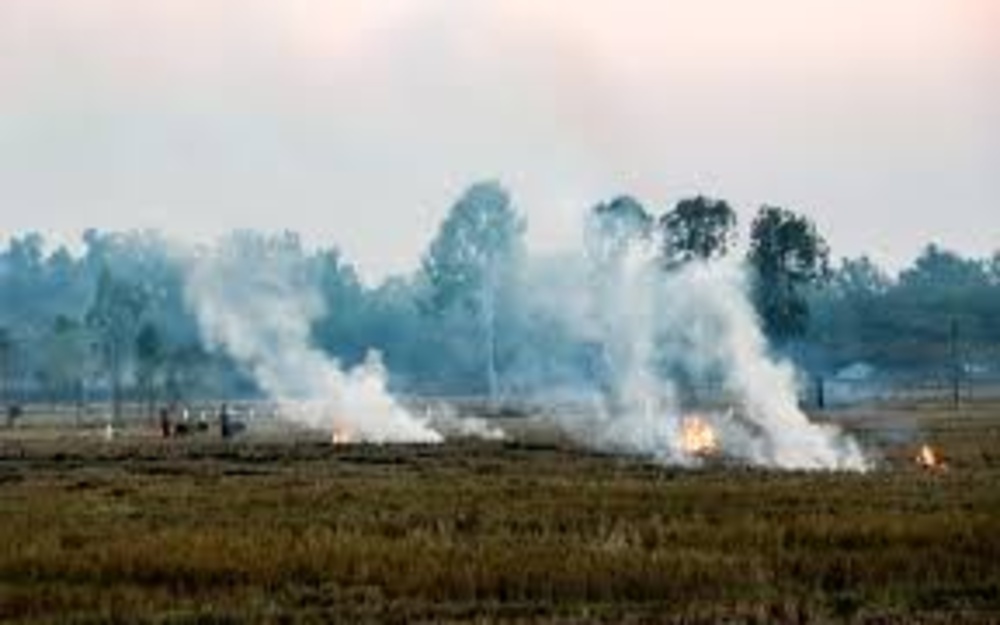
- NASA finds stubble burning in north India now peaks between 4–6 pm
- Shift may cause satellites to miss fires and underestimate pollution impact
- Scientists warn evening fires worsen overnight pollution buildup
- 2025 fire activity moderate, but timing trend raises new concerns
GG News Bureau
New Delhi, 16th Dec: Seasonal crop residue burning across northern India is increasingly being carried out later in the day, a behavioural shift that could complicate efforts to monitor stubble fires and accurately assess their impact on air quality, according to NASA scientists and satellite observations.
For decades, crop fires after the rice harvest have driven thick haze across the Indo-Gangetic Plain between October and December. While the overall stubble-burning season in 2025 broadly followed expected patterns, the daily timing of fires showed a clear departure from earlier trends, NASA said in a release on Monday.
Hiren Jethva, an atmospheric scientist at NASA’s Goddard Space Flight Center, said that for nearly a decade, most stubble fires were typically lit between 1 pm and 2 pm. However, recent satellite analysis shows that farmers are now setting fires much later, mostly between 4 pm and 6 pm. “Farmers have changed their behavior,” Jethva noted.
The shift was identified using high-frequency data from South Korea’s GEO-KOMPSAT-2A geostationary satellite, which captures observations every 10 minutes. By contrast, widely used fire-detection sensors such as MODIS and VIIRS pass over a region only once or twice a day, increasing the risk of missing late-evening fires.
Satellite imagery from November 11, 2025, showed dense plumes of smoke spreading across Punjab, Haryana, Uttar Pradesh and Madhya Pradesh. The period coincided with some of the worst air quality days of the year, with Delhi’s Air Quality Index crossing 400, triggering school closures and stricter curbs on construction activity.
Jethva’s analysis found that stubble-burning activity in Punjab and Haryana in 2025 was moderate compared to recent years—higher than 2019, 2020 and 2024, but lower than 2021, 2022 and 2023. Independent Indian studies have also confirmed the timing shift, with peak fire activity moving from early afternoon in 2020 to around 5 pm by 2024.
While scientists agree that stubble burning contributes substantially to Delhi’s winter smog, estimates of its share vary widely. NASA scientist Pawan Gupta said crop fires can account for 40–70 per cent of pollution on peak days, though the contribution drops when averaged over longer periods. He added that evening fires may worsen pollution buildup overnight due to weaker winds and a shallower atmospheric boundary layer.
Researchers warn that unless monitoring systems and mitigation strategies adapt to these changing patterns, the true scale of stubble burning and its role in air pollution may continue to be underestimated.
