
Stubb Warns Trump: Treat Bharat With Respect or Lose the Game
“As Trump Raises Tariffs on Bharat, Finland’s Alexander Stubb Warns the West That Without Respect and Cooperation, It Risks Losing Global Influence.”

Paromita Das
New Delhi, 5th September: At a time when trade tensions between Bharat and the United States have reached a boiling point, a surprising intervention has come from Europe. Finnish President Alexander Stubb has issued a warning to Washington and Brussels: unless the West learns to deal with the Global South—particularly Bharat—in a more cooperative and dignified manner, it risks “losing the game.” His message lands at a sensitive moment, just as US President Donald Trump announced sweeping 50% tariffs on Bharatiya imports, igniting what many fears could become a prolonged trade rift.
Stubb’s remarks stand out not just because of their timing, but because of his unusually close rapport with Trump. As one of the few European leaders able to speak candidly to the US President, his words carry an influence that goes beyond the typical diplomatic statements that often fade into the background noise of international politics.
Stubb’s Call for Respect in Global Diplomacy

Speaking on the sidelines of the Shanghai Cooperation Organisation (SCO) Summit in Tianjin, China, which Prime Minister Narendra Modi also attended, Stubb underlined a key shift in global geopolitics. The West, he argued, is clinging to the remnants of an old order while ignoring how much the balance of power is tilting toward Asia.
His message was simple but profound: Bharat is no longer a marginal player, and any attempt to treat it as one will backfire. “If we don’t derive a more cooperative and dignified foreign policy towards the Global South, the likes of Bharat, we are going to lose this game,” Stubb cautioned.
The timing of these remarks could not have been more symbolic. The SCO gathering, which highlighted growing cooperation between China, Russia, and countries like Bharat, was itself a reminder that Western dominance is no longer uncontested.
Trump’s Tariff Bombshell and Bharat’s Strategic Weight

Stubb’s warning comes in the shadow of Trump’s latest trade offensive. By slapping a 50% tariff on Bharatiya imports, the US President has triggered a new round of tension with New Delhi. Half of these measures were justified on the grounds of Bharat’s continued oil imports from Russia—a sore point in Washington’s foreign policy calculus.
Trump has also repeatedly accused Bharat of imposing “the highest tariffs in the world” on American goods, often citing Harley Davidson motorcycles as an example of unfair treatment. “We get along with Bharat very well, but for many years it was a one-sided relationship,” Trump remarked, defending his decision.
Yet, this transactional approach overlooks the broader reality: Bharat today is central to the global economic and strategic order. Punitive tariffs may yield short-term bargaining leverage, but they risk undermining the very relationship the United States needs to cultivate in a rapidly changing world.
Why Stubb’s Words Carry Unusual Weight

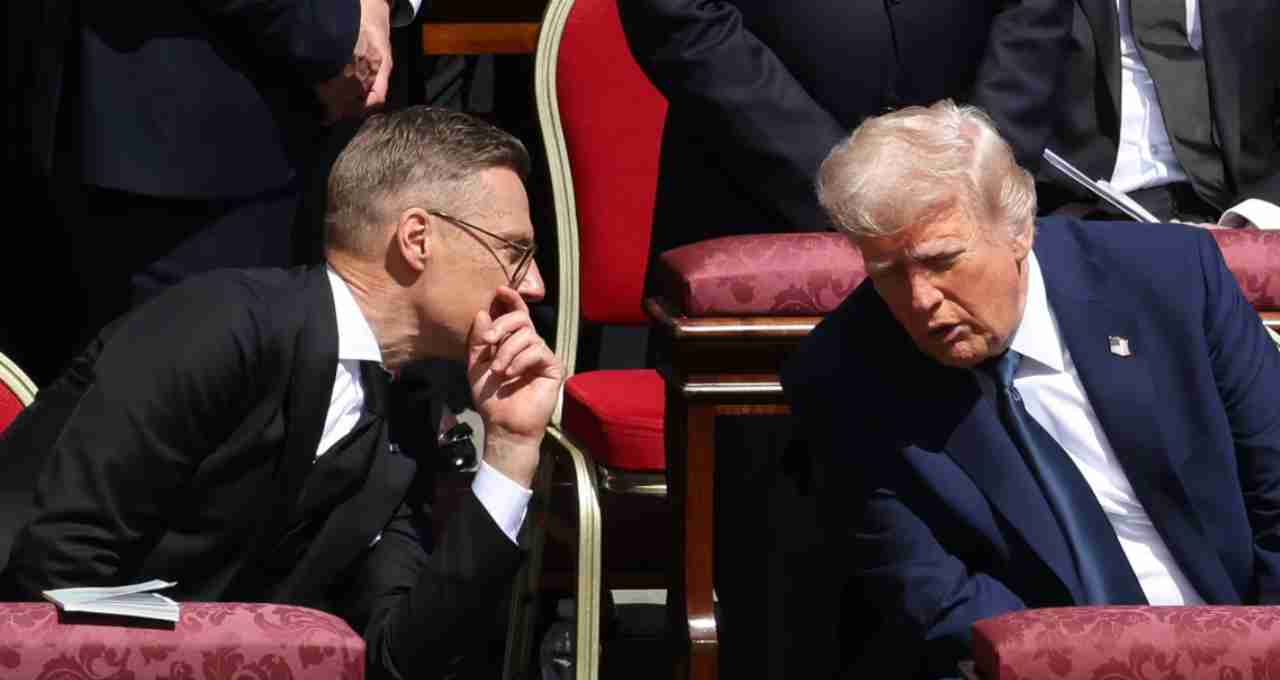
What makes Stubb’s intervention remarkable is not merely his position as the President of Finland but his personal relationship with Trump. Earlier this year, Stubb spent seven hours golfing with the US President at Mar-a-Lago, forging a rare bond for a leader from a small European country.
As Jan Hallenberg of the Swedish Institute of International Affairs observed, “Among small countries, there is no equivalent whatsoever. (Stubb) has gained unique access to Trump that no one else from a smaller European country has ever had.”
This unusual closeness means Stubb’s advice cannot be dismissed as just another European plea for multilateralism. Trump, who has often ignored mainstream European leaders, is more likely to lend an ear to someone he views as a friend. That gives Stubb’s warning—that the West risks losing global influence if it mistreats Bharat—added credibility in Washington.
Bharat’s Place in a Changing World Order

Stubb’s role as a diplomatic intermediary has been growing steadily. His accompaniment of Ukrainian President Volodymyr Zelensky to the White House earlier this year underscored his ability to straddle both European and American circles. Now, by speaking up for Bharat, he has highlighted a truth that Western policymakers can no longer afford to ignore: the Global South is demanding respect, and Bharat is at the forefront of this shift.
In trade, security, and global governance, Bharat is increasingly shaping outcomes rather than simply reacting to them. Its participation in organizations like the SCO, its balancing act between the US and Russia, and its emergence as a tech and economic hub all underline why dismissive or punitive approaches will backfire.
Why the West Needs Bharat More Than Ever

The West faces a choice. It can either continue to treat Bharat as a bargaining partner in trade disputes, focusing narrowly on tariffs and transactional gains, or it can recognize Bharat as a strategic pillar in the emerging multipolar order.
The danger of the first path is clear: alienating Bharat pushes it closer to rival blocs led by China and Russia. The opportunity of the second is equally evident: treating Bharat with dignity and respect can strengthen a partnership that helps preserve Western influence in Asia and beyond.
Stubb’s message was not just a warning; it was a roadmap. If the US and Europe want to remain relevant in the 21st century, they must build genuine cooperation with the Global South rather than relying on old hierarchies and coercive measures.
A Warning the West Cannot Afford to Ignore
President Alexander Stubb’s remarks may have come from Finland, a small country by size, but their resonance is global. By cautioning Trump and the European Union about their approach toward Bharat, he has drawn attention to a defining issue of our times: the West can no longer dictate terms unilaterally.
Trump’s tariff bombshell may have been aimed at correcting trade imbalances, but in the process, it risks undermining a relationship with one of the most vital partners in the emerging world order. As Stubb put it, without dignity and cooperation, the West will “lose the game.”
For Washington and Brussels, the choice is stark—continue down the road of transactional politics or embrace a new era of respectful partnership with Bharat. The stakes, as Stubb reminded them, could not be higher.
