

Poonam Sharma
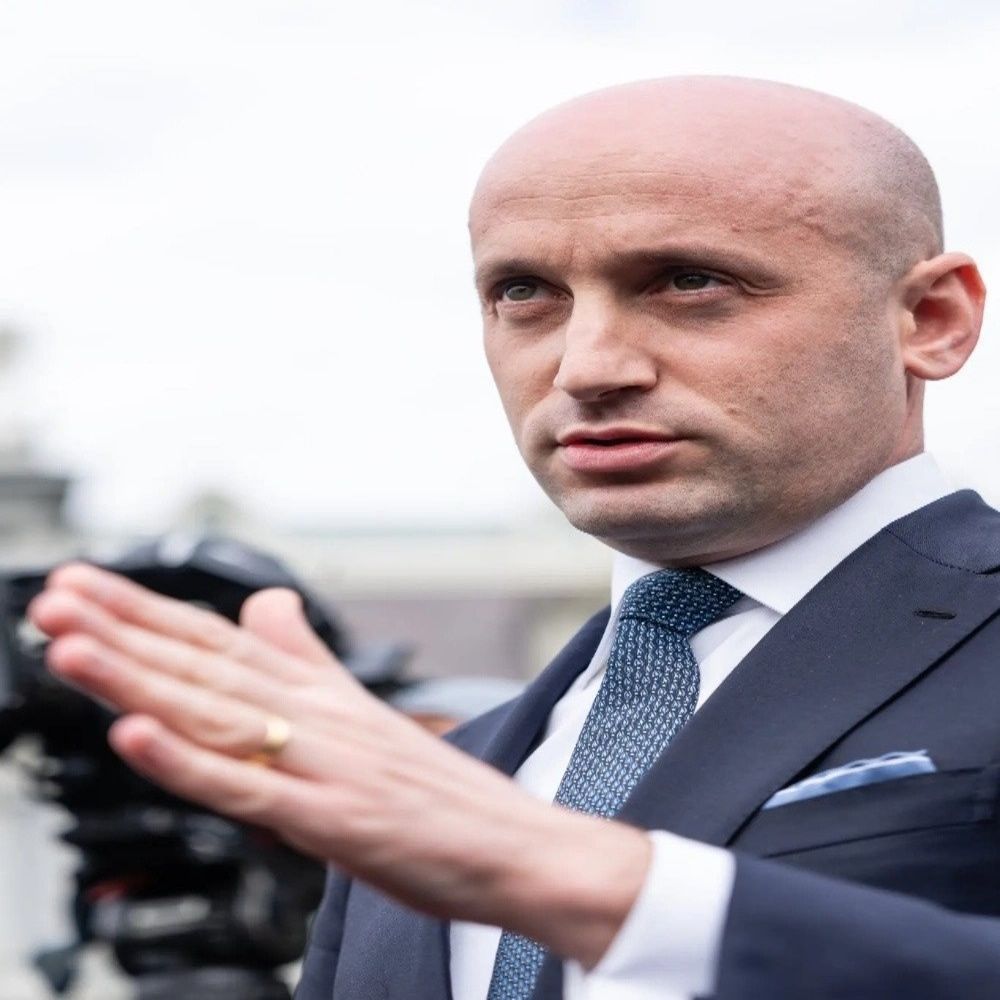
In the inner sanctum of the Trump administration’s second term, few figures wield as much intellectual and policy-making gravity as Stephen Miller. Long known as the architect of the first term’s most aggressive immigration stances, Miller has shifted his “hard-right gaze” toward the global stage, articulating a worldview that leans heavily on the ancient, uncompromising logic of the “strongman.
In a series of recent interviews—most notably with CNN’s Jake Tapper—Miller has clarified that he no longer sees the border as just a line on a map, but as the first trench in a global ideological war. For Miller, the world is not a community of nations, but a hierarchy of power.
In the inner sanctum of the Trump administration’s second term, few figures wield as much intellectual and policy-making gravity as Stephen Miller. Long known as the architect of the first term’s most aggressive immigration stances, Miller has shifted his “hard-right gaze” toward the global stage, articulating a worldview that leans heavily on the ancient, uncompromising logic of the “strongman.”
In a series of recent interviews—most notably with CNN’s Jake Tapper—Miller has clarified that he no longer sees the border as just a line on a map, but as the first trench in a global ideological war. For Miller, the world is not a community of nations, but a hierarchy of power.
The “Iron Laws” of Miller’s World
Miller’s philosophy is a blunt departure from nearly 80 years of American foreign policy. Since the end of WWII, the U.S. has maintained a “rules-based international order”—a web of treaties and global institutions designed to referee geopolitical conflict. Miller views this framework as a “straitjacket” for American power.
He argues that the world is actually governed by what he calls “the iron laws”:
-
Strength: The only true currency in international relations.
-
Force: The legitimate tool for a superpower to secure its interests.
-
Power: The ultimate arbiter of sovereignty. “We live in a world… that is governed by strength, that is governed by force, that is governed by power,” Miller stated. “These are the iron laws of the world that have existed since the beginning of time.
From Rhetoric to Action: Venezuela and Greenland
This isn’t just academic theory; it is being applied with jarring speed. The January 2026 U.S. special forces raid to capture Venezuelan President Nicolás Maduro is the clearest example of this doctrine in motion. By bypassing international legal norms to “decapitate” a regime, the administration signaled that “sovereignty” is a privilege of the strong, not a right of the weak.
Perhaps more shocking to traditional allies is Miller’s rhetoric regarding Greenland. In early 2026, Miller asserted that “Greenland should be part of the United States,” dismissing Denmark’s territorial claims as historical artifacts. His reasoning was purely strategic: because the U.S. provides the military “muscle” for NATO in the Arctic, it has a natural right to the territory
The Human and Strategic Toll
Critics, including historians and former security advisors, warn that this “clenched fist” approach is a dangerous gamble. By dismantling the institutions that prevent total war, Miller may be inviting the very chaos he seeks to dominate.
The human element is also a major point of contention. Much like his “Zero Tolerance” immigration policies, Miller’s foreign policy is characterized by a clinical detachment from the human cost—whether it’s the destabilization of Latin American nations or the alienation of European allies who now feel they must choose between American protection and their own territorial integrity.
A New Era of “Fortress America”
Stephen Miller’s rise represents an epochal shift. The U.S. is moving away from being a “shining city on a hill” and toward being a “Fortress America.” It is a vision of a planet composed of strong, nationalist states that respect boundaries only because the cost of crossing them—enforced by American force—is too high.
Whether this brings a “Pax Americana” or sparks a global arms race of wills remains to be seen. But one thing is certain: the era of the diplomatic handshake is over.
