
Spain, Brazil pushes global action to tax super-rich, curb inequality at FFD4

By Anjali Sharma
UNITED NATIONS – Spain and Brazil on Tuesday have launched a joint initiative to promote a higher tax take from the super-rich worldwide, to tackle soaring inequality by ensuring those with the most pay their fair share.
The initiative was presented during the UN’s 4th International Conference on Financing for Development taking place in Sevilla, the proposal highlighted a growing problem: the richest individuals often contribute less to public finances than ordinary taxpayers, thanks to lower effective tax rates and legal loopholes.
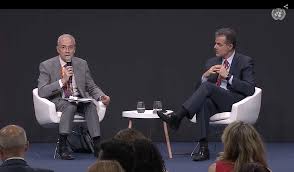
Spain’s Secretary of State for Finance Jesús Gascón at a press conference said “Our countries need more and more public revenues to meet their needs. Inequality is a problem everywhere, and the richest pay less than the middle class – even less than lower-income taxpayers”.
They called on others to join a drive for a fairer, more progressive global tax system.
They pointed a stark reality: the wealthiest one per cent of the global population owns more than 95 per cent of humanity combined.
Leaders stated that in today’s interconnected world, access to reliable data is essential.
The initiative prioritizes information sharing – between governments and tax authorities to help expose gaps in tax systems, close loopholes, and combat evasion and avoidance.
They stressed that improving data quality and building national capacities for data analysis will help tax administrations identify where and how wealth is concentrated, how much is currently being paid, and what needs to change.
The proposal mentioned some progress has been made, the countries said much more must be done and many more countries should come on board.
“There’s a real need to know who the beneficial owners are behind companies and legal structures used to conceal wealth,” said Mr. Gascón.
The initiative also proposes technical cooperation, training in data analytics, and peer review mechanisms to strengthen national tax systems, he added.
Spain and Brazil are considering steps toward a global wealth registry acknowledged that this would take time, political will, and major national efforts.
They said that the aim is clear: more transparency, more accountability, and fairer contributions from the richest.
Brazil’s Minister-Counselor to the UN, José Gilberto Scandiucci said “We cannot tolerate the intensity of inequality, which has been increasing in recent years,” denied that this was some kind of far-leftist agenda.
“This is a moderate initiative to confront a very radical reality,” he said.
The proposal forms part of the Seville Platform for Action, which is turbo charging voluntary actions to help reach the Sustainable Development Goals currently way off track for the 2030 deadline.
The 2024 agreement by the G20 industrialized nations who met in Rio, Brazil, last year the first international accord to commit to a joint tax agenda for high-net-worth individuals.
Three-month work plan is being drawn up, with regular meetings planned to track progress.
The goal: bring more countries, international organizations and civil society on board to push forward tax reforms targeting the ultra-rich.
“If we want to effectively tax the super-rich, fight inequality and make our tax systems fairer and more progressive, we need political will – and we need to act within our means,” Mr. Gascón added.
