

Poonam Sharma
The lynching of Deepu Chandra Das in Bangladesh has once again exposed a wound that South Asia has never truly allowed to heal. For India—particularly its eastern states—this is not a distant tragedy unfolding across a sovereign border. It is a civilizational, humanitarian, and constitutional concern rooted in shared history, collective memory, and lived trauma.
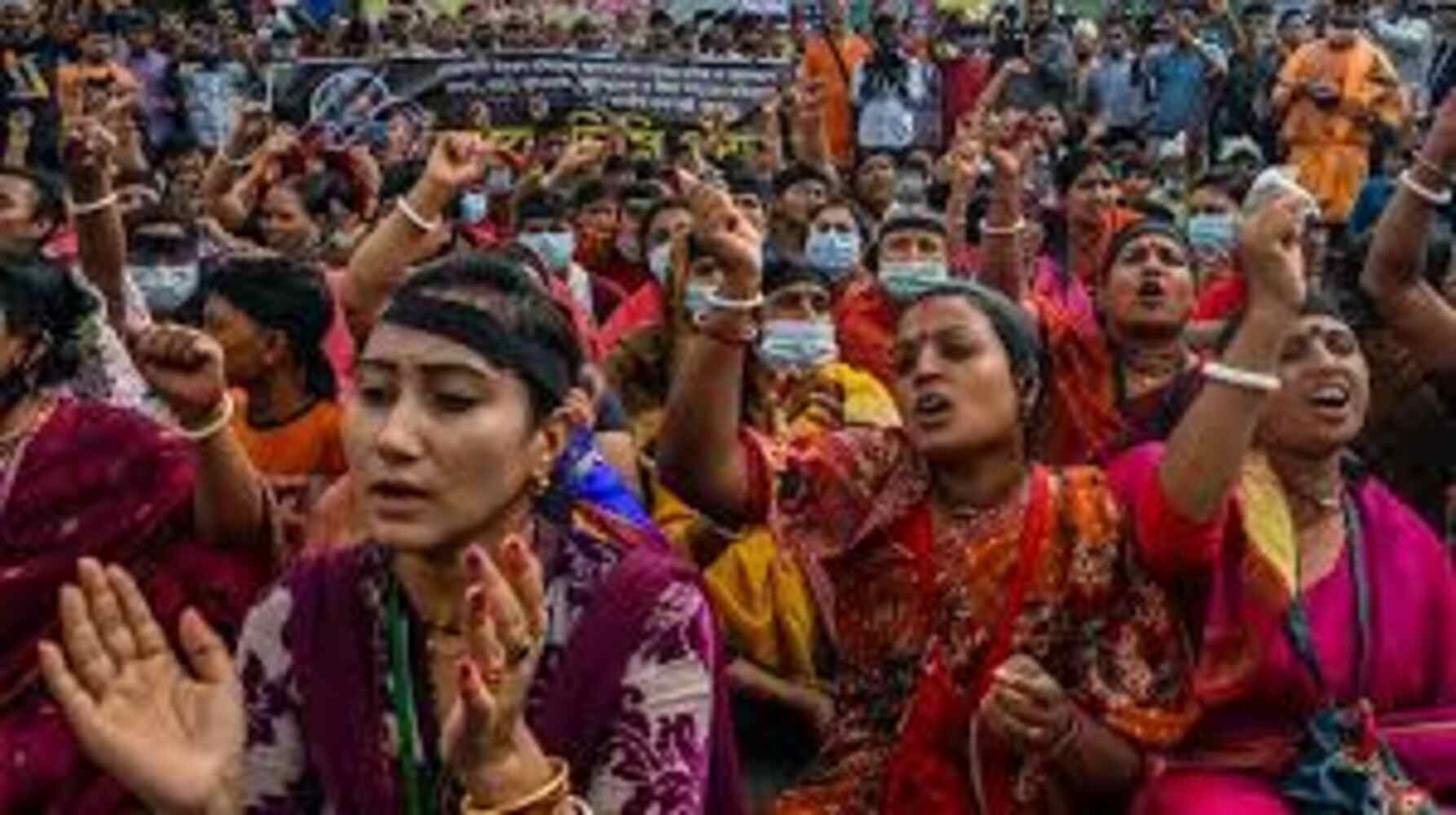
The protests that erupted across parts of India following the incident were not driven by momentary anger alone. They reflected decades of accumulated frustration over silence, denial, and what many see as selective global outrage when it comes to the suffering of Hindus in Bangladesh.
The Killing of Deepu Chandra Das: Not Just a Man, But a Message
Deepu Chandra Das was neither a political leader nor an armed activist. He was an ordinary Hindu civilian. In contemporary Bangladesh, that identity itself has increasingly become a point of vulnerability. Lynching, by its very nature, is not accidental violence. It is public, demonstrative, and symbolic—meant to terrorize not just the victim, but an entire community.
Attacks on Hindus in Bangladesh often follow a familiar pattern. They are quickly framed as isolated “law and order” issues, stripped of communal context, and buried under official narratives of stability and harmony. But repetition exposes the falsehood. When violence targets the same community across years, regions, and political cycles, it ceases to be random and begins to resemble systemic persecution.
Why India Took to the Streets
The protests witnessed in India—especially in West Bengal—did not emerge in a vacuum. Hindu organizations and civil society groups have long argued that the plight of Bangladeshi Hindus is consistently underreported, under-acknowledged, and diplomatically downplayed.
Groups such as the Bangiya Hindu Mahamanch issued warnings that should not be mistaken for mere political rhetoric. They are expressions of despair from communities that share blood ties across borders. Every incident like the lynching of Deepu Chandra Das revives memories of Partition—of forced migrations, abandoned homes, and assurances of safety that history repeatedly failed to honor.
The Long Shadow of 1947
To understand the emotional intensity this issue generates in India, one must return to 1947. At the time of Partition, Hindus comprised nearly one-third of the population of East Pakistan. Today, in Bangladesh, they constitute less than eight percent.
This dramatic demographic decline did not occur through voluntary migration alone. It unfolded through successive waves of communal riots, property seizures, intimidation, forced conversions, and institutional neglect. Discriminatory laws and selectively enforced justice systems played a decisive role. Each new act of violence, including the lynching of Deepu Chandra Das, fits into this unbroken historical continuum.
Constitutions, Secularism, and Ground Reality
On paper, Bangladesh is a secular republic. India’s Constitution, meanwhile, guarantees protection to persecuted minorities. Yet the lived reality challenges both frameworks.
In Bangladesh, secularism has often remained aspirational, compromised by political calculations and radical pressures. In India, the moral obligation to speak for persecuted Hindus clashes with geopolitical caution and diplomatic restraint. The result is an uncomfortable moral vacuum—one where outrage exists, but decisive international accountability remains absent.
Global Silence and Selective Human Rights
Perhaps the most troubling dimension of the crisis is the lack of sustained global attention. International human rights organizations that mobilize swiftly in other conflicts often respond to anti-Hindu violence in Bangladesh with muted statements—or none at all.
This selective concern deepens the sense of injustice. Silence emboldens perpetrators. Over time, lynching risks becoming normalized, fear institutionalized, and minority existence rendered perpetually precarious.
India–Bangladesh Relations at a Crossroads
India and Bangladesh share deep strategic, cultural, and economic ties. Cooperation on security, trade, and regional stability has yielded tangible benefits. But genuine friendship must endure uncomfortable truths.
Ignoring or minimizing the persecution of Hindus in Bangladesh erodes trust at the grassroots level, particularly in India’s border states. It also creates space for extremist narratives on both sides, undermining the very stability that bilateral cooperation seeks to preserve.
Not a Threat, But a Warning Bell
The warnings issued by Hindu organizations in India should be read not as threats, but as alarms—signals of institutional failure. Diplomatic assurances, legal frameworks, and moral appeals have so far failed to guarantee safety for vulnerable minorities.
Justice for Deepu Chandra Das cannot be symbolic. It demands transparent investigation, accountability for perpetrators, and credible assurances of protection for Bangladesh’s Hindu community. Anything less ensures recurrence.
Conclusion: One Death, A Reflective Mirror
The lynching of Deepu Chandra Das is not an isolated crime. It is a mirror reflecting unresolved historical injustices, fragile secular commitments, and global hypocrisy.
For India, the protests are not about interference but conscience. For Bangladesh, this moment is a test of constitutional sincerity. For the world, it is yet another opportunity to decide whether human rights are universal—or selectively applied.
History has shown repeatedly: silence is never neutral. It always sides with the oppressor.
