

By Anjali Sharma
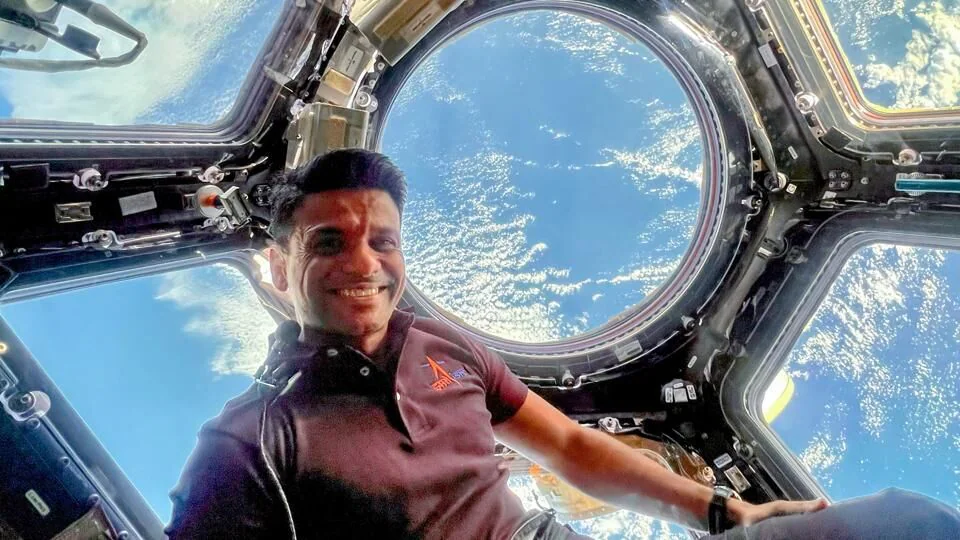
WASHINGTON – Indian astronaut Shubanshu Shukla on Sunday heading home in India with science samples in tow and a suitcase full of memories after over 2 weeks aboard the International Space Station, media reported.
NASA said in a statement that Shukla and his Axiom-4 crew will begin packing up experiments and personal items into SpaceX’s Dragon capsule for their return to Earth.
NASA said that mission managers have given the “go” for the Axiom Mission 4 crew to board the SpaceX Dragon spacecraft and undock from the ISS updated the mission status for the return journey.
The spacecraft is scheduled to undock from the space-facing port of the Harmony module at 4:35 p.m. IST on Monday, July 14, NASA stated.
According to Axiom Space, the Crew Dragon is expected to splash down off the coast of California on July 15, 2025, at 3:00 pm IST, following a series of orbital maneuvers.
In a press statement, the Indian Space Research Organization said after splashdown, Gaganyatri Shubanshu Shukla will undergo a week-long rehabilitation program under the supervision of flight surgeons to help him readjust to Earth’s gravity.
The Axiom-4 mission, piloted by Shukla and carried veteran astronaut Peggy Whitson, European mission specialists Slawosz Uznanski-Wiśniewski (Poland) and Tibor Kapu (Hungary), reached the ISS on June 26.
Shubanshu Shukla conducted a range of scientific experiments from space farming to muscle regeneration.
ISRO shared an update on the status of seven microgravity experiments carried out as part of India’s participation in the Axiom-4 mission.
It noted that completed experiments include survival studies on Indian tardigrades, the effects of the space environment on muscle loss, the growth of methi and moong seeds, and a cyanobacteria-based study aimed at developing life support systems.
The remaining three — involved microalgae, crop seeds, and the Voyager Display experiment are nearing completion, ISRO said in a statement.
These microgravity experiments and the insights gained by Shukla during the mission will contribute to India’s future space endeavours, including the development of the Bharatiya Antariksh Station planned for the 2030s, and Chandrayaan-4, the country’s first human mission to the Moon, targeted for 2047.
