
SHANTI Bill Redefines India’s Nuclear Future: Dr Jitendra Singh
Dr Jitendra Singh calls it Modi 3.0’s biggest science reform

GG News Bureau
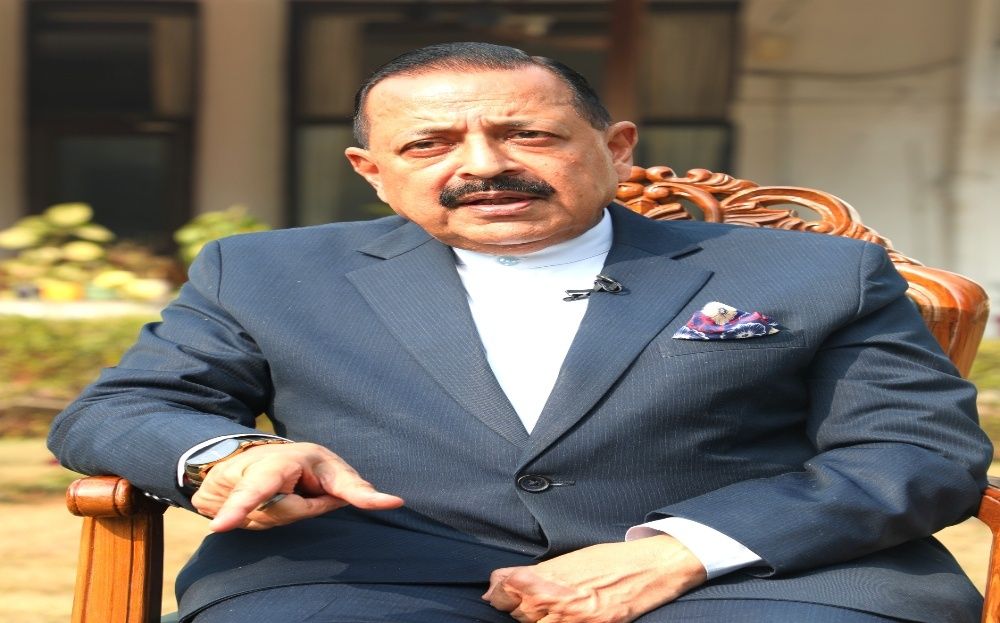
New Delhi, 28th Dec: Union Minister for Science and Technology Dr Jitendra Singh on Sunday said the SHANTI Bill will go down in history as one of the biggest science reforms of the Modi government, marking a defining shift in India’s science-led policy architecture under Modi 3.0.
Speaking in a media interaction, the Minister said that while reform narratives have traditionally revolved around welfare and governance, India’s long-term socio-economic future will increasingly be shaped by reforms in science, innovation and entrepreneurship. He said the third term of Prime Minister Narendra Modi is characterised by bold, structural reforms aimed at strengthening India’s technological and economic foundations.
Describing the SHANTI Bill as a landmark in the nuclear sector, Dr Jitendra Singh said it breaks a six-decade stalemate by unlocking the potential of nuclear energy for peaceful, clean and sustainable growth, while maintaining uncompromising standards of safety and national interest.
He said the Bill links science, industry, business and the economy, positioning nuclear energy as a critical pillar of India’s future development model. Emphasising India’s commitment to peaceful nuclear use, the Minister recalled that the country’s atomic programme, envisioned by Dr Homi Bhabha, was always aimed at development, healthcare and energy security — a philosophy that the SHANTI Bill further strengthens.
Highlighting India’s clean energy roadmap, Dr Jitendra Singh said nuclear power capacity has doubled from about 4.4 GW in 2014 to nearly 8.7 GW today, with a target of reaching around 100 GW by 2047. This, he said, would enable nuclear energy to meet nearly 10 percent of India’s electricity requirements and support the national Net Zero commitments.
The Minister underlined that nuclear energy will be indispensable for powering emerging sectors such as artificial intelligence, quantum technologies and data-driven infrastructure, as it provides reliable, round-the-clock electricity unlike intermittent renewable sources.
He also pointed to the growing role of nuclear science in healthcare, particularly in cancer diagnosis and treatment through nuclear medicine and isotopes, calling atomic science a force for human welfare.
Looking ahead, Dr Jitendra Singh said India is also preparing to adopt Small Modular Reactors suited for urban clusters, industrial corridors and emerging economic zones, further strengthening energy security with environmental responsibility.
He added that the SHANTI Bill has received wide acceptance across the scientific community, industry, startups and the innovation ecosystem, reflecting a national consensus on the need to modernise India’s nuclear sector and accelerate the journey towards a developed India by 2047.
