
Understanding our laws : Shah Bano Verdict
The Turning Point in India's Debate on Uniform Civil Code

Poonam Sharma
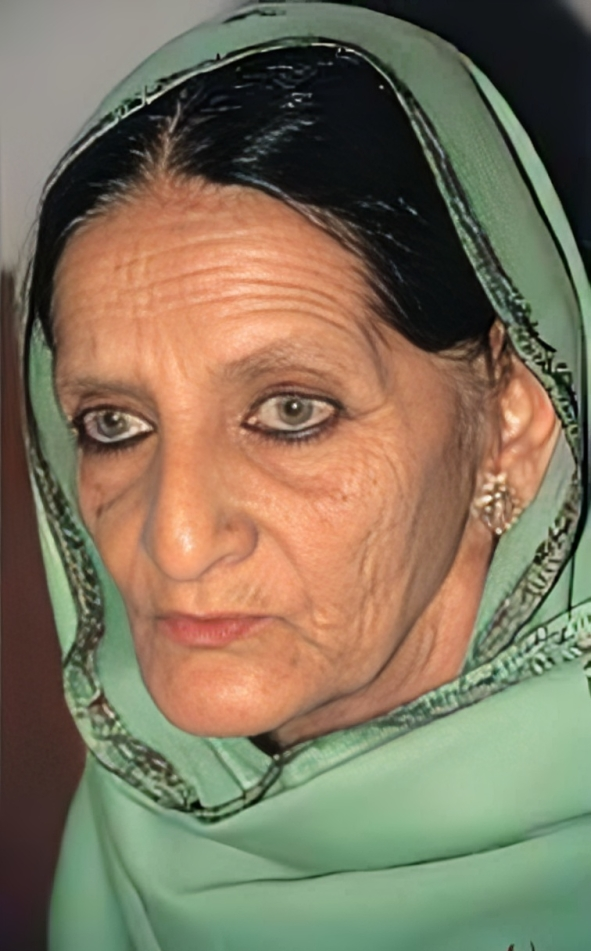
In 1985, a frail 62-year-old woman from Indore became the face of a legal and constitutional storm that continues to resonate through the Indian judiciary, parliament, and society to this day. The case of Mohammed Ahmed Khan v. Shah Bano Begum wasn’t just about alimony — it was about constitutional morality versus religious orthodoxy, and the Supreme Court’s bold stand laid the foundation for India’s long-unresolved debate on the Uniform Civil Code (UCC).
The Background: A Woman Left Behind
Shah Bano Begum had been married to Mohammed Ahmed Khan, a well-off lawyer, for over 40 years. However, in 1978, Khan divorced her through the practice of triple talaq and denied any further responsibility for her maintenance. At the age of 62, with no source of income, Shah Bano moved the local magistrate’s court under Section 125 of the Criminal Procedure Code (CrPC), which allows any neglected wife to claim maintenance.
Khan’s argument was rooted in Islamic personal law — he claimed that his obligation ended with the ‘iddat’ period (a mandatory waiting period after divorce) during which he had paid her the customary maintenance.
The Legal Conundrum
The core legal question was this: Does Section 125 CrPC, a secular provision applicable to all citizens, override personal religious laws in matters of maintenance? And if so, is the state interfering in religious freedom?
The case went all the way to the Supreme Court, where a Constitution Bench headed by Chief Justice Y.V. Chandrachud delivered a landmark verdict.
The Verdict: Maintenance Has No Religion
The Supreme Court ruled in Shah Bano’s favour. It held that Section 125 CrPC applies to all citizens equally, regardless of religion. The court emphasized that the law’s primary objective was to prevent destitution and ensure social justice. “A uniform civil code is the need of the hour,” the court observed, pushing Parliament to act in favor of gender justice and equality.
Most critically, the court rejected the notion that personal laws could be used to deny basic rights like maintenance, which falls under the right to life and dignity guaranteed by Article 21 of the Constitution.
The Aftermath: Uproar and Political Retreat
The judgment sparked outrage in conservative Muslim circles. Religious bodies argued that it amounted to interference in Sharia and Islamic personal law. Facing mounting political pressure, the then Rajiv Gandhi-led Congress government passed the Muslim Women (Protection of Rights on Divorce) Act, 1986, which diluted the Supreme Court’s ruling.
The new law restricted the maintenance obligation of Muslim husbands to the iddat period, but left enough ambiguity for future courts to interpret the act in a gender-just manner.
A Judgment That Refused to Die
Despite the political retreat, the spirit of the Shah Bano judgment refused to fade. Later rulings such as Danial Latifi v. Union of India (2001) and Shayara Bano v. Union of India (2017) cited Shah Bano to reinforce that women’s rights cannot be held hostage to patriarchal interpretations of personal law.
Legal scholars today view the Shah Bano case as the first real call for a Uniform Civil Code — a directive principle mentioned in Article 44 of the Constitution but never implemented. It became a watershed moment that exposed the deep contradictions in India’s legal framework — one foot in secular constitutionalism, the other in religious pluralism.
A Legacy of Justice
For many, Shah Bano’s victory in court was pyrrhic — she eventually withdrew her claim under social pressure. But in legal history, she remains a symbol of resistance, courage, and the long arc of justice.
Shah Bano’s court victory, though personally short-lived, became a timeless symbol of legal resistance and women’s rights in India. Her story, so powerful and poignant, even inspired a film — capturing the enduring struggle between constitutional justice and religious orthodoxy that still echoes in today’s Uniform Civil Code debates.
