

Poonam Sharma
Recent developments—from an espionage arrest linked to the Indian Air Force to allegations involving an American missionary’s activities—have reignited debates around national security, foreign influence, and the protection of India’s cultural and civilizational fabric. While these incidents are distinct in nature, they converge on a larger question: how should India respond to perceived external and internal challenges in an increasingly interconnected world?
Espionage Case Highlights Hard Security Threats
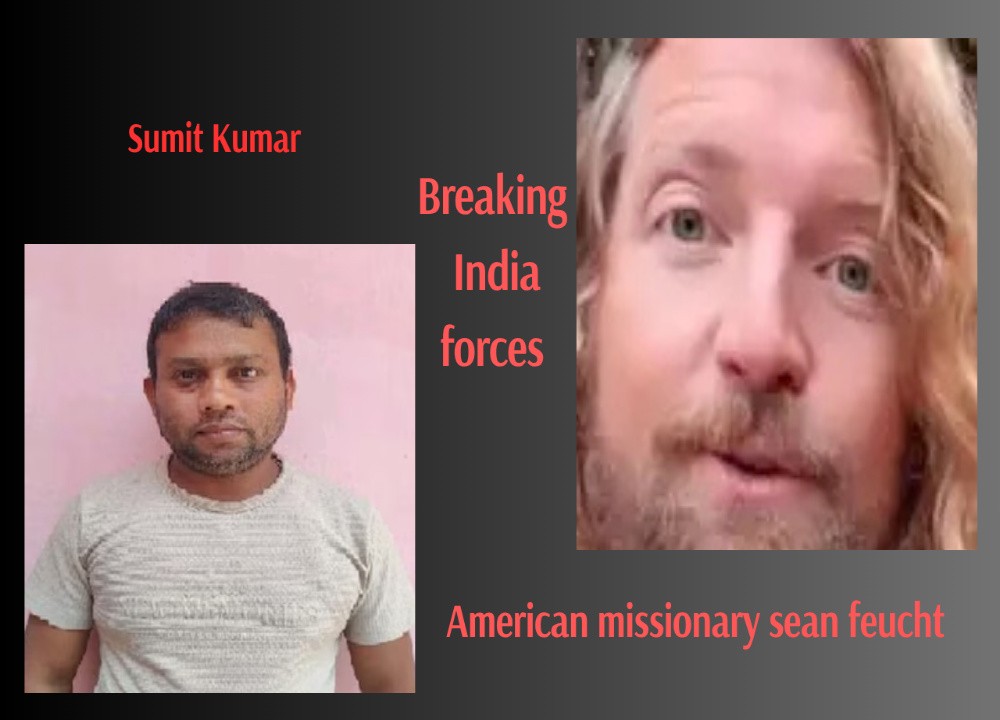
The arrest of a civilian employee Sat an Indian Air Force station in Assam underscores the seriousness of traditional security threats. According to investigators, the accused allegedly passed sensitive defense information to handlers linked to Pakistan. The case, which originated from an earlier arrest in Rajasthan, points to the possibility of a wider espionage network operating across regions.
This incident is a stark reminder that India continues to face conventional threats to its sovereignty. Espionage is not new, but the methods have evolved. Digital communication, social media platforms, and encrypted channels have made it easier for hostile actors to recruit insiders and extract critical information.
What is particularly concerning is the vulnerability within sensitive institutions. Even non-uniformed personnel with limited roles can access valuable data if proper safeguards are not in place. This raises urgent questions about internal vetting, digital surveillance, and institutional resilience.
Religious Activities and Legal Boundaries
Parallel to this, the controversy surrounding American missionary Sean Feucht has sparked a different kind of debate. His visit to India, participation in religious events, and the inauguration of a new center in Bengaluru have drawn scrutiny over whether visa norms were violated.
Indian law clearly distinguishes between types of visas and the activities permitted under each. Tourist visas, for instance, do not allow religious preaching or proselytisation. Even missionary visas come with strict conditions and oversight.
The allegations against Feucht—though not yet officially confirmed—have triggered strong reactions. Critics argue that such activities, if conducted without proper authorization, undermine legal frameworks and potentially disrupt social harmony. Supporters, on the other hand, view them as expressions of religious freedom.
This tension reflects a broader challenge in India: balancing openness with regulation, and freedom of belief with respect for local sensitivities.
Why These Incidents Spark Larger Concerns
When incidents like espionage and alleged unauthorized religious outreach occur close together in public discourse, they often feed into a larger narrative of external interference. For many observers, these are not isolated events but part of a pattern—whether real or perceived—of attempts to influence India’s internal dynamics.
India’s civilizational identity, deeply rooted in traditions broadly associated with Hindu philosophy and culture, is often seen by its proponents as something that needs safeguarding. As a result, any external activity—be it geopolitical, ideological, or religious—is sometimes interpreted through a lens of cultural preservation.
However, it is important to distinguish between verified threats and interpretative narratives. Espionage cases are backed by investigations and evidence, whereas concerns about cultural or religious influence often operate in a more subjective domain.
The Role of Social Media and Perception
One key factor amplifying these concerns is social media. Platforms like X (formerly Twitter) can rapidly turn localized events into national debates. In the case of Feucht, his own posts showcasing missionary intent intensified scrutiny and triggered complaints to authorities.
Similarly, espionage cases gain traction quickly, often accompanied by speculation about the scale and implications of the threat. In such an environment, narratives can evolve faster than verified information.
This creates a feedback loop: incidents lead to perceptions, perceptions shape narratives, and narratives influence public opinion and policy demands.
Security vs. Openness: India’s Policy Dilemma
India today stands at a crossroads. On one hand, it is a globalizing nation that welcomes investment, tourism, and cultural exchange. On the other, it faces real and perceived threats that demand vigilance.
The espionage case calls for stronger institutional safeguards, better intelligence coordination, and stricter monitoring of sensitive roles. Meanwhile, the controversy over religious activities highlights the need for clearer enforcement of visa rules and greater transparency in foreign engagements.
But beyond enforcement, there is also a need for nuance. Not every foreign religious activity is a threat, just as not every concern about cultural influence is unfounded. Policymaking in this domain must avoid extremes—neither complacency nor overreaction serves the national interest.
Navigating Complexity with Clarity
The two incidents discussed here reflect different dimensions of the same underlying challenge: how to protect national integrity in a complex, interconnected world. Espionage represents a direct and tangible threat, while debates over religious activities operate in a more contested and interpretative space. Pakistan’s ISI has been actively trying to recruit social media influencers in India. They offer incentives like money, free travel, and the promise of increased likes and views for promoting pro-Pakistan content [ianslive.in]. This shows a shift from traditional espionage methods to more subtle, influence-based tactics.
Rather than viewing these developments solely through the lens of conspiracy, it may be more productive to see them as signals—indicating areas where systems need strengthening, laws need clarity, and public discourse needs balance.
India’s strength has historically lain in its ability to absorb, adapt, and endure. Preserving that strength requires not just vigilance, but also discernment—the ability to separate fact from fear, and security concerns from sweeping generalizations.
Only then can the country effectively safeguard both its sovereignty and its civilizational ethos in the years ahead.
