
SCO 2025: Bharat’s Roar Against Terrorism and the Diplomatic Reset
“From Pahalgam to Tianjin: How SCO 2025 Became Bharat’s Stage to Expose Cross-Border Terrorism, Challenge China’s Dilemma, and Push the World Toward Real Security.”

Paromita Das
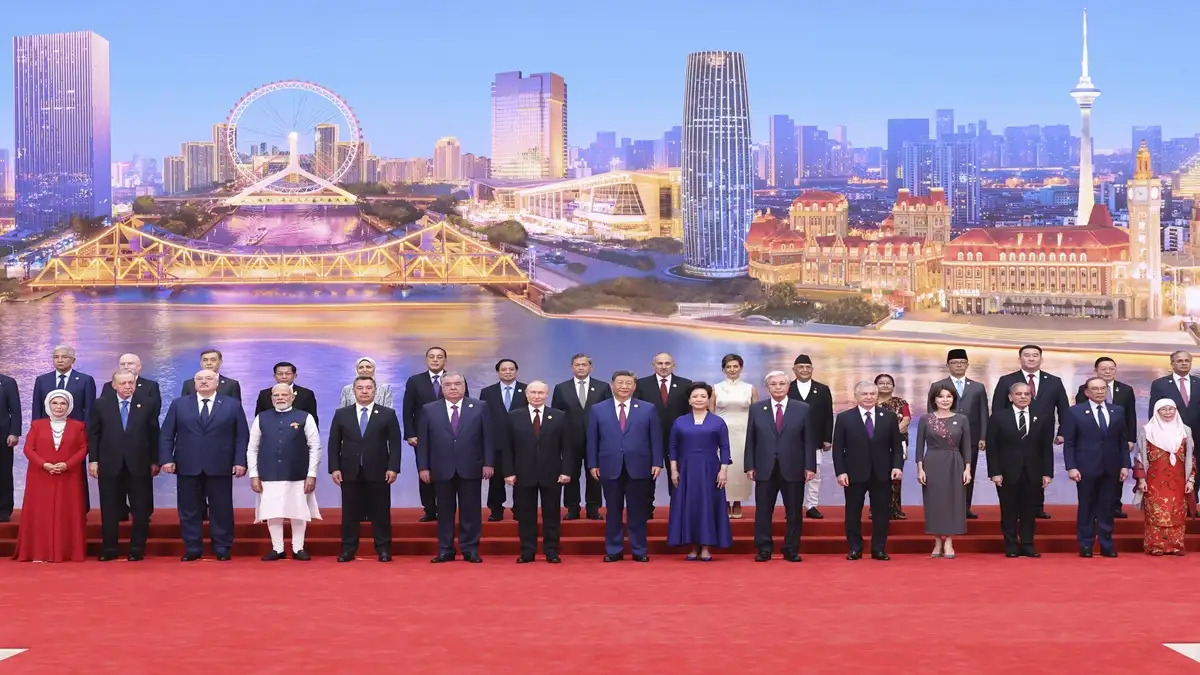
New Delhi, 2nd September: At a time when the world speaks in whispers against terrorism, Bharat roared. The Shanghai Cooperation Organisation (SCO) Summit 2025 in Tianjin became more than just another diplomatic gathering — it turned into a turning point in the global fight against cross-border terrorism. With global eyes fixed on this meeting, Prime Minister Narendra Modi used the stage not for pleasantries, but for an uncompromising call: there can be no double standards on terrorism.
This wasn’t mere rhetoric. It came in the shadow of the brutal Pahalgam terror attack in Jammu and Kashmir, where 26 innocent lives were lost, and against the backdrop of Operation Sindoor, Bharat’s decisive counter-terrorism move earlier this year. Together, these developments raised the stakes for SCO 2025. The question before the world was clear: could SCO fulfil its original purpose of being a bulwark against terrorism, or would it remain a talk shop caught in contradictions?
A Summit Under Global Spotlight

The Tianjin summit attracted global attention because it was more than a routine gathering of Eurasian powers. For the first time in years, terrorism took center stage — not climate change, not economic ties, not connectivity — but the menace that has destabilized regions and cost thousands of lives.
The timing was crucial. Operation Sindoor had demonstrated Bharat’s military resolve to dismantle terror networks beyond its borders, but New Delhi also knew military strength alone was not enough. What was needed was global consensus and accountability. By choosing to make terrorism the heart of the summit, Modi ensured the SCO agenda aligned with the pressing realities of South Asia and beyond.
Modi’s Message: Terrorism Is Humanity’s Red Line

PM Modi’s address was both a warning and a challenge. He declared that terrorism is not just Bharat’s concern, but a threat to humanity itself. The Pahalgam attack, he argued, was an attack on every person who believes in peace and human dignity.
The statement carried extra weight because of who was in the room: Pakistan’s Prime Minister Shehbaz Sharif, representing a state long accused of sponsoring terrorism, and Chinese President Xi Jinping, whose nation continues to arm Islamabad despite its complicity in fostering extremist groups.
By insisting that “no double standards are acceptable on terrorism,” Modi exposed the contradictions of SCO’s most powerful players and forced them to confront their own roles in perpetuating instability.
China’s Dilemma: The Dragon and the Snake

Xi Jinping attempted to project a vision of cooperation, saying: “The dragon and the elephant must walk together for Asia’s peace and progress.” But Modi’s subtext was sharper: if the dragon truly wants to walk with the elephant, it must stop feeding the snake.
China remains Pakistan’s largest arms supplier, responsible for over 80% of its military imports. From fighter jets to missiles, Beijing’s defence support strengthens Pakistan’s hand, even as Beijing signs joint statements condemning terrorism. This contradiction now stands exposed.
By condemning the Pahalgam attack in Tianjin, China entered a credibility crisis: can a nation denounce terror while simultaneously arming its biggest sponsor? The answer will define whether SCO evolves into a genuine anti-terror platform or collapses under its contradictions.
Bharat’s Three-Pillar Vision: Security, Connectivity, Opportunity

Beyond its warning on terrorism, Bharat brought structure to SCO through a three-pillar framework: Security, Connectivity, and Opportunity.
- Security: Bharat insisted that peace cannot coexist with terrorism. Nations cannot use extremism as a tool of state policy and still expect stability.
- Connectivity: Bharat stressed genuine economic and cultural linkages, rejecting projects that undermine sovereignty or indirectly fuel terrorism.
- Opportunity: Bharat positioned itself as a constructive connector across Eurasia, Central Asia, Russia, and the Global South.
This vision underscored that Bharat isn’t at SCO to merely attend but to lead, shape, and set the terms of engagement.
Operation Sindoor: The Context That Changed Everything

The resonance of Bharat’s message in Tianjin cannot be understood without Operation Sindoor. Launched earlier this year, it was one of Bharat’s most decisive counter-terrorism offensives, targeting cross-border networks that had long enjoyed safe havens.
The operation sent a message that Bharat would act unilaterally if the world failed to act collectively. Against that backdrop, Tianjin was a diplomatic follow-up — a chance for Bharat to internationalize its fight against terror and push SCO to fulfil the purpose for which it was originally conceived.
SCO Condemns Pahalgam: A Diplomatic Breakthrough

The outcome of the summit validated Bharat’s gamble. In an unusual move, SCO’s joint declaration explicitly condemned the Pahalgam attack and called for sponsors of terrorism to be held accountable. The language closely echoed Modi’s speech, signalling that Bharat had successfully shaped the narrative.
For the first time, even China and Turkey — often accused of shielding Pakistan — signed onto language that directly aligned with Bharat’s position. Diplomatically, this was a watershed moment, proof that Bharat’s persistence had forced SCO to take a harder stance.
Bharat’s Roar Was Necessary

For too long, terrorism has been treated as a regional inconvenience, not a global emergency. By forcing SCO to take a united stand, Modi transformed the narrative. The boldness was necessary — not just for Bharat, but for the credibility of international institutions themselves.
Of course, skepticism remains. Will China continue to arm Pakistan while signing anti-terror statements? Will SCO translate words into action? These contradictions won’t disappear overnight. But Bharat has ensured they can no longer be ignored.
SCO Must Fulfil Its Real Purpose
The SCO was founded in 2001 with security as its core purpose, particularly counter-terrorism. Over the years, it drifted into economic and political dialogue, often accused of being a mere “talk shop.” But Tianjin 2025 might mark the moment SCO returns to its original mission.
Bharat’s message was uncompromising: no compromise on terror, no double standards, no excuses. If SCO is to matter in the future, it must act on this foundation.
The summit proved one thing: when Bharat roars, the world listens. And if the dragon truly wishes to walk with the elephant, it must first stop feeding the snake.
