
Schools Go Hybrid, 50% Offices WFH As GRAP-4 Kicks In
Delhi tightens curbs after AQI worsens to ‘Severe Plus’ amid adverse weather conditions

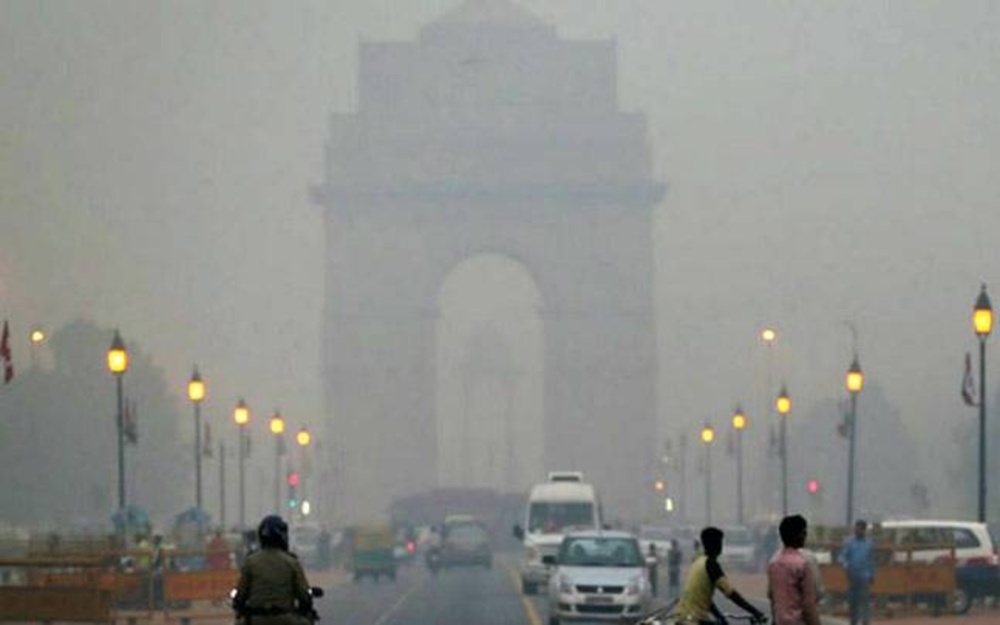
- Schools till Class 11 to run in hybrid mode, Class 10 exempted
- 50% staff in government and private offices asked to work from home
- CAQM upgrades restrictions from GRAP-3 to GRAP-4 within hours
- AQI rises from 431 to 441 on Saturday evening
GG News Bureau
New Delhi, 13th Dec: As Delhi’s air quality deteriorated sharply, the city government on Saturday directed all government and private schools to conduct classes till Class 11 in hybrid mode, excluding Class 10, while mandating 50 per cent work from home for staff in government and private offices.
The measures came into force after stricter pollution norms under Stage-IV of the Graded Response Action Plan (GRAP) were imposed across Delhi and the National Capital Region. A similar work-from-home order had been issued on November 24 during GRAP-3 restrictions but was later withdrawn when pollution levels improved.
The Commission for Air Quality Management (CAQM) first invoked GRAP-3 restrictions on Saturday afternoon after the Air Quality Index (AQI) crossed the 400 mark. With pollution levels worsening further, the panel escalated the curbs to GRAP-4 the same evening.
According to CAQM data, Delhi’s AQI stood at 431 at 4 pm and rose to 441 by 6 pm, showing an increasing trend. Under the GRAP framework, Stage-I applies when AQI is between 201 and 300 (Poor), Stage-II between 301 and 400 (Very Poor), Stage-III between 401 and 450 (Severe), and Stage-IV when AQI crosses 450 (Severe Plus).
“Keeping in view the prevailing trend of air quality and in an effort to prevent further deterioration, the CAQM Sub-Committee on GRAP has decided to invoke all actions envisaged under Stage-IV of the extant GRAP — ‘Severe+’ air quality — with immediate effect across the entire NCR,” the commission said in a statement. It clarified that GRAP-4 measures would be in addition to restrictions already in force under Stages I, II and III.
Explaining the sudden spike in pollution, CAQM said adverse meteorological conditions were primarily responsible, rather than local emissions. It pointed to a feeble Western Disturbance approaching north-west India, leading to reduced wind speed, occasional calm conditions, a shift in wind direction from westerly to easterly, and higher moisture levels in the lower atmosphere.
“These conditions during winter are conducive to smog and fog formation, resulting in poor dispersion and trapping of pollutants near the surface,” CAQM said, adding that the situation would be closely monitored in the coming days.
