
SC Reserves Verdict on Justice Varma’s Plea
Top court hears challenge to parliamentary panel probing corruption charges against Allahabad High Court judge

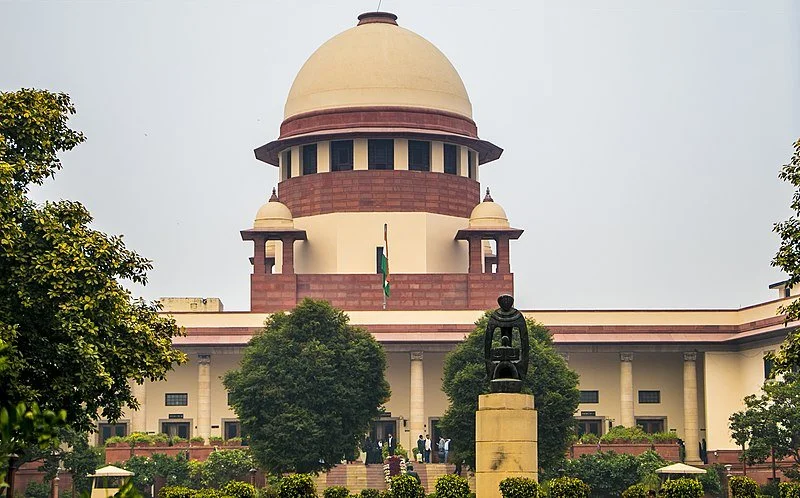
- Supreme Court reserves order on Justice Yashwant Varma’s plea
- Judge has challenged legality of the parliamentary inquiry panel
- Case stems from recovery of burnt currency at his Delhi residence
- Impeachment process was initiated after in-house probe found misconduct
GG News Bureau
New Delhi, 8th Jan: The Supreme Court on Thursday reserved its verdict on a petition filed by Allahabad High Court judge Justice Yashwant Varma, challenging the constitution and legality of a parliamentary panel probing corruption charges against him.
A bench comprising Justice Dipankar Datta and Justice S. C. Sharma reserved its order after hearing detailed arguments from senior advocates Mukul Rohatgi and Siddharth Luthra for Justice Varma, and Solicitor General Tushar Mehta for both Houses of Parliament.
During the hearing, Rohatgi and Luthra questioned the procedure adopted in constituting the inquiry panel. They contended that under the Judges (Inquiry) Act, 1968, only the Speaker of the Lok Sabha and the Chairman of the Rajya Sabha are empowered to admit a motion for the removal of a judge, and that the process followed in Varma’s case was contrary to statutory provisions.
Defending the panel’s constitution, Solicitor General Mehta argued that once motions are admitted in both Houses, the inquiry committee is to be jointly constituted by the Speaker and the Chairman, and that the procedure followed was lawful.
Earlier, the Supreme Court had orally observed that there was no bar under the Judges (Inquiry) Act on Lok Sabha Speaker Om Birla constituting an inquiry committee after a similar motion was rejected in the Rajya Sabha.
Justice Varma was repatriated from the Delhi High Court to the Allahabad High Court after burnt wads of currency notes were recovered from his official residence in New Delhi on March 14. Following the incident, then Chief Justice of India Sanjiv Khanna had ordered an in-house inquiry by a three-member committee comprising Punjab and Haryana High Court Chief Justice Sheel Nagu, Himachal Pradesh High Court Chief Justice G.S. Sandhawalia, and Karnataka High Court judge Justice Anu Sivaraman.
The committee submitted its report on May 4, holding Justice Varma guilty of misconduct. After he declined to resign, the CJI forwarded the findings and Varma’s response to the President and the Prime Minister, paving the way for impeachment proceedings.
Subsequently, Speaker Om Birla admitted a multi-party motion for Varma’s removal on August 12 and constituted a three-member parliamentary inquiry committee comprising Supreme Court judge Justice Aravind Kumar, Madras High Court Chief Justice Manindra Mohan Shrivastava, and senior advocate B. V. Acharya.
Justice Varma has sought quashing of the Speaker’s actions, the admission of the motion, and all consequential notices issued by the inquiry committee, claiming the entire process is unconstitutional and in violation of the Judges (Inquiry) Act.
