
SC on Basant Panchami : Allows Hindu Muslim Prayers at Bhojshala

GG News Bureau
New Delhi,22nd January :The Supreme Court on Thursday permitted Hindu devotees to offer prayers at the disputed Bhojshala–Kamal Maula Mosque complex in Madhya Pradesh’s Dhar district from sunrise to sunset on Basant Panchami, while also allowing Muslims to perform namaz between 1 p.m. and 3 p.m. on the same day. The order seeks to maintain religious balance and public order amid long-standing sensitivities surrounding the site.
The apex court’s decision comes a day ahead of Basant Panchami on January 23, an occasion that coincides with Saraswati Puja, which holds special significance for Hindu devotees who consider Bhojshala to be an ancient Saraswati temple. At the same time, Muslims regard the structure as the Kamal Maula Mosque, making the complex one of central India’s most contentious religious sites.
In its order, the Supreme Court also directed that a list of individuals from the Muslim community intending to offer namaz at the site be submitted in advance to the district administration. The directive is aimed at facilitating effective crowd management and ensuring security during the limited prayer window allotted to the Muslim community.
The Bhojshala dispute dates back several decades, with both Hindu and Muslim groups staking historical and religious claims over the monument. While Hindus believe the site was once a centre of learning dedicated to Goddess Saraswati during the reign of King Bhoj, Muslims assert that it has functioned as a mosque for centuries. Periodic permissions for worship by both communities, especially on Basant Panchami and Fridays, have often required judicial and administrative intervention.
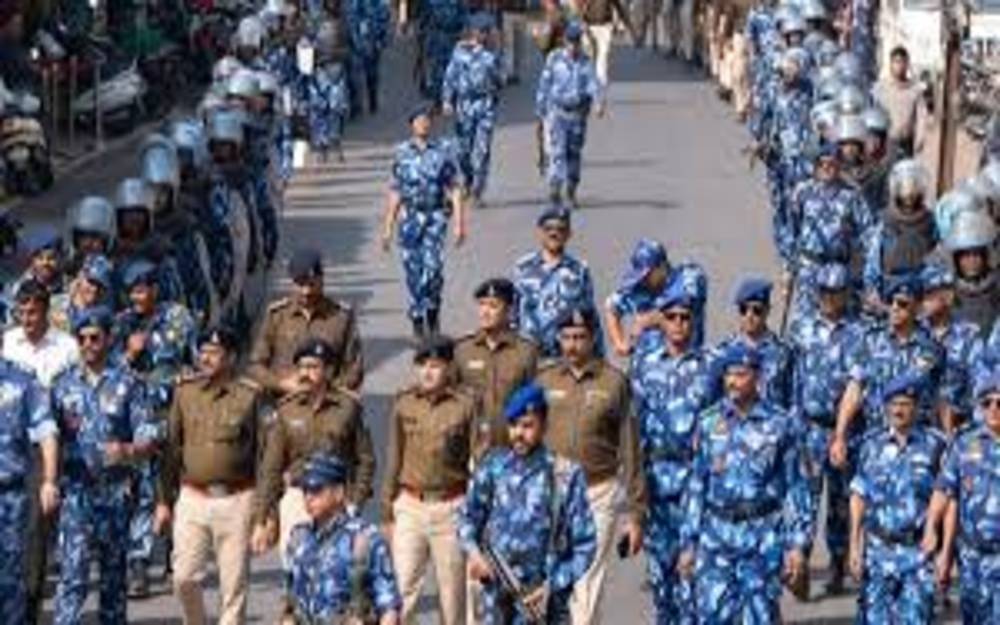
Friday’s ruling attempts to strike a delicate balance by clearly demarcating time slots for religious practices, while placing responsibility on local authorities to ensure peace and compliance. Madhya Pradesh police and district officials have stepped up security arrangements around the complex, with prohibitory orders and deployment of additional forces expected to prevent any untoward incidents.
Religious groups from both sides have welcomed the clarity provided by the court, though some have reiterated their broader legal claims over the site. Legal experts note that the order is interim in nature and does not prejudge the final outcome of the dispute, which remains under judicial consideration.
As the country closely watches developments at Bhojshala, the Supreme Court’s intervention underscores its continuing role in managing sensitive religious matters while emphasising coexistence, law and order, and constitutional values.
