

Paromita Das
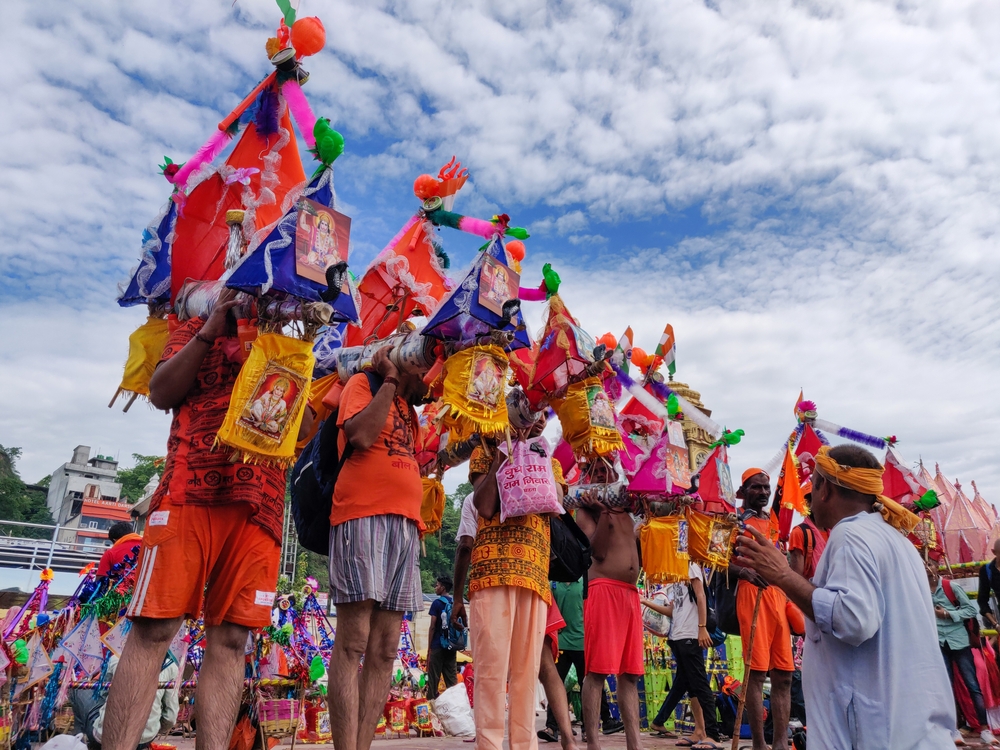
New Delhi, 11th July: As dawn breaks today, on July 11, the first day of Sawan 2024, the roads leading to holy rivers and ancient Shiv temples begin to echo with chants of “Bol Bam!” For millions of Shiv Bhakts across Bharat, the start of the holy month isn’t just marked by fasting and temple visits — it is defined by the iconic Kanwar Yatra, one of the world’s largest peaceful religious gatherings.
Every year, lakhs of devotees — young and old, men and women — set out barefoot or in humble slippers, carrying beautifully decorated Kanwars on their shoulders. Their mission is clear yet deeply spiritual: to fetch the sacred Gangajal from places like Haridwar, Gaumukh, or Sultanganj and offer it to Shiv Lingams in their hometowns. But beyond the visible journey lies an ocean of devotion, discipline, and symbolism that makes this Yatra more than just a pilgrimage.
The Four Paths to Shiv’s Blessings
What makes the Kanwar Yatra 2024 so unique is that this sacred trek isn’t the same for everyone. Traditionally, the Yatra is divided into four distinct paths — each signifying a different level of commitment, penance, and endurance.
Most common is the Simple Kanwar, where pilgrims may rest, but even then, the Kanwar must never touch the ground. Many tie it to trees or rest it on a stand — a mark of deep respect for the water they carry for Lord Shiv.
Then there is the Dak Kanwar, a test of sheer willpower. Here, devotees walk without stopping, day and night, until they reach their temple and offer the water. Rest is not an option; the journey itself becomes a living prayer.

For those with an iron resolve, there is the Khadi Kanwar, where the bamboo structure remains standing, held vertically throughout the route. The devotee’s helper walks beside them, ensuring the Kanwar stays upright — a sight that humbles even the strongest observers.
And finally, the most intense path of all — the Dandi Kanwar. Imagine a devotee inching forward, performing a full prostration or squat with every step. What might take a few days for some takes almost a month for these pilgrims. The physical pain is unimaginable, but so is the spiritual reward they seek: Lord Shiv’s ultimate blessing.
A Mythology Rooted in Devotion
Why do these pilgrims undertake such hardships, year after year? The answer lies in ancient stories that still shape modern faith. According to legend, when the ocean of milk was churned during the Samudra Manthan, a deadly poison emerged. To protect the universe, Lord Shiv drank it all, turning his throat blue. To ease the burning poison, holy water was poured on his Lingam — an act devotees replicate through the Jalabhishek ritual.

In this simple yet profound act, millions believe they are offering relief to the Lord who took the world’s pain upon himself. In return, devotees seek blessings for health, prosperity, and freedom from troubles — a spiritual exchange of love and loyalty.
Why the Kanwar Yatra Still Matters
Some see the Kanwar Yatra only as an annual spectacle that clogs highways and towns with crowds. But look closer, and it’s clear that this journey is more than ritual — it’s a lesson in discipline, humility, and community. In a modern age of instant comforts, these devotees choose discomfort. They choose the burning roads of North Bharat’s monsoon for days, all for a few drops of holy water offered in silence at dawn.

It’s not just about religion; it’s about reconnecting with something larger than oneself — a reminder that faith, when practiced sincerely, can unite villages, generations, and even strangers on the road.
A Walk That Touches the Divine
As the holy month of Sawan unfolds from July 11 to August 9, the roads will again be filled with orange-clad pilgrims, the Kanwars balanced carefully on tired shoulders, songs of Shiv echoing through forests, highways, and villages.
Kanwar Yatra 2024 stands as living proof that while technology may change our world, the human heart still yearns for the timeless — for rituals that test our bodies and nourish our souls.
When these pilgrims return to their villages, they don’t just bring back Gangajal — they carry back a part of themselves reborn in faith. And in every drop poured on the Shiv Ling, an ancient promise is renewed: devotion will always find its way back to the divine.
