
‘RSS Cannot Be Compared with Anyone’: Mohan Bhagwat at Centenary Event in Meerut
RSS Is a Workshop for Nation-Building, Not a Paramilitary Force, Says Sarsanghchalak

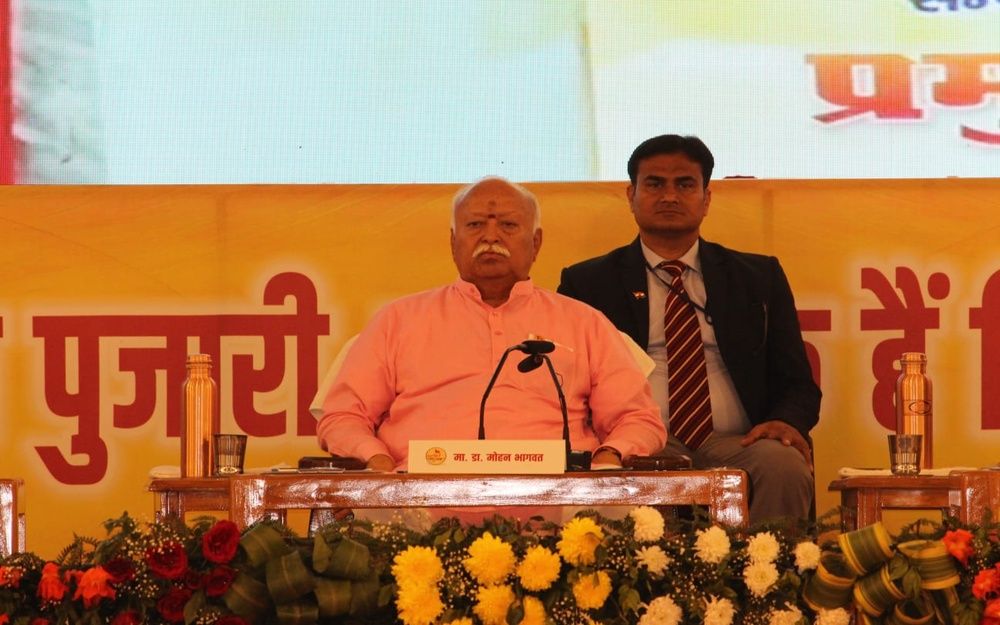
- RSS chief says organisation focuses on character-building and social unity
- Calls for value-based education and social harmony beyond caste lines
- Emphasises spiritual unity as India’s civilisational strength
- Urges citizens to actively contribute to national resurgence
GG News Bureau
Meerut, 21st Feb: Rashtriya Swayamsevak Sangh (RSS) chief Dr. Mohan Bhagwat said that the RSS cannot be compared with any other organisation, asserting that it is unique in its character and mission. Addressing a major public gathering organised as part of the RSS centenary year celebrations in Meerut, he clarified that while some perceive the RSS as a paramilitary body due to its drills and discipline, it is fundamentally a “workshop for character-building” focused on holistic personality development.
He said that RSS shakhas are designed to nurture individuals in all dimensions, shaping disciplined and socially responsible citizens. Reflecting on the period before the organisation’s founding in 1925, Bhagwat recalled that Dr. Keshav Baliram Hedgewar had been in contact with several freedom fighters and national leaders such as Bal Gangadhar Tilak, Madan Mohan Malaviya, Subhas Chandra Bose, Veer Savarkar, Bhagat Singh and Chandrashekhar Azad.
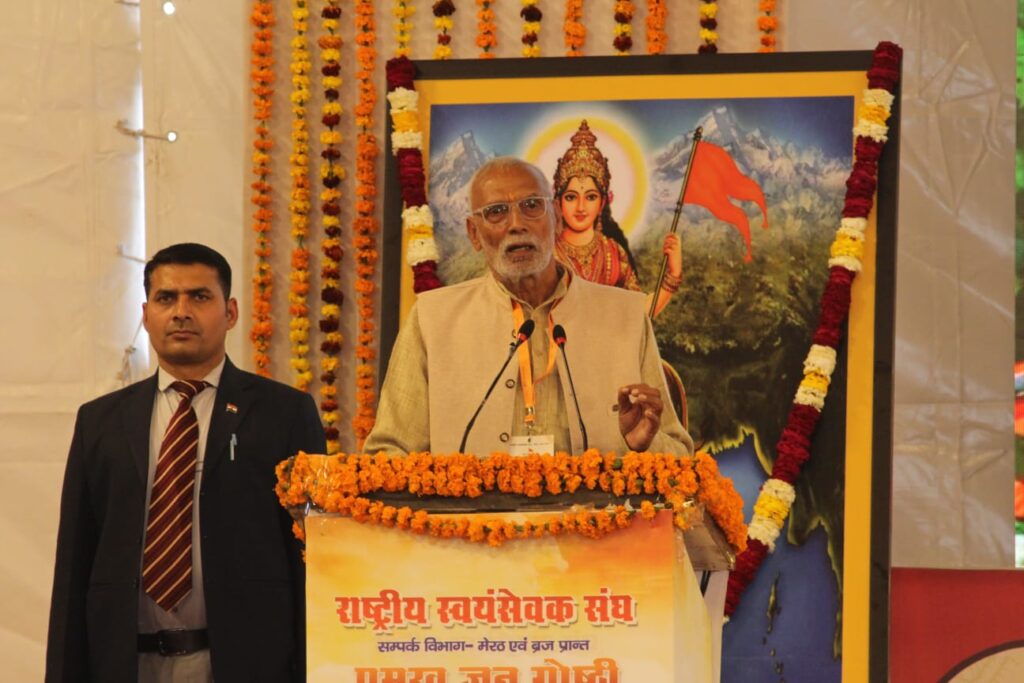
According to Bhagwat, the central concern among these leaders was why India repeatedly fell into subjugation. He said Hedgewar concluded that societal divisions, social evils and loss of collective identity had weakened the nation. The solution, he emphasised, lay in building a harmonious, organised and disciplined Hindu society.
Bhagwat stated that everyone residing in India is part of the broader Hindu civilisational identity, regardless of differences in faith or modes of worship. He described “Hindu” as a unifying cultural concept rooted in collective welfare and harmony, extending goodwill not only to humanity but to all life forms and the universe.
He highlighted India’s enduring unity despite diversity and said that Indian spiritual traditions recognised that while diversity appears real, unity is the deeper truth. Over the past century, he noted, the RSS has faced bans, allegations, political opposition and hardships, yet volunteers remained steadfast in their resolve.
During an interactive session, Bhagwat addressed questions on education, healthcare, social equality and cultural values. On concerns about education budgets and accessibility, he said while budgetary allocation is the government’s responsibility, society must also step forward to ensure education reaches the underprivileged, as was done historically through community-supported institutions.
On the idea of “One Nation, One Education” and a unified health policy, he observed that national frameworks exist but implementation remains a state subject, stressing the need for broader consensus. He also called for value-based education to address moral decline, urging citizens to balance prosperity with social responsibility.
Responding to concerns about caste-based politics, Bhagwat said social harmony must begin with individual conduct. He asserted that in the RSS, caste distinctions dissolve through shared discipline and purpose. On digital content platforms, he remarked that viewing choices depend on personal discretion and discernment.
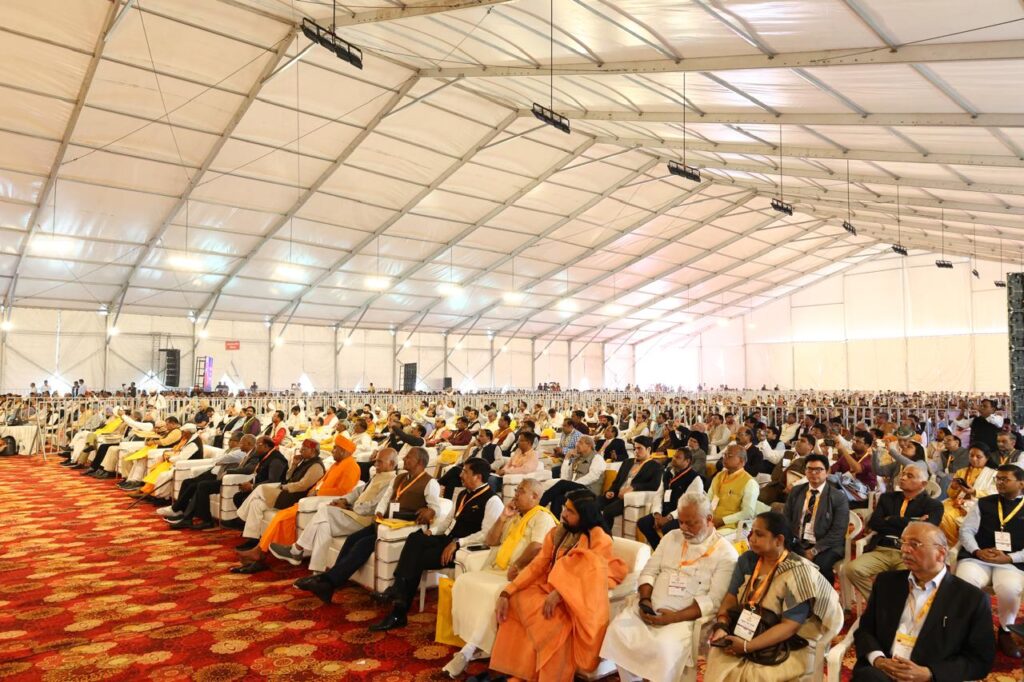
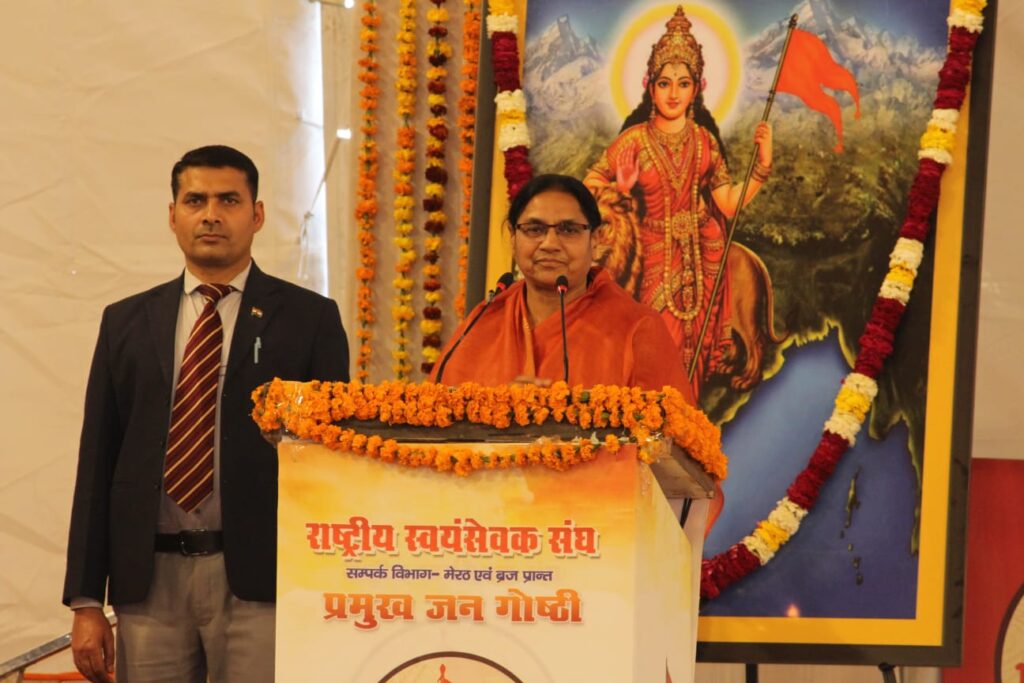
Regional functionaries and distinguished guests, including Padma Shri awardee Bharat Bhushan Tyagi and educationist Dr. Sumedha Acharya, also addressed the gathering, highlighting themes of environmental responsibility, organic farming, cultural values and spiritual progress alongside material development.
The event concluded with a call for active societal participation in India’s national resurgence as the RSS marks 100 years of its journey.
