
Rohingya Baby Boom: A Demographic Threat at Bharat’s Doorstep
Over 1,000 births daily in Bangladesh camps, illegal migration into North-East India sparks fears of regional instability

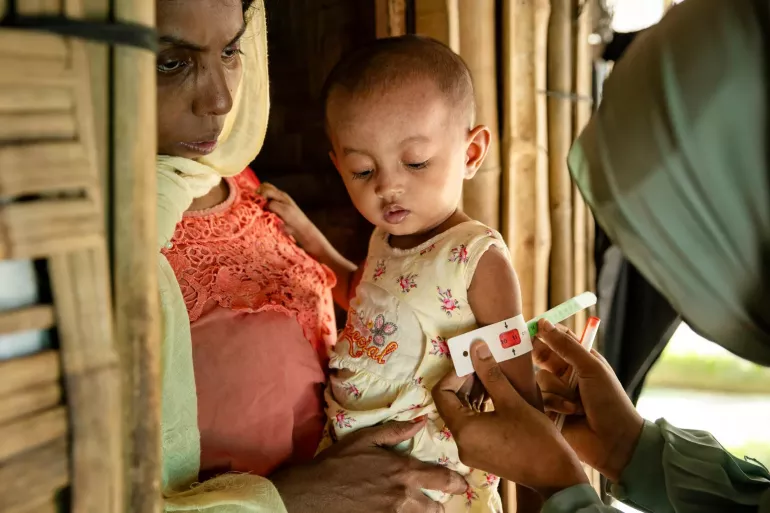

What began as a humanitarian tragedy has now spiraled into a demographic explosion and a looming regional catastrophe. Inside the overcrowded Rohingya refugee camps of Ukhiya and Teknaf in Cox’s Bazar, the birth rate has reached unprecedented levels. According to camp health officials, over 1,000 babies are born every single day—averaging more than 87 recorded births officially—amounting to nearly 32,000 newborns each year, with many births going unreported. Experts warn that this unchecked baby boom is a ticking demographic time-bomb with potentially devastating consequences, not only for Bangladesh but for the entire South Asian subcontinent, especially Bharat.
Population Surge Beyond Control
Official figures estimate 1.15 million Rohingyas reside in Bangladesh, but international agencies suggest the real number has already surpassed 1.3 million. Alarmingly, over the past year alone, more than 150,000 fresh infiltrations have been documented, intensifying the crisis further.
With family planning rejected, polygamy widely practiced, and deliberate pursuit of large families, many households now consist of 15–18 members. Sociologists have described this as a form of “demographic weaponry”—a calculated strategy to reshape the religious, cultural, and political balance of the region.
Beyond Cox’s Bazar: A Regional Spillover
The Rohingya presence is spreading rapidly beyond Cox’s Bazar into Bandarban, Chattogram city, and even across international borders into India’s North Eastern states, especially Assam and Tripura. Analysts warn that such demographic pressure and unregulated movement will not remain confined to Bangladesh but risks triggering a regional explosion of instability.
The Looming Threat
If this abnormal population growth continues unchecked, the Rohingya may soon challenge the social, cultural, and political identity of host communities. For Bangladesh—already grappling with poverty, climate change, and resource shortages—this influx threatens to overwhelm both its economy and internal security.
What was once dismissed as a mere humanitarian problem is increasingly being seen as a population jihad—a strategy capable of destabilizing the entire subcontinent.
Proposed Strategic Measures
Security experts suggest urgent, multi-pronged measures to contain the looming disaster:
- International Pressure: Strong UN and regional intervention to compel Myanmar to take back its nationals.
- Border Security: Stricter surveillance and military enforcement to halt illegal infiltration.
- Population Control Programs: Family planning awareness initiatives, backed by strong policy enforcement where needed.
- Internal Security: Preventing illegal Rohingya settlements from embedding within local communities.
- Regional Unity: A joint security framework involving Bangladesh, India, Myanmar, and neighboring nations.
The Point of No Return
Experts warn that the crisis has reached a critical threshold. With over 1,000 births daily, relentless illegal entry, and a mindset of demographic dominance, the Rohingya issue has escalated into an existential threat for South Asia’s stability.
Unless firm, immediate, and coordinated measures are adopted, today’s inaction will translate into tomorrow’s irreversible demographic catastrophe. The subcontinent now faces a stark choice: act decisively—or face a destabilized future shaped by unchecked population jihad.
About the Author: Prof. Rupa Rani Bhuyan, English Department, Mangaldai College (Autonomous), is the Founder of Maa Shakti Foundation and a Hindu activist dedicated to supporting Sanatani orphans and empowering underprivileged Hindu students.
