
Rights experts calls Taliban to end crackdown on women over ‘bad Hijab’

Anjali Sharma
GG News Bureau
UNITED NATIONS, 3rd Feb. UN human rights experts on Friday expressed grave concern over multiple reports of arbitrary arrests, detention and ill-treatment of women and girls in Afghanistan.
The experts noted that the incidents have surged since early January, are purportedly linked to violations of the Taliban’s stringent dress code for women.
The experts called on de facto authorities to comply with Afghanistan’s human rights obligations, including under the Convention on the Elimination of All Forms of Discrimination against Women.
Taliban crackdown initially began in western Kabul, predominantly inhabited by the minority ethnic Hazara community which has been the target of extremist violence for years but swiftly expanded to other areas, including Tajik-populated regions and provinces such as Bamiyan, Baghlan, Balkh, Daykundi, and Kunduz.
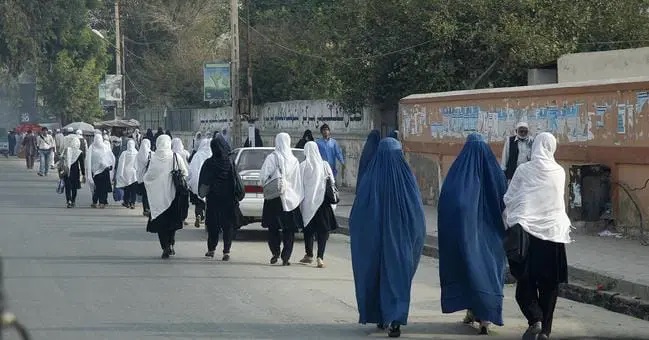
Women and girls accused by the Taliban of wearing “bad hijab”, were arrested during the operation in public places, including shopping centres, schools and street markets.
According to a news release issued by UN rights office OHCHR on behalf of the experts some were forcibly taken to police vehicles, held incommunicado and denied legal representation.
“Women and girls were reportedly held in overcrowded spaces in police stations, received only one meal a day, with some of them being subjected to physical violence, threats and intimidation,” they said.
The de facto authorities ordered all women to observe “proper hijab”, preferably by wearing a chadari – a loose black garment covering the body and face in public and made male relatives responsible for enforcing the ban or face punishment in May 2022.
Some detainees were released after a few hours, others languished in custody for days or weeks, OHCHR reported.
The lack of transparency and access to justice means the current number of detainees potentially held incommunicado is hard to assess.
Their release has been made contingent on male family members and community elders providing assurances, often in writing, that they would comply with the prescribed dress code in the future.
The experts said “In addition to punishing women for what they wear, assigning responsibility for what women wear to men violates women’s agency and perpetuates an institutionalized system of discrimination, control of women and girls, and further diminishes their place in society,”.
They monitor and report on the rights situation in the country, as well as on violence and discrimination against women and girls.
UN report found that several hundred Afghan women were forced to quit their jobs or were arrested and denied access to essential services in the last quarter of 2023.
Those arrested included women purchasing contraceptive pills, female staff of a healthcare facility and women who were not accompanied by a mahram – a male chaperone.
The de facto authorities reportedly stated that “it was inappropriate for an unmarried woman to work.”
The humanitarian situation across the country continues to deteriorate.
UN stated that four decades of conflict, entrenched poverty, climate change-induced and natural disasters and severe restrictions on rights, has left 24 million people, including over 12 million children, in need of humanitarian assistance and protection.
UN and relief partners have launched a $3.06 billion response plan for 2024, targeting 17.3 million for assistance.
They said that greater food supplies are need and the rebuilding of the agricultural sector, health systems, water and sanitation. Protection for women, children and other vulnerable groups is also a key priority.
