
Respect, Identity and Language: Maharashtra’s Growing Storm

Paromita Das
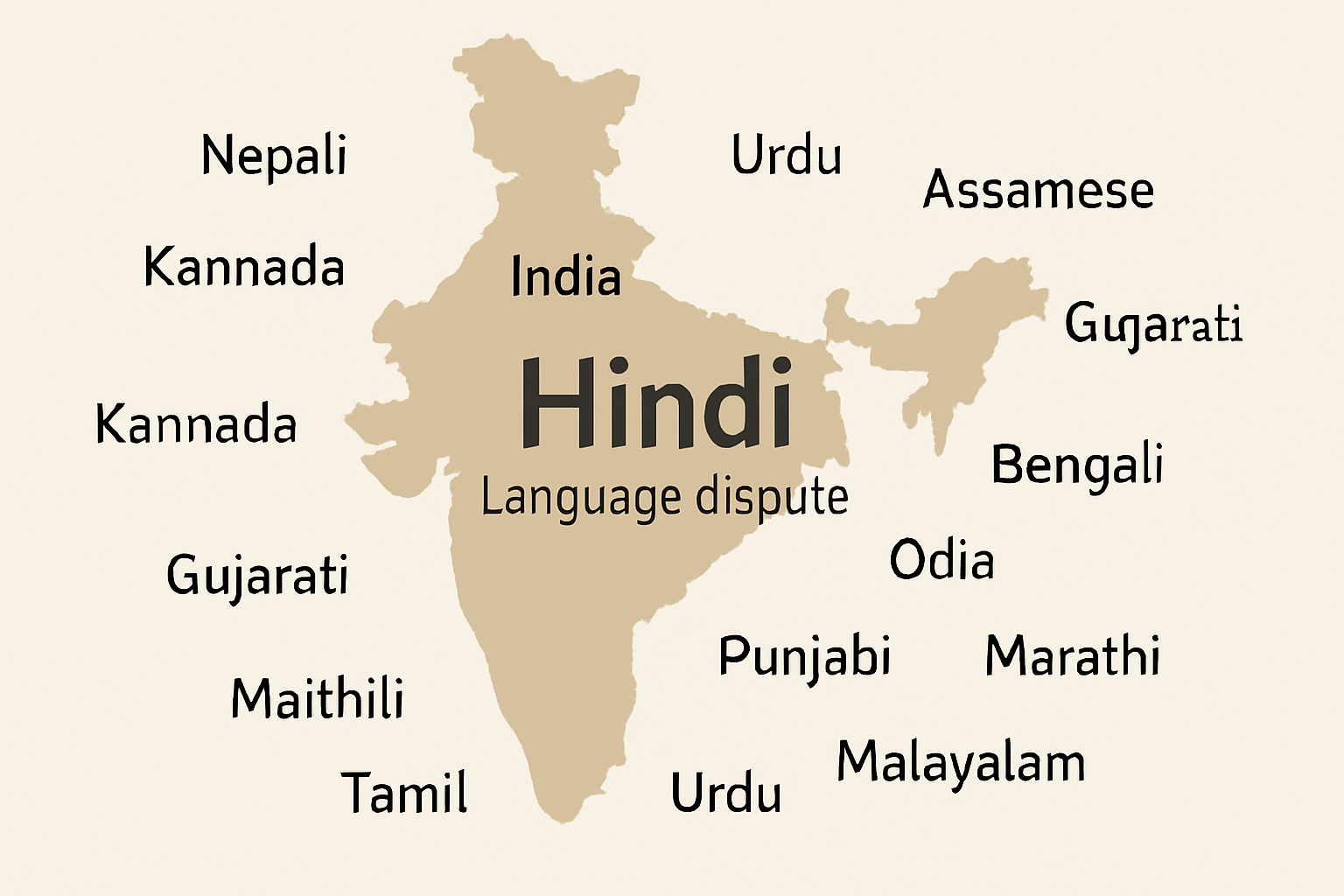
New Delhi, 17th July: In the hum of a classroom in Mumbai or a village school in Vidarbha, a quiet question echoes louder than any political slogan — does learning someone’s language truly equal respecting their identity? In Bharat, where language is stitched into the fabric of selfhood, the recent controversy in Maharashtra over mandatory Hindi in primary schools has reignited a debate that cuts deeper than textbooks or timetables.
The issue is not about whether Hindi is a beautiful language — it certainly is, with its vast literature and poetry. But for many Maharashtrians, the decision to make it compulsory alongside Marathi and English feels like a slow erosion of their linguistic pride. It is not just about adding a subject. It’s about a history of standing guard over Marathi’s place in public life, a history that dates back to the Samyukta Maharashtra movement and the fiery rise of regional politics that shaped Mumbai’s skyline and its psyche.
When Identity Feels Cornered
Why do people react so fiercely when language policies change? Because language is not merely about words — it’s about belonging. For generations, states like Maharashtra have seen language as a marker of who they are in a country that is both wonderfully united and perpetually divided by its diversity.
The fear, whether spoken aloud or whispered in private, is simple: if you make room for Hindi in the classroom, does it push Marathi to the corner? Is this the first step towards diluting a legacy? And if Hindi becomes more visible, does that mean Marathi becomes less relevant?
These are not idle fears. Migration from northern states has steadily changed the social fabric of Mumbai and other cities, stoking anxieties about jobs, culture, and space. Political leaders know this sentiment well — and they do not hesitate to use it.
The Impossible Task: Learning Every Tongue
But here’s a hard truth we often shy away from: if learning someone’s language is the only way to show respect, then as Bharatiyas, we are doomed to fail. How many languages can one person master? Bharat officially recognizes 22 major languages, but the dialects number in the hundreds. In Maharashtra alone, the Marathi spoken in Pune sounds different from that in Nagpur or Kolhapur. Should we all learn Bhojpuri to respect the migrant worker in Mumbai? Or Tulu to greet a visitor from Karnataka’s coast?
The answer, of course, is that respect cannot be reduced to a vocabulary list. Respect is shown in how we listen, how we accommodate, how we allow space for another tongue to thrive alongside our own. Language is deeply personal, but its survival depends on shared goodwill, not enforced compliance.
Language Should Liberate, Not Divide
We must ask ourselves an uncomfortable question: does enforcing Hindi in Maharashtra’s classrooms make us more united or just more resentful? The ideal of Bharat was never about stamping uniformity across states. It was about celebrating difference and finding common ground.
By pushing a single language from the top, we risk making it a symbol of cultural intrusion rather than connection. The real goal should be creating classrooms where children see Hindi, Marathi, English — and every other language — not as rivals, but as bridges.
Schools must teach that speaking multiple languages is a gift, not a burden. And governments must trust communities to nurture their mother tongues without feeling threatened. A policy born of trust will always do more good than a rule forced by fear.
The True Way Forward
Maharashtra’s language row is more than a curriculum dispute — it is a mirror reflecting Bharat’s fragile dance between unity and diversity. The identity crisis at its heart is not unique to Maharashtra; it is a reminder that our strength lies not in one language dominating the others, but in many languages coexisting without anxiety.
So, no — we cannot learn every language. But we can learn to respect every speaker. We can let children hear stories in many tongues and teach them that no language makes them more or less Bharatiya. When we do that, we honour our real mother tongue — the idea of Bharat itself.
