
Religious Conversion Biggest Threat to India: Ashwini Upadhyay
National security lecture held in memory of Pt Ganesh Prasad Mishra in Chhatarpur

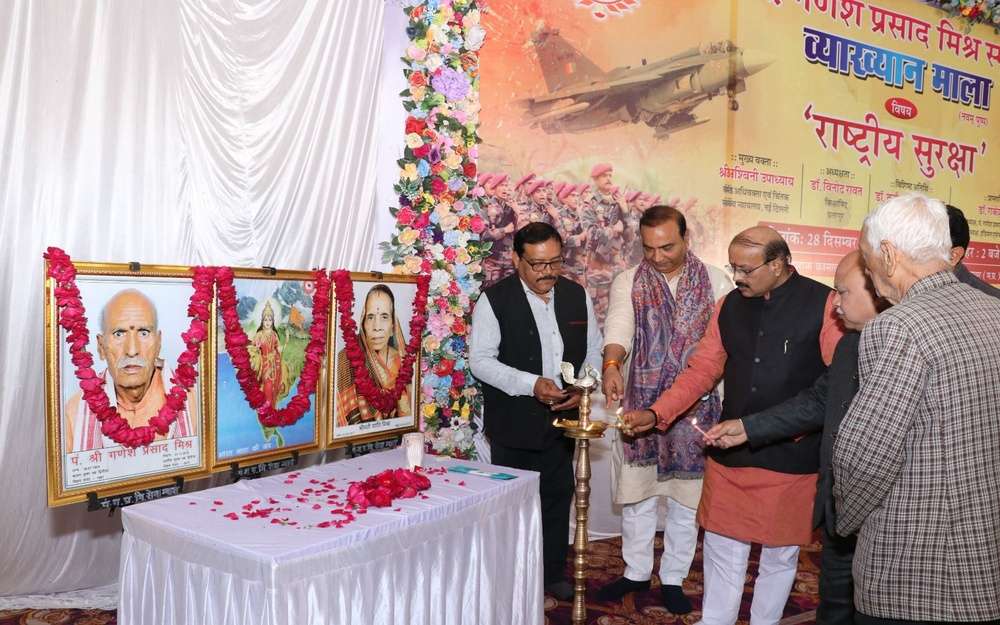
- Advocate Ashwini Upadhyay flags religious conversion as major national security concern
- Ninth memorial lecture organised by Pt Ganesh Prasad Mishra Seva Nyas
- Historian Dr Kanhaiya Lal Agrawal releases research on Prabodh Chandrodaya
- Trust outlines its social and development initiatives
GG News Bureau
Chhatarpur. 29th Dec: Senior Supreme Court advocate Ashwini Upadhyay on Sunday said that religious conversion poses the biggest threat to India’s national security, while addressing the ninth memorial lecture on national security organised by Pt Ganesh Prasad Mishra Seva Nyas at Chhatrasaal Auditorium.
Upadhyay alleged that organised conversion activities were weakening India’s social fabric and demographic balance, asserting that the issue must be addressed through stronger legal and administrative measures. He said conversion was a “planned crime” and urged citizens to actively engage with their elected representatives to push for reforms.
Quoting figures, Upadhyay claimed that large-scale demographic changes, infiltration and misuse of land and financial networks were emerging as major internal security challenges. He also raised concerns over illegal funding, fake medicines, drugs and hawala money allegedly being used to support conversion activities, and called for tighter monitoring by the government.
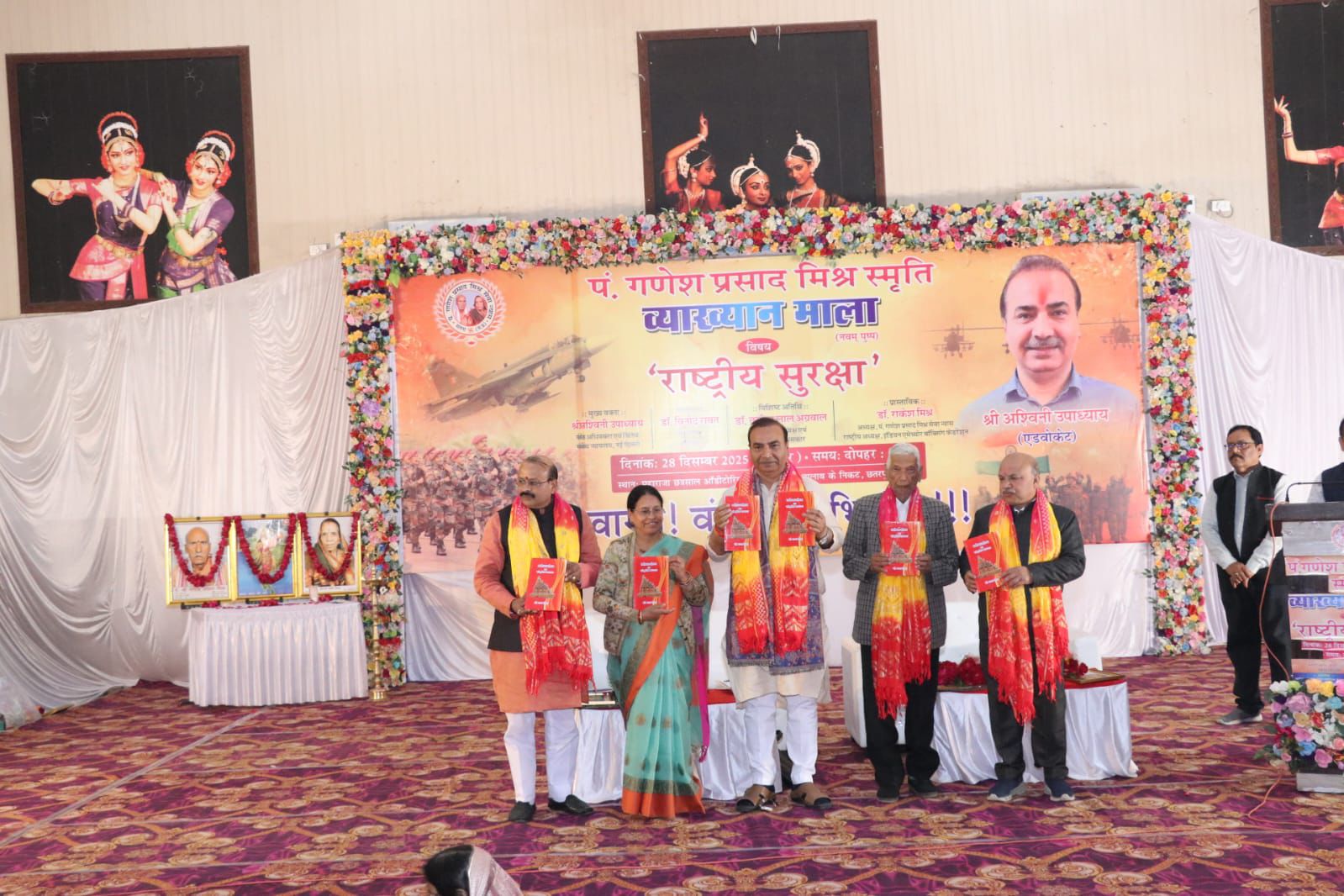
Historian Dr Kanhaiya Lal Agrawal, who attended as a special guest, spoke about the cultural and historical importance of the ancient text Prabodh Chandrodaya, written during the Chandela period. He elaborated on its literary symbolism and links to Khajuraho temple carvings. On the occasion, Dr Rachna Mishra’s book Prabodh Chandrodaya Ka Sanskritik Adhyayan was formally released.
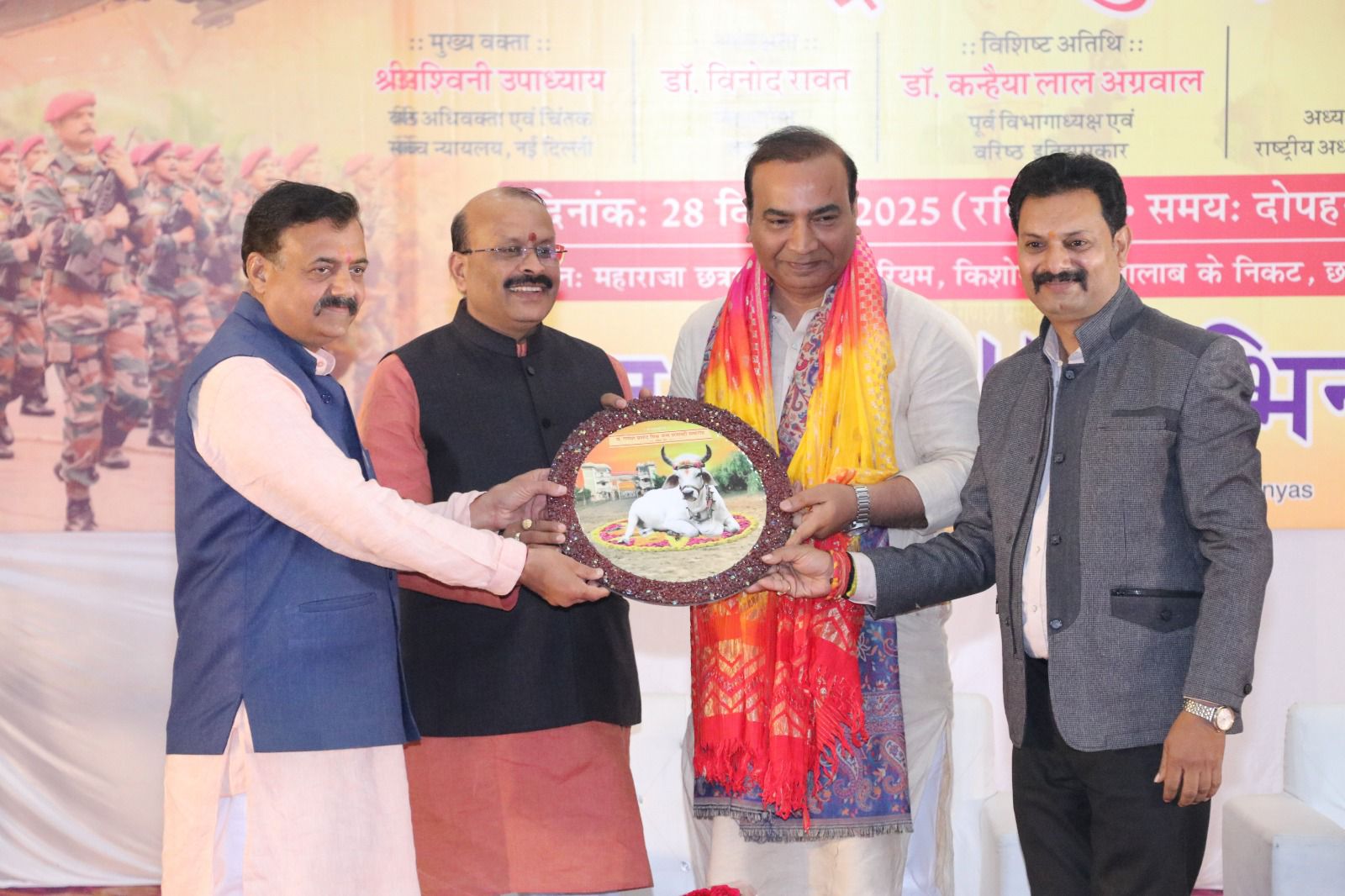
Addressing the gathering, Dr Rakesh Mishra, president of the Seva Nyas, said the trust was founded in 2017 in memory of Pt Ganesh Prasad Mishra to strengthen society through service-based initiatives. He highlighted the organisation’s work in healthcare camps, farmers’ support programmes, tree plantation drives, sanitation campaigns, talent honour programmes and social welfare activities across the region.
Several dignitaries including local legislators, university officials, lawyers, academicians, social workers and representatives of civil society organisations were present at the programme, which drew a large turnout of students, teachers, advocates and community members.
