

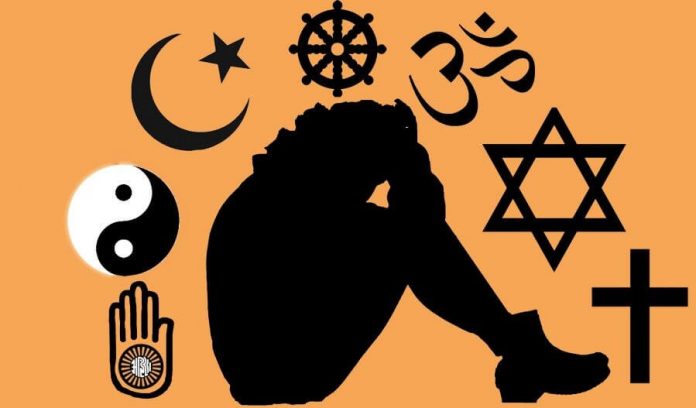

An old acquaintance recently informed me that he’s launching a new religious TV channel. Not long after, news of another one arriving this January surfaced. Clearly, the expansion of religious TV channels shows no signs of slowing down. In India, it’s a bit of a trend: those with financial backing or domain relevance often jump into the TV channel game. We’ve seen this in the news genre too. But here’s the catch—this trend mostly thrives in sectors where you don’t need a massive content budget. Opening an entertainment, film, or sports channel is an expensive affair, because it demands high production value. In contrast, religious and news channels are relatively low-cost ventures. That’s why India has nearly 400 news channels and more than 50 religious ones.
Now let’s talk religion. Have these religious channels truly benefited the spiritual landscape, or have they boxed it into a few narrow formats? When we speak of “Dharma” (religion), we refer to a wide spectrum—rituals, traditions, festivals, prayer, worship, spiritual knowledge, discourses, sacred places, projects, and themes. Our understanding of religion is richer when we experience all its dimensions. But on most religious channels, some aspects are spotlighted while others are ignored—often due to format limitations.
In North India, religious TV is dominated by “kathas” (scriptural storytelling). In South India, it’s more focused on rituals and ceremonies. The medium of TV has amplified the reach of kathas, and in doing so, given rise to a revered community of storytellers and preachers. In fact, for many channels, kathas are still the primary source of revenue. When religious TV channels first emerged, it was probably North Indian kathavachaks (storytellers) who provided content in the format of satsang (spiritual discourses), similar to what Zee TV did back in the day. Kathas also function as events—bringing communities together, engaging audiences, and reinforcing traditions. In ancient times, monks and saints would travel from village to village to spread these stories. Today, television beams them into every home.
But the times—they are a-changin’. While TV still dominates the living room, the smartphone has conquered every palm. And with it, the way we consume content. Time is limited, and attention even more so. With mobile, people now spend countless hours on digital platforms, and this shift has dramatically increased the value of content itself. We now watch based on platforms—TV gave us viewing habits; mobile gives us viewing choice. Naturally, religious channels are now moving onto mobile platforms. People watch them at their convenience and comfort. But here’s the real question—will religion on TV shrink?
TV and mobile operate with different psychologies. TV is time-bound; mobile is convenience-bound. But both drain your time. Watching TV is often a shared, social activity. Mobile is personal, private. In the future, people will consume religious content that aligns with their preferences—customized, curated, and crafted for them. On a mass scale, only content that reflects a shared worldview will go viral.
Religion is eternal. Timeless. Humanity will change, technology will evolve—but religion must adapt. Religious channels need to think differently, innovate formats, and present emerging spiritual activities. A healthy environment of competition is essential for the domain to grow and the content to evolve. This will also open up market collaboration opportunities, reducing the burden of funding the channel solely through religious programming.
Truth is, the current broadcast model is too tight a frame. That’s why we’re hitting walls. No religious channel today is able to showcase the full range of what faith has to offer. For example, bhajans (devotional songs) are now dominated by music companies. Despite their reach, religious TV channels aren’t able to launch this content on their own platforms. Moreover, “Devotion” isn’t even a formal category on most digital platforms—so discoverability is minimal. YouTube, Facebook, Twitter—all operate on algorithms. Your content’s reach depends entirely on user interest and platform rules. Metrics can be misleading, and impact hard to measure.
This calls for a structured expansion of religious platforms. And yes, we need professionalism. Today, not a single religious organization or app from India has achieved global recognition. Meanwhile, the Calm app (for meditation) is a billion-dollar business, and Shilpa Shetty’s yoga app is among the most downloaded in the country. Why? Because of focus, packaging, and aligning content with today’s user needs.
Religion is action—karma. And presenting it to the next generation is our karmic responsibility.
~ Bhavya
