
Real empowerment begins when society stands with women in their most basic needs
International Women’s Day is therefore not just a celebration; it is also an opportunity to rethink our roles in building an equitable society

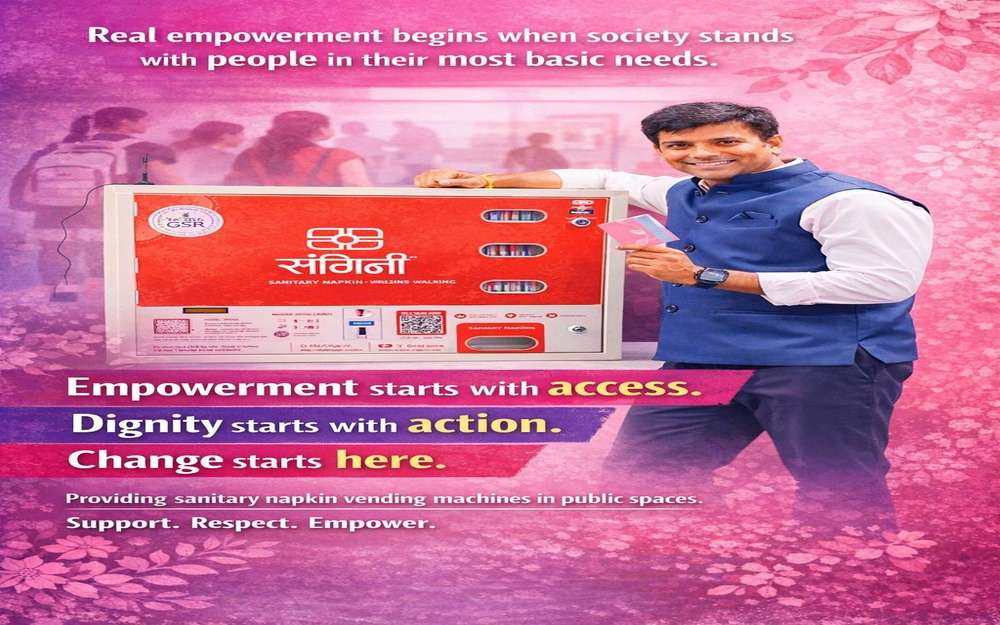
Vikash Ranjan, Tokyo
Every year, International Women’s Day reminds us to reflect on the progress made towards gender equality and the work that still lies ahead. While many initiatives focus on empowering women through education, employment, and leadership, one fundamental issue continues to affect millions of girls silently menstrual hygiene. Across many rural parts of India, menstruation is still surrounded by stigma, misinformation, and lack of access to basic hygiene products.
For thousands of adolescent girls, the absence of sanitary pads and proper disposal facilities often leads to school absenteeism during their menstrual cycle. In many cases, girls use unsafe alternatives, risking infections and compromising their dignity and health. Addressing this deeply rooted issue requires not just awareness among women, but collective participation from society—including men.
It was with this belief that NOBA GSR (Netarhat Old Boys’ Association – Global Social Responsibility) initiated the Sangini project, a grassroots effort aimed at promoting safe menstrual hygiene among school-going girls and women, particularly in rural and semi-urban areas of Bihar and Jharkhand.
What makes this initiative distinct is that it is largely driven by men who believe that menstrual dignity should not be treated as a “women-only issue,” but as a shared responsibility of society. Living and working in Tokyo, Japan, yet deeply connected to my roots in Bihar, I have often reflected on how members of the Indian diaspora can contribute meaningfully to their communities back home. Through NOBA GSR—a network of former students of the prestigious Netarhat School who are committed to social responsibility—we decided to address a challenge that is often overlooked but deeply impactful.
The Sangini initiative focuses on three critical aspects: accessibility, awareness, and dignity. The first step has been to improve access to menstrual hygiene products. Through partnerships with CSR organizations, local administrations, and community volunteers, Sangini has supported the installation of sanitary pad vending machines and environmentally friendly incinerators in schools. These facilities allow girls to access sanitary pads during school hours and dispose of them safely and discreetly. The second pillar of the initiative is awareness. Many girls in rural communities grow up with limited knowledge about menstrual health, often learning about it through myths or incomplete information.
Sangini conducts awareness sessions in schools to educate girls about menstrual hygiene, health practices, and the importance of maintaining cleanliness and confidence during their menstrual cycle. Equally important has been the engagement of teachers, community leaders, self-help groups, and local representatives. Their participation helps create an environment where menstruation is discussed openly and responsibly rather than treated as a taboo topic.
The results have been encouraging. Through Sangini, 700+ schools have been supported, enabling thousands of girls to gain access to sanitary hygiene facilities and awareness programs. More importantly, girls who previously hesitated to attend school during menstruation now feel more comfortable and confident continuing their education. But beyond infrastructure and numbers, the initiative represents something deeper—a shift in social mindset.
Menstrual health has historically been considered a private issue that women must manage on their own. However, initiatives like Sangini demonstrate that meaningful progress occurs when society acknowledges that women’s health and dignity are collective responsibilities. When men step forward with sensitivity, understanding, and action, they help normalize conversations that have long been silenced by stigma. International Women’s Day is therefore not just a celebration; it is also an opportunity to rethink our roles in building an equitable society. Empowerment does not come only through policies or speeches—it is reflected in the everyday actions that ensure girls and women can live with dignity, health, and confidence.
The Sangini initiative is a small step in that direction. Our vision is simple yet powerful: a future where no girl misses school because of menstruation, where sanitary hygiene is accessible to every adolescent girl, and where menstruation is recognized as a natural biological process rather than a social taboo. If this effort can inspire more communities, institutions, and individuals—especially men—to contribute towards women’s health and dignity, then the purpose of Sangini will truly be fulfilled. Because real empowerment happens not when women fight alone, but when society walks beside them.
