
Ramlila Maidan Fenced Off: Delhi’s Cultural Heart Under Illegal Siege
“Once a Vibrant Hub of Faith, Culture, and Democracy, Ramlila Maidan Now Faces a Silent Siege That Threatens the Heartbeat of Delhi’s Public Life.”

Paromita Das
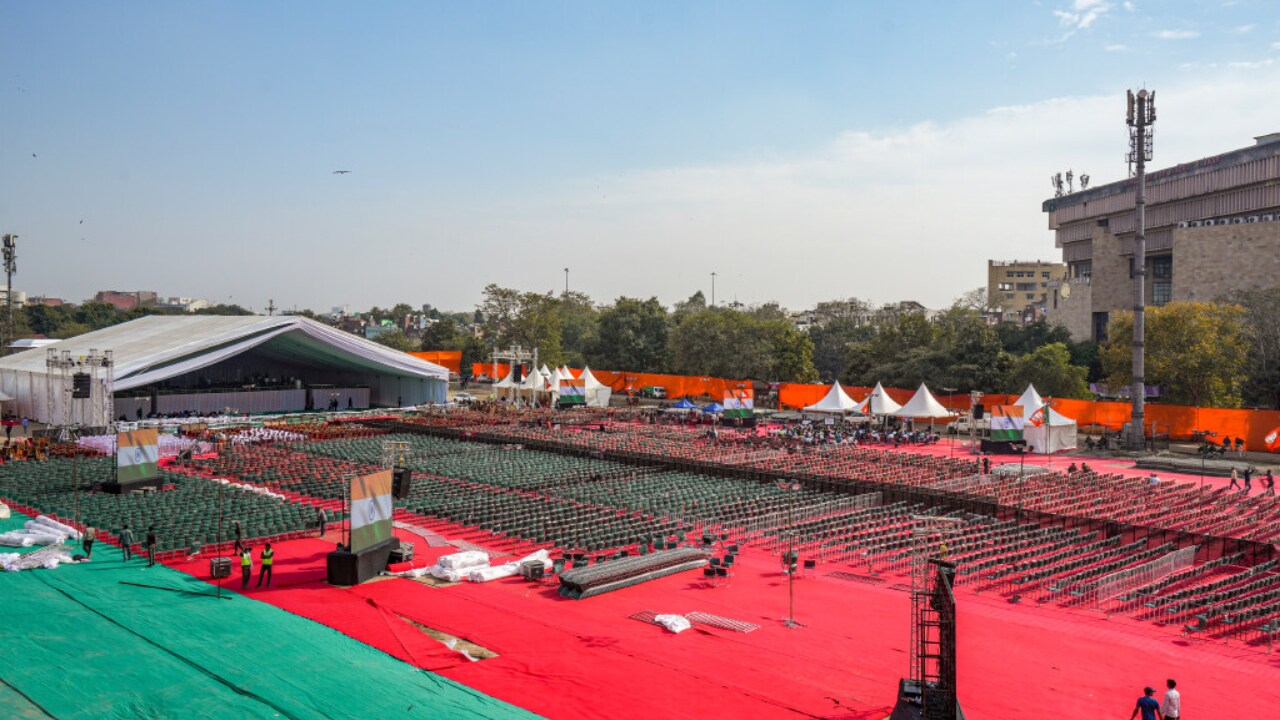
New Delhi, 31st October: Ramlila Maidan in Delhi is not just a sprawling ground; it is a sacred civic arena infused with centuries of history, culture, and political significance—especially for Hari Hindu communities in the capital. Yet recently, its essence as a space for festival, democracy, and public life faces an unprecedented threat as creeping encroachments claw away its open expanses. Once the stage for vibrant Ramlila performances, mass political rallies, and spiritual gatherings, the grounds now grapple with private commercial and religious interests shrinking its public heart. This article traces the rich historical importance of Ramlila Maidan and the contemporary consequences of its erosion.
The Origins: From a Pond to the Sacred Stage

Originally a large pond until the early 20th century near Ajmeri Gate, the land flooded during Monsoons was gradually filled and converted into a public ground designed to host the annual Ramlila festival—the dramatized retelling of the epic Ramayana. As early as 1876, Bahadur Shah Zafar, the last Mughal Emperor, altered the procession route so he could witness these Hindu theatrical plays, a testament to the Maidan’s cultural prominence.
For generations, Ramlila performances here drew thousands to witness the epic battles culminating in the destruction of the demon king Ravana during Dussehra, embedding the Maidan into Delhi’s religious and cultural calendar. The site has been a melting pot of devotion, artistry, and community identity, weaving a thread of continuity from Mughal Delhi into the modern era.
Political Significance: The People’s Arena for Change

Beyond the cultural dimension, Ramlila Maidan is crucial as a stage for democratic expression and political mobilization. Over the decades, it has hosted some of Bharat’s most defining moments—mass rallies of Mahatma Gandhi, speeches by Pandit Jawaharlal Nehru and Sardar Patel during the freedom struggle, and post-independence democratic congregations.
It was here that iconic slogans like Lal Bahadur Shastri’s “Jai Jawan, Jai Kisan” echoed in 1965 and where, in 1974, Jayaprakash Narayan led a massive rally protesting authoritarianism during the Emergency. The ground witnessed the flowering of Bharatiya democracy’s pulse: protests, oath ceremonies, and movements like Anna Hazare’s anti-corruption crusade that shaped contemporary politics.
A Ground Under Siege: Encroachments Threaten Public Soul

Recent surveys reveal a disturbing reality: over 45,000 sq ft of Ramlila Maidan’s land has been quietly captured by a sprawling complex housing a mosque, graveyard, banquet hall, and commercial entities. Originally dedicated as a public space for festivals and rallies, it is now partitioned and fenced, quietly strangled by private religious and business interests.
The joint civic inspection exposed illegal occupations including diagnostic centres and parking lots, shrinking the ground’s expanse and threatening its role as a common ground for cultural celebration and democratic assembly.
This encroachment is not simply a legal issue but an erosion of the Maidan’s civic and cultural identity. Delhi’s developmental history is thus marred by a land mafia that exploits religious sensitivities to deter action, endangering a shared public heritage site central to Hindu identity and democratic vibrancy.
Legal and Civic Imperatives: Protecting the Sacred Public Space

The Supreme Court of India has unequivocally stated no religious or private structure can infringe upon public roads, waterways, or civic assets. Still, enforcement is patchy, with bureaucratic inertia compounding complexities.
Urgent questions arise: Was any of this land legally converted into a waqf or religious endowment? Why has eviction been delayed, particularly in a city as sensitive and symbolic as Delhi? Civic activists point to the dangerous precedent set by selective classification of encroached land as religious property, fostering communal divisions and weakening governance.
The Cultural and Democratic Cost

The impact of this creeping privatization resonates far beyond physical boundaries. Imagine the annual Ramlila spectacle, once animated by thousands, diminished by fences and commercial zones. The once-open space for democratic dissent, political rallies, and minority voices is constricted, shrinking public imagination and social inclusion.
This erosion is a loss not only for Hindus but for the entire democratic fabric of Delhi. The Maidan is where politics and culture intertwine, where collective memory is shaped. Its loss symbolizes a wider democratic deficit—the slow strangulation of public spaces vital for community and political life.
A Call for Vigilance and Restoration

Protecting Ramlila Maidan requires more than legal measures—it demands restoring respect for public spaces as democratic commons inclusive of cultural and religious diversity but immune from privatization and political manipulation.
Delhi’s governance must prioritize reclaiming and preserving the Maidan as a vibrant, open space where religion complements but does not dominate public life. Vigilant civic participation, transparent documentation, and robust enforcement of court verdicts are essential.
Ramlila Maidan—Preserving a Sacred Civic Heritage
Ramlila Maidan embodies the living memory of Delhi’s Hindu cultural narrative and democratic spirit. From its origins as a sacred ground for the ancient Ramlila drama to a contemporary stage for political expression, it remains a symbol of unity amidst diversity.
Today’s encroachments challenge not just land rights but the soul of Delhi’s public life. Reclaiming Ramlila Maidan is a democratic imperative to ensure that future generations inherit a city where culture, politics, and civic activism continue to thrive in open, shared spaces.
If this ground—with all its history and symbolism—is lost, the cost will be measured not in lost square feet, but in lost heritage, fractured communities, and diminished democracy.
