
Rahul Gandhi’s Vote Theft Drama Backfires as Congress Faces Its Own Ghosts
“As Rahul Gandhi sharpens his attacks on the Election Commission and accuses the BJP of orchestrating “vote theft,” an inconvenient past return to haunt the Congress. From booth capturing to ballot paper manipulation, the party’s legacy of electoral malpractice resurfaces, raising questions about whether today’s allegations are a genuine fight for democracy or just political theatre gone wrong.”

Paromita Das
New Delhi, 18th August: If irony ever needed a brand ambassador in Bharatiya politics, the Indian National Congress under Rahul Gandhi would be the frontrunner. Once the party that defined Bharat’s destiny for decades, Congress today has been reduced to little more than a loud commentator in Bharat’s democracy. Since 2014, when Narendra Modi stormed to power, its strategy has looked painfully simple: oppose Modi at any cost — even if it means alienating voters, bending facts, or contradicting its own history.
Rahul Gandhi and the Obsession with “Vote Theft”

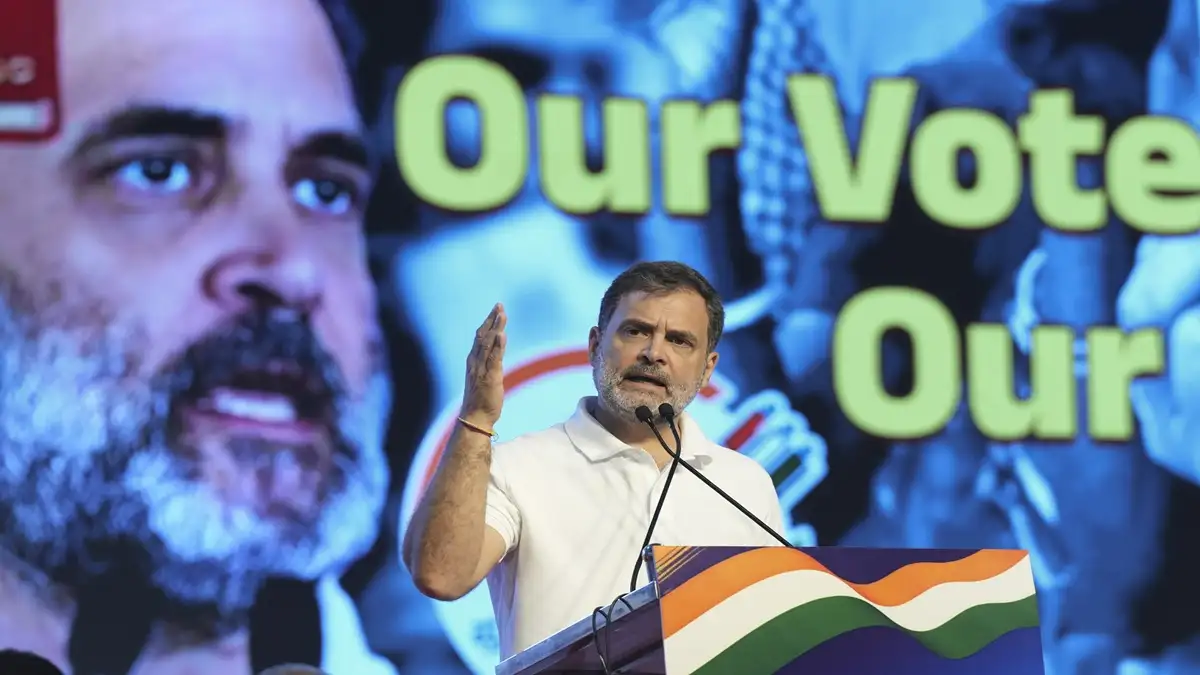
From the Parliament floor to social media, Rahul Gandhi has made “vote theft” his favorite war cry. He accuses the Election Commission of bias, claims voter rolls are manipulated, and insists election schedules are engineered to favor the BJP. Each defeat, in his narrative, is the outcome of a conspiracy. What he avoids admitting is this: Congress’s decline is less about Modi’s supposed manipulation and more about its own organizational decay and disconnection from ordinary people.
In Karnataka this July, Rahul declared he had “100% proof” of voter fraud. The Election Commission countered firmly, urging him to submit a sworn complaint. Gandhi brushed it aside as “nonsense,” repeating his storyline of victimhood. For casual observers, it may seem like righteous anger. For seasoned political watchers, however, it looks like a familiar pattern: Rahul isn’t just fighting Modi — he’s fighting his party’s own shadow.
When the Past Catches Up

Just as Rahul intensified his campaign against “vote chori,” the internet dug up an inconvenient truth. A video of Congress leader Sandeep Dikshit resurfaced, where he openly admitted how Congress leaders once engineered fake votes during ballot paper days — sometimes 100 per booth.
That revelation turned Rahul’s moral crusade into political comedy. His attempts to accuse Modi and the Election Commission of manipulation were undercut by his own party’s history of doing the same. It was like accusing your neighbor of theft while your own cupboards rattled with stolen goods.
A Party Shrinking in Relevance

Beneath this drama lies a harsher reality: Congress is steadily vanishing from the national map. In states like West Bengal and Uttar Pradesh, it is irrelevant. In Bihar, it survives only as a junior partner. Its cadre is depleted, its local leadership eroded, and its message uninspiring. Instead of addressing issues that matter — jobs, inflation, education, healthcare — the party clings to conspiracy theories.
The desperation to oppose Modi at all costs blinds it to how voters perceive this constant negativity. Every press conference about “rigging,” every hashtag on “vote theft,” chips away at Congress’s image as a credible alternative. Instead of fighting as a strong challenger, it looks like a sore loser.
Manipulation Disguised as Moral Politics

The Congress playbook today runs on two things: emotional manipulation and refusal to self-reflect. Crying “rigging” keeps its core supporters angry, but voters are not naïve. They remember the booth-capturing days. They know that Congress, too, has a long history of electoral manipulation.
Even within the opposition, there is frustration. Rahul’s fixation on vote theft distracts from building a broader vision or policy narrative. Instead of proposing solutions, he fuels suspicions. Instead of offering leadership, he amplifies noise.
The Boy Who Cried Wolf

There’s a famous fable about a boy who cried wolf so many times that when the real wolf appeared, no one believed him. Congress seems to be living that fable. By repeatedly overplaying the “vote theft” card, it risks losing credibility not for Modi or the Election Commission, but for itself.
Rahul Gandhi wants to be seen as a crusader against corruption and manipulation. But his party’s past, combined with resurfaced confessions like Dikshit’s, makes his narrative hollow. Citizens, meanwhile, want governance, jobs, and development — not endless conspiracy theories.
A Party Consumed by Its Own Shadow
At its core, the Congress problem is not Modi — it is itself. Rahul Gandhi’s “vote theft” obsession reveals more about his insecurities than about the BJP’s strength. Every time he points fingers outward, he reminds voters of his party’s inner contradictions.
In the end, democracy rewards credibility and vision, not theatrics. If Congress continues to cry wolf while ignoring its own decline, it won’t be Modi who buries it — it will be its own shadow that consumes it.
