
Rahul Gandhi vs Election Commission: Crying Wolf or Planning a Khaleda Zia-Style Boycott?
“As Rahul Gandhi sharpens his ‘vote chori’ allegations against the Election Commission, the controversy is raising deeper questions: Is the Congress leader merely deflecting from repeated defeats, or is he laying the groundwork for a Khaleda Zia-style political playbook that risks eroding trust in Bharat’s democratic institutions?”

Paromita Das
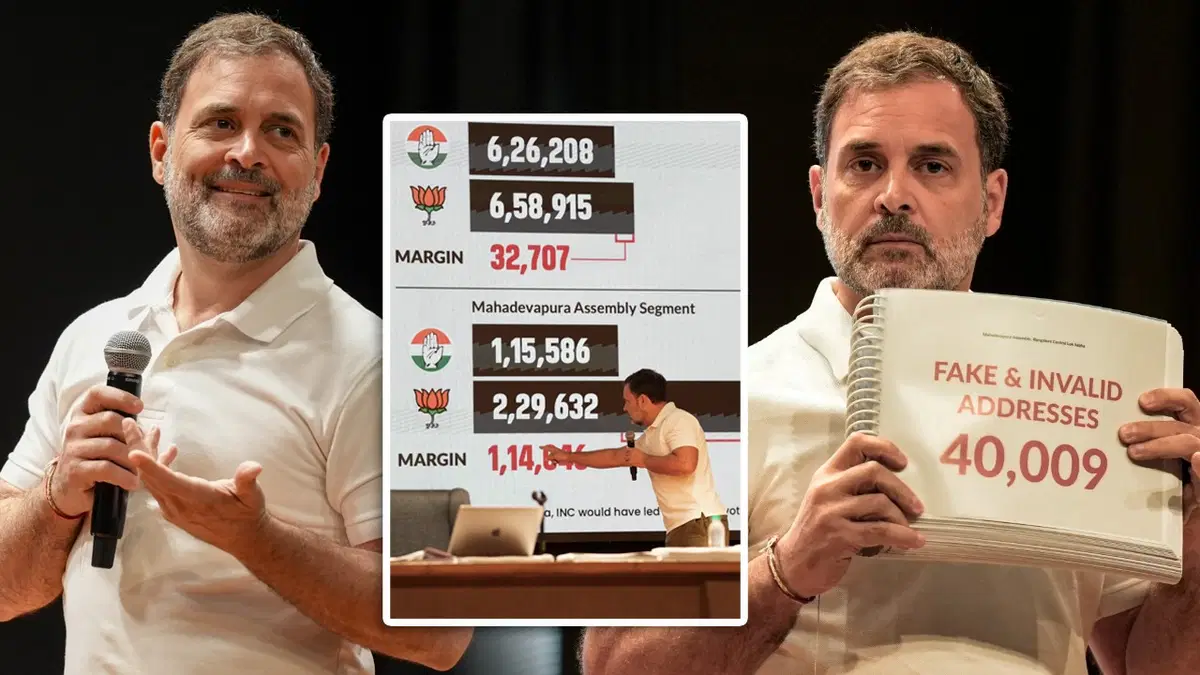
New Delhi, 19th August: In politics, when you cannot win the match, the easiest tactic is to blame the referee. For Rahul Gandhi and the Congress Party, this has become a recurring strategy. Over the past months, Gandhi has amplified his claims of “vote theft” and alleged collusion between the Election Commission of India (ECI) and the Bharatiya Janata Party (BJP). While opposition outrage has become a familiar sight in Bharatiya politics, the timing and tone of Gandhi’s rhetoric suggest something deeper: is Congress laying the groundwork for a Bangladesh-style election boycott?
The comparison may sound far-fetched, but the echoes are there. Just as Khaleda Zia of Bangladesh’s BNP undermined democratic institutions to delegitimize elections, Rahul Gandhi’s repeated allegations risk weakening trust in Bharat’s robust democratic processes.
The Rise of the ‘Vote Chori’ Narrative

Rahul Gandhi’s accusations range from faulty voter rolls and fake entries to alleged manipulation of EVMs and VVPATs. He insists that the ECI is working in tandem with the ruling party to disenfranchise voters. These claims, however, lack substantiated evidence.
On 11th August, the I.N.D.I. Alliance marched to the ECI headquarters in New Delhi, protesting the Special Intensive Revision (SIR) of Bihar’s electoral registers. Their argument? That the revision would lead to mass voter disenfranchisement. The reality, however, paints a different picture. The drive exposed nearly 65 lakh fake or non-existent voters—names of deceased individuals and people who no longer resided at listed addresses. Far from being disenfranchisement, the exercise was an overdue clean-up of the electoral system.
The ECI issued a strong rebuttal, demanding that Gandhi either present evidence under oath or retract his statements. But Gandhi doubled down, insisting that his parliamentary oath was evidence enough. Theatrics replaced substance, leaving ordinary voters skeptical of his motives.
Bihar, Bengal, and the Ghost of Fake Voters

The Bihar revelations have shaken the opposition. Reports from researchers at IIM earlier flagged the presence of 70 lakh fake voters in the state—an estimate now proven accurate. With similar drives planned in West Bengal, where nearly 1 crore excess voters may be listed, panic has spread among opposition parties.
For Mamata Banerjee’s Trinamool Congress, which has often been accused of relying on vote-bank politics, this scrutiny is alarming. The narrative of “vote chori” thus provides political cover to resist uncomfortable reforms.
But history is not on Congress’s side. Booth capturing, manipulation of voter rolls, and misuse of state machinery were once hallmarks of the same party now crying foul. Ironically, the ghost of its past haunts its present crusade.
The Foreign Echo Chamber

What has failed to resonate with ordinary Bharatiya voters has, however, found a voice in sections of the foreign media. Outlets like The New York Times and Al Jazeera have amplified Rahul Gandhi’s claims, framing them as evidence of Bharat’s democratic decline.
This external validation provides Gandhi with global soundbites, but it risks undermining the credibility of Bharatiya institutions internationally. More troubling is Gandhi’s habit of voicing these allegations on foreign soil—whether about Bharat’s democracy being “under threat” or insinuating bias in its electoral system. This mirrors strategies seen in “color revolutions,” where external narratives fuel internal unrest.
Learning from Bangladesh: The Khaleda Zia Parallel

The sharpest concern is whether Rahul Gandhi is drifting toward a Khaleda Zia-style playbook. In Bangladesh, BNP leader Khaleda Zia boycotted multiple elections, claiming that fair polls were impossible under Sheikh Hasina. The boycotts led to chaos, violent protests, and targeted attacks on minorities, leaving the democratic process in shambles.
Bharat is, of course, a very different polity. The Election Commission enjoys broad trust, and the Supreme Court has consistently upheld its credibility. Yet, by relentlessly questioning these institutions without offering evidence, Congress risks importing the same destabilizing strategy into Bharatiya politics.
A Manufactured Crisis or a Calculated Strategy?

Seen in isolation, Rahul Gandhi’s allegations might appear as routine political posturing. But when combined with Congress’s past failures, the timing of the SIR revelations, and its broader desperation to regain political relevance, the pattern is troubling.
There is reason to believe this is more than just rhetoric. By casting doubt on every election outcome, Congress is building a narrative of victimhood that could justify a boycott of future polls, or worse, street-level unrest. Theatrics that once seemed laughable could morph into something more dangerous if left unchecked.
Leadership or Noise?

At its core, the issue is not about EVMs or voter lists—it is about leadership. Instead of rebuilding its organizational base, reconnecting with grassroots voters, and offering a clear policy vision, Congress has chosen the shortcut of outrage.
Rahul Gandhi’s obsession with “vote theft” makes him appear less like a reformer and more like a politician clutching at straws. It is a narrative that may play well in soundbites but fails the test of substance. Worse, it risks eroding faith in Bharat’s institutions—the very foundation of its democracy.
A Road Bharat Cannot Afford to Walk
Bharat’s democracy is one of the most vibrant in the world, tested across decades of competitive elections. Its institutions are not perfect, but they command deep public trust. Rahul Gandhi’s “vote theft” campaign, devoid of evidence and full of theatrics, is less about defending democracy and more about masking his party’s decline.
If this strategy escalates into a Khaleda Zia-style boycott or agitation, it will not damage the BJP—it will damage Bharat’s democratic fabric. In the end, Rahul Gandhi risks becoming the boy who cried wolf too often. And when the real challenges to democracy emerge, the people may no longer listen.
Rahul Gandhi’s ‘vote chori’ narrative has reignited debate on Bharat’s electoral integrity. From allegations against the Election Commission to comparisons with Khaleda Zia’s boycott politics in Bangladesh, this analysis explores whether Congress is exposing flaws or manufacturing chaos in Bharatiya democracy.
