
Rahul Gandhi Demands Private School Quota
Congress Leader Pushes for OBC/Deprived Class Reservation in English Medium Schools.

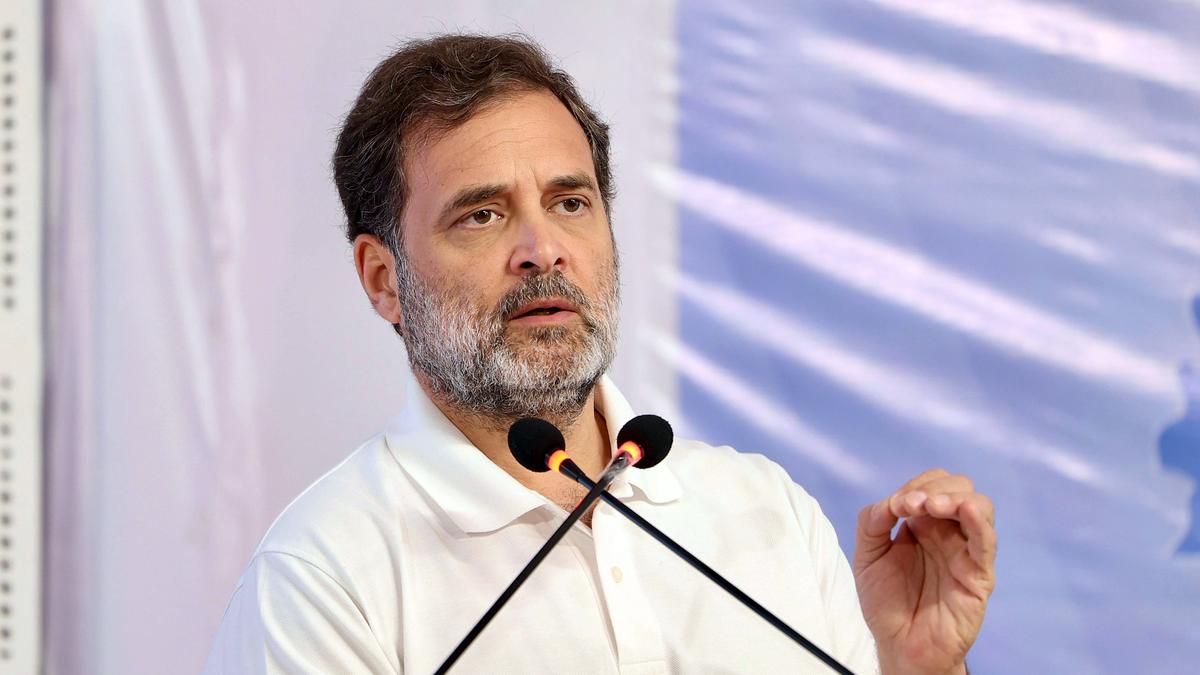
- Rahul Gandhi advocated for reservation in private English medium schools for OBC and deprived classes.
- He argues English education is crucial for social mobility and equal opportunity.
- The demand has sparked debate, with ruling party opposition and support from backward class organizations.
GG News Bureau
New Delhi, 27th July: Senior Congress leader and former president Rahul Gandhi has once again highlighted the issue of social justice, demanding the implementation of reservations for OBC and other deprived classes in English medium private schools. In his parliamentary statements and social media messages, Rahul Gandhi asserted that the discourse on equal opportunity in the country remains incomplete as long as education—especially English medium education—remains the exclusive domain of a select few.
Rahul Gandhi, a Member of Parliament and a successor to the Nehru-Gandhi family, has consistently raised issues concerning social inequality, unemployment, and disparities in educational opportunities. He contends that English education in the current era is an ‘economic power’ that dictates social mobility. Therefore, he believes that until deprived sections gain access to private English medium schools, social equality will remain an illusion.
Gandhi further stated that the government must ensure that the spirit of the Mandal Commission is not confined solely to government jobs but is also extended to fundamental sectors like education. He believes that private schools cannot be exempted by claiming autonomy; if they are registered under the Indian Constitution and operate in the public interest, they must fulfill their social responsibilities.
The ruling party has reacted sharply to this demand. Some BJP leaders have labeled it as ‘vote bank politics,’ arguing that such pressure on the private sector could negatively impact educational quality. They accused Rahul Gandhi of transforming every issue into reservation politics, potentially creating new societal divisions.
Conversely, several Dalit and backward class organizations have supported Rahul Gandhi’s initiative. They assert that this demand is not new but is gaining strong national traction for the first time. If implemented as policy, they believe it could mark a historic turning point for millions of underprivileged students.
Education experts remain divided on the issue; some view it as a crucial step towards social inclusion, while others consider it an interference in the private sector’s autonomy. However, one aspect is clear: Rahul Gandhi’s demand is not merely an expansion of a reservation policy but could mark a new chapter in the fight for social equality. The debate on education and equal opportunities in India now stands at a crucial juncture.
