
Rahul Gandhi’s Citizenship Under Scrutiny Again
Legal Pressure Mounts Over Alleged British Allegiance

GG News Bureau
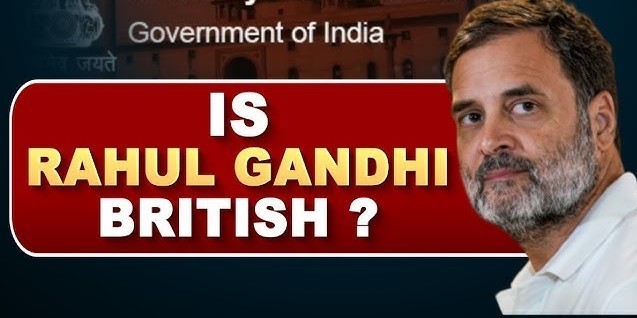
Allahabad, 12 July -In a politically sensitive turn of events, the Indian citizenship of Congress president Rahul Gandhi has again been brought under judicial scrutiny. A new review petition was submitted in the Allahabad High Court questioning the validity of his Indian citizenship in view of purported evidence establishing him as a British national. Although Rahul Gandhi has faced similar accusations previously, the timing and continuity of such judicial challenges are significant constitutional, political, and ethical issues.
Background: Controversy Strikes Again
The fresh petition, submitted by Karnataka-based petitioner SP Vignesh, argues that Rahul Gandhi is a British citizen and hence cannot be a Member of Parliament in India. The petitioner has allegedly produced a range of evidence, including official records and videos, to substantiate the argument that Rahul Gandhi had previously stated he was a British citizen, especially in commercial filings in the UK. Those accusations are not fresh — Subramanian Swamy had already raised similar issues in a petition filed before the Delhi High Court.
But the new turn is the review petition against an earlier rejection by the Lucknow bench of the Allahabad High Court. In May 2024, the Court had rejected the initial plea on the grounds of lack of tangible, admissible evidence and told the petitioner that they could seek other legal recourse. Vignesh now asserts to have better evidence and has requested the court to reconsider its earlier decision.
Key Legal Issues: Dual Citizenship Prohibited
The heart of the matter is the Indian Constitution’s stern denial of dual citizenship. Article 9 of the Constitution explicitly provides that whoever voluntarily acquires the citizenship of a foreign country ceases to be a citizen of India. India, in contrast to a number of Western democracies, never permits its citizens to be dual nationals.
If the fact that Rahul Gandhi was a British citizen at any time is established to be true, it would also legally render his Indian citizenship invalid. That would in turn make his MP status invalid, prevent him from contesting elections, and question the legitimacy of all his elections contested till date.
Evidence and Timing: Political or Legal?
The petitioner claims that he has provided email exchanges, business registration records, and communication with British officials suggesting that Rahul Gandhi might have even registered as a British national while being a director of a now-dissolved UK-based company, Backops Ltd. While previously such allegations had been dismissed because of a lack of tangible follow-up, here the petitioner is adamant that verified international documents have been submitted.
The Court had previously rejected the plea on the ground that the central government, in their reply, stated that any confirmation from the UK authorities would be of uncertain duration. But now the petitioner has presented documents he says he has collected on his own, circumventing red tape delays. If these documents are accepted, the case may turn dramatically.
But the timing of the petition cannot be overlooked. With the 2029 general election not too distant and Congress struggling to restore its credibility, a high-profile legal row over its de facto leader could be politicized. Whether this petition is bona fide legal activism or political vendetta by design is a matter of public and judicial perception.
Court’s Dilemma: To Hear or Not to Hear
Currently, the review petition has been presented to the High Court’s registry but not yet admitted for hearing. This is important — unless the court accepts the petition and determines the documents are strong enough, the issue might not go on for complete judicial examination.
If allowed in, this could have a long-term impact, ranging from issuing notices to the Ministry of Home Affairs, Election Commission, to even asking Rahul Gandhi to appear or file affidavits in court. The judiciary would also have to balance constitutional interpretation, natural justice, and public interest in dealing with this politically charged issue.
Broader Questions: National Identity and Transparency
At a deeper level, this case pertains to bigger issues of transparency among public representatives. Should a prominent national leader be found to have declared foreign nationality — albeit for corporate purposes alone — it needs to be established whether the said act amounts to voluntary acquisition of foreign citizenship, and hence contravening Indian law.
India’s legislators need to be held to the most stringent standards of responsibility, particularly as regards citizenship, loyalty, and legal compliance. If this matter is once again dismissed on procedural grounds without proper scrutiny of the new evidence presented, public faith in judicial supervision of political leaders may further weaken.For the Congress party, already beset by internal factional politics and low public esteem, this new scandal is a significant distraction. Rahul Gandhi is not only a Lok Sabha MP — he is the party’s face. Any legal disqualification or unfavorable observation by the court would inflict a serious blow to the party’s electoral fortunes and moral legitimacy.
On the other hand, if the Court ultimately rules in Gandhi’s favor, dismissing the allegations conclusively, the Congress may find an opportunity to reclaim some lost credibility, painting the entire episode as another example of “BJP-sponsored harassment”.
A Question of Law and Trust
Whether the case proceeds or gets dismissed again, the issue of Rahul Gandhi’s citizenship has now entered the public conscience. This isn’t just about one man’s nationality — it is about how seriously India takes its laws on citizenship, especially for those who aspire to lead the nation.
The coming weeks will tell. Will the Court receive the case for hearing? Will it request explanations from Rahul Gandhi and the Ministry of Home Affairs? Or will it go down as another unresolved, politically expedient controversy?
Until then, only one question remains: Can a person who once referred to himself as a British citizen ever fairly represent Indian democracy? Only time — and the law — will be able to say.
