
Putin-Trump 15 August Meeting on the Ukraine Divide ?
India's Strategic Balancing Act

Poonam Sharma
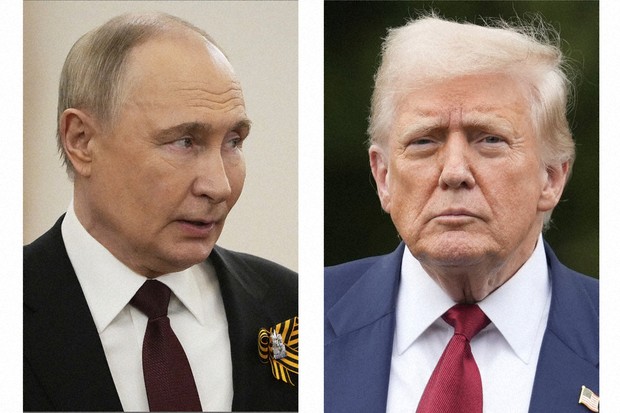
The scheduled meeting of Russian President Vladimir Putin and ex-U.S. President Donald Trump on 15 August is against the backdrop of one of the most polarizing geopolitical conflicts of the decade—the war in Ukraine. For Moscow, it’s a matter of solidifying battlefield victories; for Washington, a matter of limiting the spread of Russian influence. For India, this summit—focusing on the Ukraine divide—is at a sensitive juncture of defense, commerce, and diplomatic readjustment.
The Ukraine Divide at the Core
At the center of the Putin–Trump debate is what the future holds for Ukraine. Russia now has a strategic advantage, bolstered by its high-tech drone warfare, dominance over strategic mining areas, and constant military pressure. A complete Russian triumph would redraw Europe’s security landscape and send oil prices skyrocketing, an option that might profit Moscow economically but destabilize international markets.
Trump’s Ukraine policy has never taken the same course as mainstream American policy—tending more towards negotiation than long-term confrontation. The August summit may find him pressing for a freeze or territorial settlement, which today’s U.S. and European leaderships resist. The result would have immediate implications for sanctions regimes, energy markets, and weapons flows—affecting India’s strategic space.
India’s Defense Position Amid Global Flux
Even as the conflict in Ukraine conditions the global environment, India is preserving selective cooperation with the U.S. in strategic wireless technology, space, and artificial intelligence—sectors unlikely to be interfered with. New Delhi, however, is avoiding showpiece American defense purchases like the F-35 fighter or Striker systems, opting to scale up C-295 aircraft production, domestic carbine manufacturing, and an expanding indigenous defense industry.
This cautious strategy prevents India from becoming too reliant on any one supplier, particularly at a moment when Russia is still a key defense partner and the Ukraine rift has frayed its ties with the West.
Trade Diplomacy with U.S. Election Calculations
Trade negotiations with Washington are bogged down in U.S. domestic politics. Indian agrarian concessions—opening up to ethanol, fruits, and berries—are hedged to avoid contributing to Trump’s MAGA voter base on dairy, soy, corn, and wheat. It is a calculation within a larger diplomatic balancing act.
Meanwhile, China’s soybean import restrictions have added to U.S. farmers’ pressures, and Trump’s pattern of passive pressure followed by tariffs could soon hit India. If these disputes persist beyond September into December, New Delhi may respond with reciprocal trade measures, potentially influencing major defense or energy deals.
Domestic Economic Shielding
India’s coming festival season will fuel internal consumption, protecting the economy from outside shocks. Prime Minister Modi has prioritized change through the GST Council, bank liberalization, and private sector strengthening, but bureaucratic resistance is a challenge. Support for exporters—especially in industries such as diamonds and machinery—will be vital if foreign demand shifts because of geopolitical tensions.
The Risk of Escalation Beyond Ukraine
Indian strategists remain sensitive to the risk that an extended standoff over Ukraine can spill into other domains. A destabilized South Asia, and one in which Pakistan is involved, will add complexity to India’s security equation. The U.S. can try to drive arms sales within its geo-political game, but Russia’s grip on mineral resources and defense exports will continue to be a clincher for New Delhi.
Meeting Outcomes and Indian Strategy
If the meeting of Putin and Trump produces a negotiated agreement or a partial freeze in Ukraine, it will relax tensions around the world, stabilize oil prices, and create space for more dynamic diplomacy. If it widens the rift—firming Russia’s alignment with China and making U.S. positions more rigid—India will confront a more turbulent environment both for trade and security.
Either path, India’s strategy will be one of non-alignment with constructive engagement—maintaining technology collaboration with the U.S., defense and energy relationships with Russia, and growing trade with ASEAN and the Global South.
The August summit is not necessarily about India, but the Ukraine chasm at its center will define the strategic context in which New Delhi needs to make its most important choices over the next few months.
