

Poonam Sharma
The conflict in Ukraine has reached a sinister, more perilous stage. Missiles shook last week’s nighttime skies as Russian missile bombardments rained down on Ukrainian positions, including a Neptune missile defense system upon which Kyiv had relied as a deterrent. For Moscow, it was not only a tactical operation but a strategic one—neutralizing Ukraine’s offensive might while delivering a resounding message to the West: Russia will not be deterred.
At the same time, President Vladimir Putin has escalated his diplomatic offensive. After holding talks with Chinese President Xi Jinping and Indian Prime Minister Narendra Modi, Putin declared that NATO’s eastward expansion was the fundamental cause of the Ukraine conflict. In his words, sustainable peace is impossible unless the West addresses what Russia sees as existential security concerns.
Escalation on the Battlefield
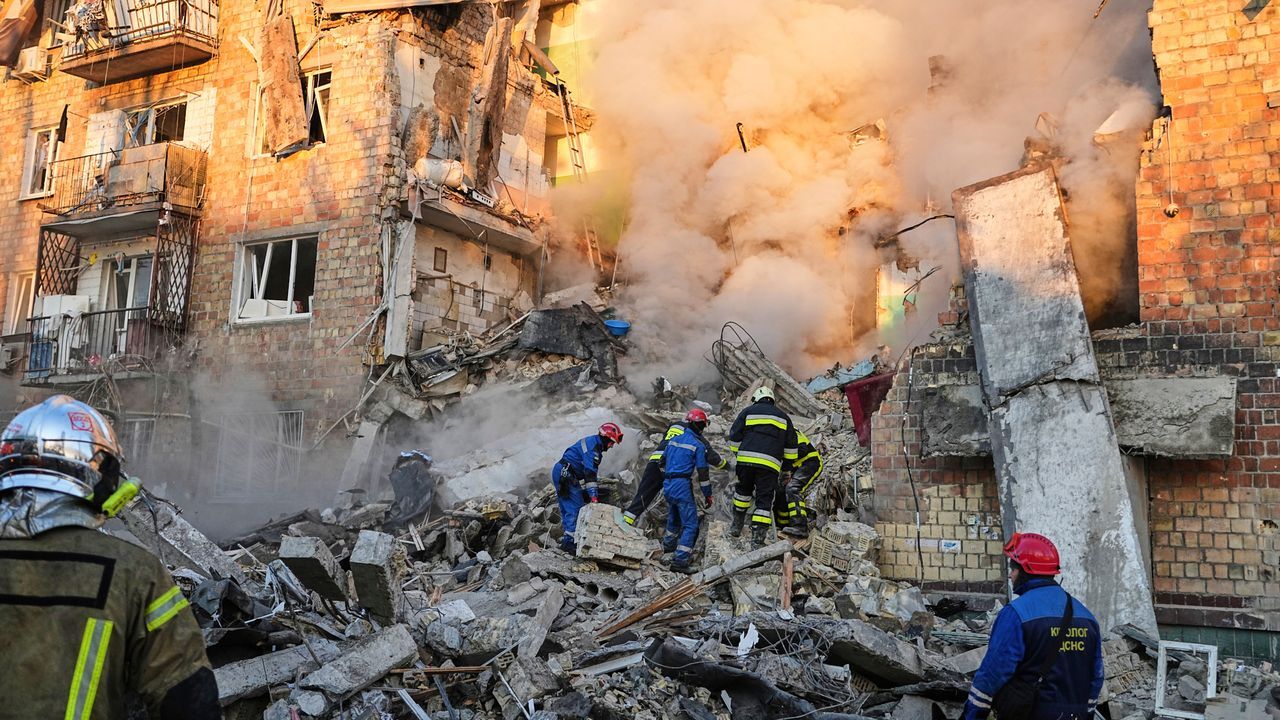
Over 1,200 Ukrainian soldiers were reportedly killed on one day of conflict, according to Russia’s Defense Ministry. Independent confirmation of such numbers is tricky, but the intensity of the barrage cannot be denied. Some 60,000 homes in the Odessa region alone were left without power after the flow of missile attacks.
The news was stark: Moscow is bent on wearing down Ukrainian resistance. Precision bombardment of key infrastructure demonstrates Russia’s turn to a war of attrition—one in which Ukraine’s mettle is tested not just on the front lines but also in its cities, power grids, and everyday civilian routines.
In the meantime, President Volodymyr Zelenskyy is racing against time to mobilize support. He is scheduled to sit down with European leaders in Paris on September 4, calling on them to up their game. But with Western capitals weary, fractured, and growing more risk-averse, Zelenskyy has the daunting challenge of persuading Europe to remain staunchly committed to Kyiv’s existence.
Putin’s Rebuke to NATO and the West
From the podium in Beijing, Putin launched one of his toughest criticisms yet of NATO expansion. “The West’s relentless efforts to engage Ukraine in NATO pose an immediate threat to Russia’s security,” he stated. His warning was addressed not only to Washington but also to Europe, which he claimed was relinquishing sovereignty by adhering too closely to U.S. security structures.
The timing of Russian President Putin’s gesture was deliberate. Only a week ago, seven European leaders, including France’s Emmanuel Macron, Italy’s Giorgia Meloni, and Britain’s Keir Starmer, met the United States’ former President Donald Trump in Washington. The meet, which Zelenskyy also attended, was seen in Moscow as largely a reflection of how Europe is once again anchoring its own destiny in America’s political currents.
Western Europe has lost sovereignty,” Putin asserted, comparing Russia’s determination to self-sufficiency with the reliance of Europe on Washington’s nuclear umbrella.
Propaganda or Perspective?
Detractors call the words of Putin old Cold War propaganda. Wolfgang Ischinger, the former German ambassador to NATO, labeled it a “classical Soviet narrative,” contending that Europe has volunteered to take its side with the U.S. since the late 1940s because of guarantees of security against Soviet expansion.
“Europeans have never lived under anything but the American nuclear umbrella,” he said, adding that European governments far from being bullied, consistently viewed alignment with Washington as a stabilizing influence.
However, Putin’s words find resonance in some areas of Europe where there is increasingly widespread distrust of NATO. Political parties between Budapest and Rome that are sympathetic to Moscow’s articulation of sovereignty over dependence are on the rise. The Kremlin is aware of this and continues to play on schisms in Europe by dividing between “unfriendly elites” and Western states’ “peoples.”
The Narrative of 2014
Another central pillar of Putin’s case is historical framing. He maintains that the war did not begin in 2022 but in 2014, when allegedly Kyiv had directed its military against civilians in the Donbas. By framing Russia’s actions as defensive, Putin hopes to undermine the West’s moral authority to provide weapons to Ukraine.
“Propaganda works,” he bluntly asserted, blaming Western media for brainwashing their people into thinking that Russia initiated the war. In his version, Crimea was always Russian, Donbas was shelled first, and Moscow is merely trying to defend its people.
This version of history will not be shared with international law or Western archives, but it is core to Russia’s internal legitimacy. It enables the Kremlin to present losses on the battlefield as essential, even just, against the backdrop of what it terms as Western aggression.
Relations with the U.S.: Darkness and Light
Interestingly, amidst the rhetoric, Putin left Washington a door open. Admitting that Russia–U.S. relations are historically at a low, he nevertheless hinted “light at the end of the tunnel”—and tied it directly to Donald Trump.
Under President Joe Biden, Moscow has endured unrelenting sanctions, NATO deployments, and increasing U.S. military aid to Ukraine. But Putin seems to reckon that a Trump comeback might change the calculus. In his worldview, Europe is a vassal, but America—when led correctly—is still a possible ally.
To the Kremlin, Trump embodies unpredictability, but also possibility. His skepticism of NATO, transactional approach to alliances, and “America First” focus might embolden European weakness and create openings for Russia to reassert itself.
Europe at a Crossroads
Europe is in a delicate position today. On the one hand, it is under increasing pressure from Zelenskyy to intensify assistance—financial, military, and political. On the other, it is confronted with Russia’s relentless effort to portray European leaders as Washington’s puppeteers, out of touch with their own citizens.
With winter looming, the fight for Ukraine is no longer being fought in trenches and missile facilities. It’s also being fought in European legislatures, media outlets, and across the Atlantic. Putin’s attacks in Odessa and his rhetoric in Beijing are two sides of the same coin: a war fought with both guns and words.
A Darker Phase
The conflict in Ukraine is dragging into what most analysts refer to as its “darker phase.” Russian missiles keep pounding cities, cutting off electricity and spreading terror. Ukrainian troops battle relentlessly to maintain ground as Europe grapples with cohesion.
For Putin, this is not just about Ukraine but about remaking the post-Cold War system. His assertion that Europe has lost sovereignty is propaganda, perhaps, but strikes a chord in societies wondering about reliance on US security guarantees.
Ultimately, the true fight might not be for Donetsk or Odessa, but for Europe’s soul—whether it stays firmly anchored in the transatlantic fold or breaks under the pressure from Moscow.
