
Public Participation Key in Disaster Management Training
National Service Bharti and JNU's Specialized Disaster Research Center Organize Two-Day Residential Program.

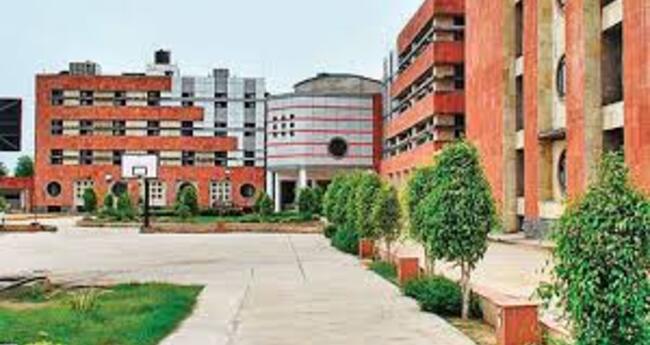
- JNU launched a two-day “Disaster Management Training Program” with Rashtriya Seva Bharti.
- Speakers emphasized public participation in disaster management and its link to national security.
- The training aims to enhance community preparedness and response to various disaster scenarios.
GG News Bureau
New Delhi, 26th July: A two-day residential “Disaster Management Training Program” commenced today, Saturday, July 26, 2025, at Jawaharlal Nehru University (JNU), Delhi. The program, a joint initiative of Rashtriya Seva Bharti and JNU’s Specialized Disaster Research Center, was inaugurated with a lamp lighting ceremony and Bharat Mata Pujan at 10 AM.
Disaster Management Linked to National Security
In his introductory speech, Shri Ramesh Agarwal, President of Seva Bharti (Delhi Province), highlighted Rashtriya Seva Bharti’s extensive network, comprising over 800 partner organizations across 45 provinces, conducting more than 1.38 lakh initiatives nationwide. Lieutenant General (Retd.) Syed Ata Hasnain, Member of NDMA, the program’s inaugurator, connected disaster management to national security, citing examples from Bangladesh, Pakistan, and African nations. He elaborated on the 10-point agenda declared by the Prime Minister, emphasizing awareness and various related topics.
Importance of Government and Public Participation
Chief Guest IAS Sanjeev Jindal, Additional Secretary for Disaster Management at the Ministry of Home Affairs, Government of India, provided insights into various types of disasters and the importance of awareness. He specifically mentioned apps like ‘Sachet’ and ‘Damini’. Mr. Jindal stressed that disaster management is not solely the government’s responsibility but requires crucial public participation.
Shri Shikesh, Chairperson of the Specialized Disaster Research Center, informed attendees that JNU has initiated a Disaster Club and introduced a disaster management curriculum at the undergraduate level. The keynote speaker, Shri Sudhir Kumar, Organizational Secretary of Rashtriya Seva Bharti, detailed the eight types of divine and human-made disasters described in Chanakya’s Arthashastra. He cited Japan’s example of modern technology combined with public participation, suggesting that disaster education should begin from Class 6, with “disaster captains” in classrooms. He also proposed campaigns like ‘One Family, One Disaster-Aware Volunteer’.
Attendees and Training Objectives
The program saw the presence of notable figures including Joint General Secretary Shri Vijay Puranik, Assistant Professor Dr. Deep Narayan Pandey from the Specialized Disaster Center, Shri Ram Kumar (Minister), Executive Officer Shri Vikas Nam Joshi, Treasurer Shri Anil Maheshwari, and Shri Krishna Kumar, along with other workers from Rashtriya Seva Bharti and Seva Bharti Delhi. Additionally, 80 disaster management coordinators and co-coordinators from 22 states across the country were in attendance.
This training program focuses on the concept of disaster management and social initiatives, including practical demonstrations and exercises by the NDRF. It also covers managing stress, panic, and trauma in disaster-affected communities, precautions during crowds, stampedes, and riots, and the formation and training of disaster management teams.
About Rashtriya Seva Bharti
Rashtriya Seva Bharti is a volunteer organization founded in 2003, operating on the principle of “Nar Seva Narayan Seva” (Service to humanity is service to God). It acts as an apex body coordinating over 800 partner organizations across 45 provinces in India, actively engaging in various social initiatives. The organization aims to uplift and empower socially and economically weaker sections, striving to create a harmonious, educated, and civilized society with national spirit and dedicated volunteers.
Rashtriya Seva Bharti provides a national platform for volunteer organizations, building their capacity through awareness, cooperation, training, research and development, and disaster management. Currently, over 44,121 service activities are ongoing under its guidance. Beyond regular selfless service, its volunteers swiftly respond to natural or human-made disasters across India, mobilizing resources for relief efforts.
The organization is committed to regularly conducting “Disaster Management Training Programs.” Three such programs have been held so far in Mumbai, Bhubaneswar, and Ghaziabad, with additional training sessions conducted in various provinces.
