
PSLV Roars Back with EOS-N1 Mission
ISRO’s workhorse rocket lifts off successfully at 10:18 am from Sriharikota, marking a major comeback

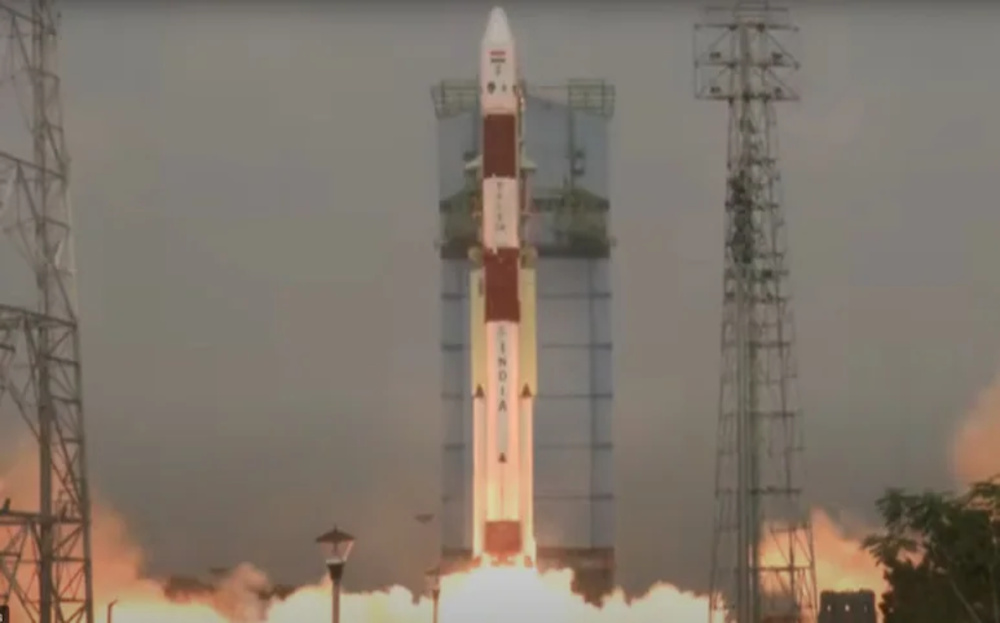
- PSLV-C62/EOS-N1 is ISRO’s 64th PSLV mission
- 16 satellites launched, including strategic imaging payload
- Hyderabad-based Dhruva Space contributes seven satellites
- Mission restores confidence after May 2025 setback
GG News Bureau
Sriharikota, 12th Jan: India’s trusted workhorse rocket, the Polar Satellite Launch Vehicle (PSLV), staged a successful comeback on Sunday with the launch of PSLV-C62/EOS-N1 from the Satish Dhawan Space Centre, Sriharikota, at 10:18 am, putting behind it the setback faced in May 2025.
The 64th PSLV mission carried the Earth Observation Satellite EOS-N1 along with 15 co-passenger satellites. EOS-N1 and 14 co-passengers are planned to be injected into a Sun Synchronous Orbit, while the Kestrel Initial Demonstrator (KID) is set for a re-entry trajectory.
The Anvesha satellite on board is designed to deliver advanced imaging capabilities, enabling precise mapping of strategic and sensitive locations. Beyond the primary payload, the mission marked a major milestone for India’s private space sector. For the first time, a single Indian private company — Hyderabad-based Dhruva Space — contributed seven satellites to a PSLV mission.
Following lift-off, the mission initially deployed an Earth Observation Satellite built by Thailand and the United Kingdom, followed by 13 other co-passenger satellites into sun-synchronous orbit about 17 minutes after launch.
Over two hours after lift-off, the fourth stage of the rocket (PS4) is scheduled to separate to demonstrate the Kestrel Initial Technology Demonstrator (KID) capsule, a 25-kg payload developed by a Spanish start-up. ISRO scientists will restart the PS4 stage to de-boost and place it on a re-entry trajectory, after which the KID capsule will separate.
Both the PS4 stage and the KID capsule are expected to re-enter the Earth’s atmosphere and splash down in the South Pacific Ocean.
The previous PSLV mission in May 2025 had failed due to an anomaly in the rocket’s third stage. The success of PSLV-C62 is therefore seen as crucial in restoring confidence in India’s most reliable launch vehicle and reinforcing ISRO’s standing as a global space launch service provider.
The mission also highlights a paradigm shift in India’s space ecosystem, with private players like Dhruva Space emerging as key partners alongside ISRO, offering end-to-end satellite solutions and strengthening India’s commercial space footprint.
