

Paromita Das
GG News Bureau
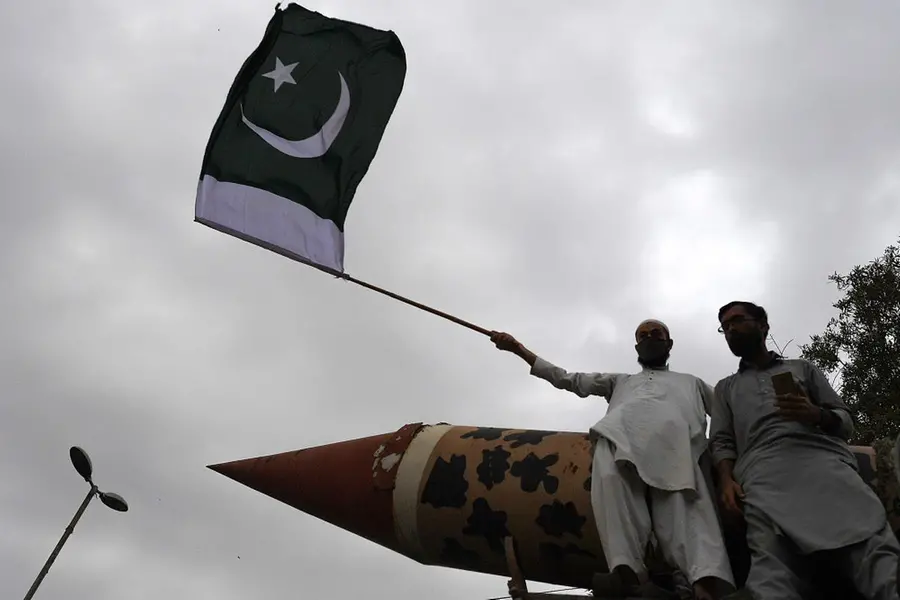
New Delhi, 3rd June: In the contemporary narrative of national strength, symbols of hard power—missiles, military parades, and nuclear tests—continue to captivate public imagination. For Pakistan, May 28, 1998, remains one of the most symbolic days in its history. But two decades later, the legacy of that moment is far more complex than what was once proudly celebrated. What was initially seen as a decisive stride into the exclusive club of nuclear powers now poses difficult questions about national priorities, missed opportunities, and the price of prestige.
The detonation of nuclear devices in the Chagai Hills of Balochistan was framed as a triumph of science and sovereignty. It was Pakistan’s pointed response to Bharat’s tests weeks earlier, and for many, it cemented a perception of strategic parity with its larger neighbor. The image of mushroom clouds above the desert was burned into the nation’s psyche as a display of deterrence and dignity. Yet, as the decades since have shown, strategic parity did not bring economic strength. The nuclear weapons remained, but the economy faltered.
A Costly Pursuit of Security
Pakistan’s nuclear arsenal today is estimated to comprise over 160 warheads, making it one of the fastest-growing stockpiles in the world. But the financial cost of maintaining such a deterrent has placed a heavy burden on a fragile economy. Although precise figures are closely guarded, experts suggest the cumulative cost of the nuclear program exceeds $20 billion, potentially reaching $25 billion when auxiliary infrastructure is included. These expenses cover not only weaponization but also command systems, research institutes, and delivery mechanisms—such as ballistic missile programs.
Simultaneously, Pakistan’s annual defense budget continues to eclipse critical public sectors. In the 2024–25 federal budget, defense spending accounted for nearly 17% of total government expenditure. By contrast, combined funding for health and education received less than half of that share. This imbalance is not new. It has persisted across governments—both civilian and military—and reflects a national priority that places strategic assets over societal well-being.
The implications are stark. Pakistan’s public healthcare remains chronically underfunded, with less than 1.2% of GDP allocated to it. In education, over 22 million children remain out of school, and dropout rates in rural areas are climbing. Major infrastructure projects, including those related to clean water, urban transport, and power generation, struggle for consistent funding. In a country of over 240 million people, the dividends of defense spending have not translated into broader human development.
A Nation in Fiscal Distress
Beyond military expenditure, Pakistan’s economic trajectory paints a grim picture. The external debt burden now exceeds $130 billion, and foreign exchange reserves hover near critical thresholds. Since independence, Pakistan has entered into 23 loan programs with the International Monetary Fund (IMF)—the most recent one being signed in 2024. These bailouts, often presented as economic lifelines, come with strict conditions: cuts to subsidies, hikes in taxes, and the curtailing of public sector investment.
While these measures may satisfy creditors, they squeeze the average Pakistani. Prices of essential goods have skyrocketed. Food inflation remains high, the national currency continues to depreciate, and employment opportunities are shrinking. Meanwhile, military allocations remain untouched, considered sacrosanct even amid austerity.
Pakistan ranks 161 out of 191 countries on the Human Development Index, highlighting the depth of structural challenges. Poverty rates are climbing, with nearly 40% of the population vulnerable to economic shocks. Income inequality is rising, and cities are growing without planned infrastructure or environmental resilience. These are not just indicators of economic strain—they are symptoms of a national model in need of overhaul.
Strategic Comfort, Structural Fragility
There is little doubt that Pakistan’s nuclear arsenal serves a geopolitical function. It has arguably deterred full-scale conflict with Bharat since 1998 and has given Islamabad a strategic voice in international forums. Yet, it has also created an illusion—one of invulnerability that discourages introspection and shields poor governance from accountability.
Instead of being a shield that enables internal development, nuclear capability has sometimes enabled complacency. Political elites have often pointed to external threats to justify internal inefficiencies. Civil-military relations remain skewed in favor of military influence, especially in economic decision-making. From real estate to manufacturing, military-linked businesses exert outsized control over key sectors, further distorting competition and innovation.
In the absence of deep structural reforms, the nuclear program offers prestige without prosperity. It is a sword Pakistan is proud to brandish—but one that has also cut into its capacity to address long-term socio-economic challenges.
Rewriting the National Equation
The time has come for Pakistan to rebalance its national priorities. Security cannot be defined solely through the lens of military might. Economic resilience, social mobility, and education are the true bedrocks of sovereignty in the modern world. A shift in focus is not only desirable—it is essential.
To begin with, expanding the tax base is critical. Pakistan’s tax-to-GDP ratio remains one of the lowest globally, hovering around 9.2%. Defense spending must be subject to parliamentary scrutiny, and transparency should guide all aspects of budgetary allocations. Most importantly, the conversation must shift from short-term security to long-term human development. Without education, healthcare, and energy security, no amount of nuclear preparedness can protect the population from economic despair.
From Deterrence to Development
Pakistan’s entry into the nuclear club was meant to herald a new era of strength and self-respect. In some ways, it achieved that goal. But over time, the celebration has given way to a sobering realization: nuclear capability is not a substitute for economic planning or social justice. As the country marks 27 years since the Chagai tests, it must ask itself what kind of strength it truly seeks—symbolic or sustainable.
Real security lies not in arsenals buried beneath mountains, but in schools filled with children, hospitals open to all, and an economy capable of standing on its own. Only by shifting its gaze from missiles to minds can Pakistan forge a future worthy of its potential.
