

By Anjali Sharma
WASHINGTON – US President Donald Trump on Wednesday arrived in South Korea ahead of high-stakes summits with President Lee Jae Myung and Chinese President Xi Jinping on the occasion of an Asia-Pacific Economic Cooperation summit in the southeastern city of Gyeongju.
Trump is on his first Asia trip of his second term, came to South Korea the US ally nation focused on securing deals in trade and investment after months of market turmoil and tensions over his threats to impose sweeping tariffs on imported goods.
Trump landed at Gimhae International Airport in the southeastern city of Busan.
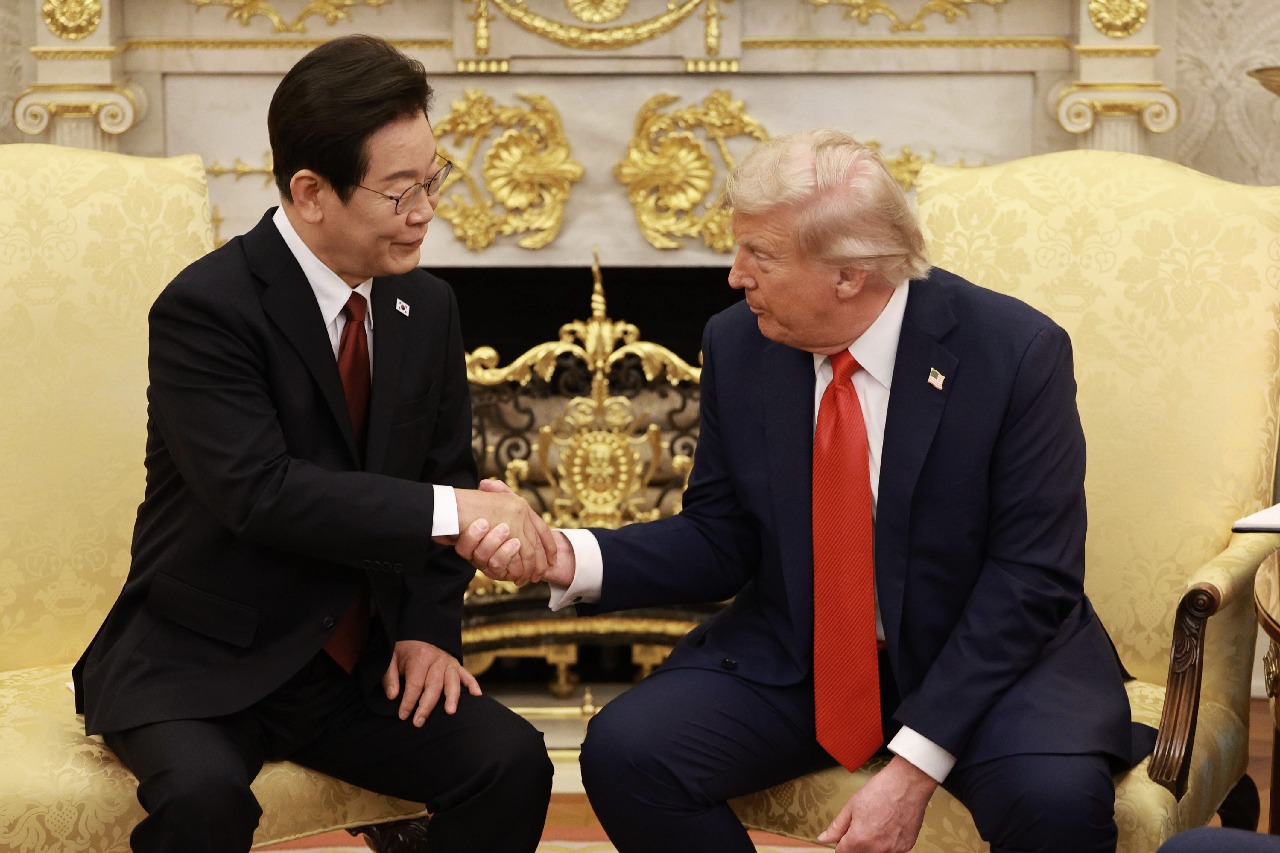
He wiill meet Lee in Gyeongju later Wednesday for their second summit in about two months.
Both sides will be able to finalize a framework trade deal reached in July remains a key point of interest as Seoul and Washington have put out differing assessments of where their negotiations stand.
The framework deal called for South Korea to invest US$350 billion in the US in exchange for Washington’s lowering of “reciprocal” tariffs from 25 per cent to 15 per cent, but the agreement has yet to take effect due to gaps over details of the investment package.
Trump said earlier that a trade deal with South Korea was “pretty close to being finalized.”
In a Bloomberg interview conducted the same day, however, Lee struck a different tone, media reported.
“The method of investment, the amount of investment, the timeline and how we will share the losses and divide the dividends all of these remain sticking points,” he said.
Trump’s two-day state visit to South Korea has drawn keen attention for reasons that extend beyond issues concerning just Seoul and Washington.
His highly anticipated summit with Xi on Thursday their first meeting since 2019 will be watched closely for any breakthroughs in the escalating US-China trade war.
China tightened export controls on rare earths, which are critical for the production of high-tech military and commercial products, including fighter jets and robots, while Trump responded with a threat to impose an additional 100 percent tariff on Chinese goods starting November 1.
The world’s two largest economies have other trade issues to resolve as well.
China stopped buying soybeans from the U.S. this year, potentially hurting American farmers that are a key Trump voter base. The US has separately used tariffs to pressure China to stop the flow of fentanyl.
Trump has expressed optimism about his upcoming meeting with Xi.
“When we leave South Korea, it could be wrong, but I think we’ll end up with a very strong trade deal,” he said last week. “Both of us will be happy.”
Trump’s visit to South Korea has touched off talk of a potential meeting with North Korean leader Kim Jong-un.
Both leaders met three times during Trump’s first term — in Singapore in June 2018, in Vietnam in February 2019 and in the inter-Korean truce village of Panmunjom in June that year.
The meetings were to yield an agreement on dismantling North Korea’s nuclear weapons program in exchange for US concessions, including sanctions relief, but broke down over differences on how to match their steps.
Trump has expressed his openness to reengaging Kim, even if it means extending his stay in South Korea.
The North has yet to respond to the Trump overtures.
