
When Political Speech Becomes Strategic Damage
The Cost of Undermining India’s Armed Forces

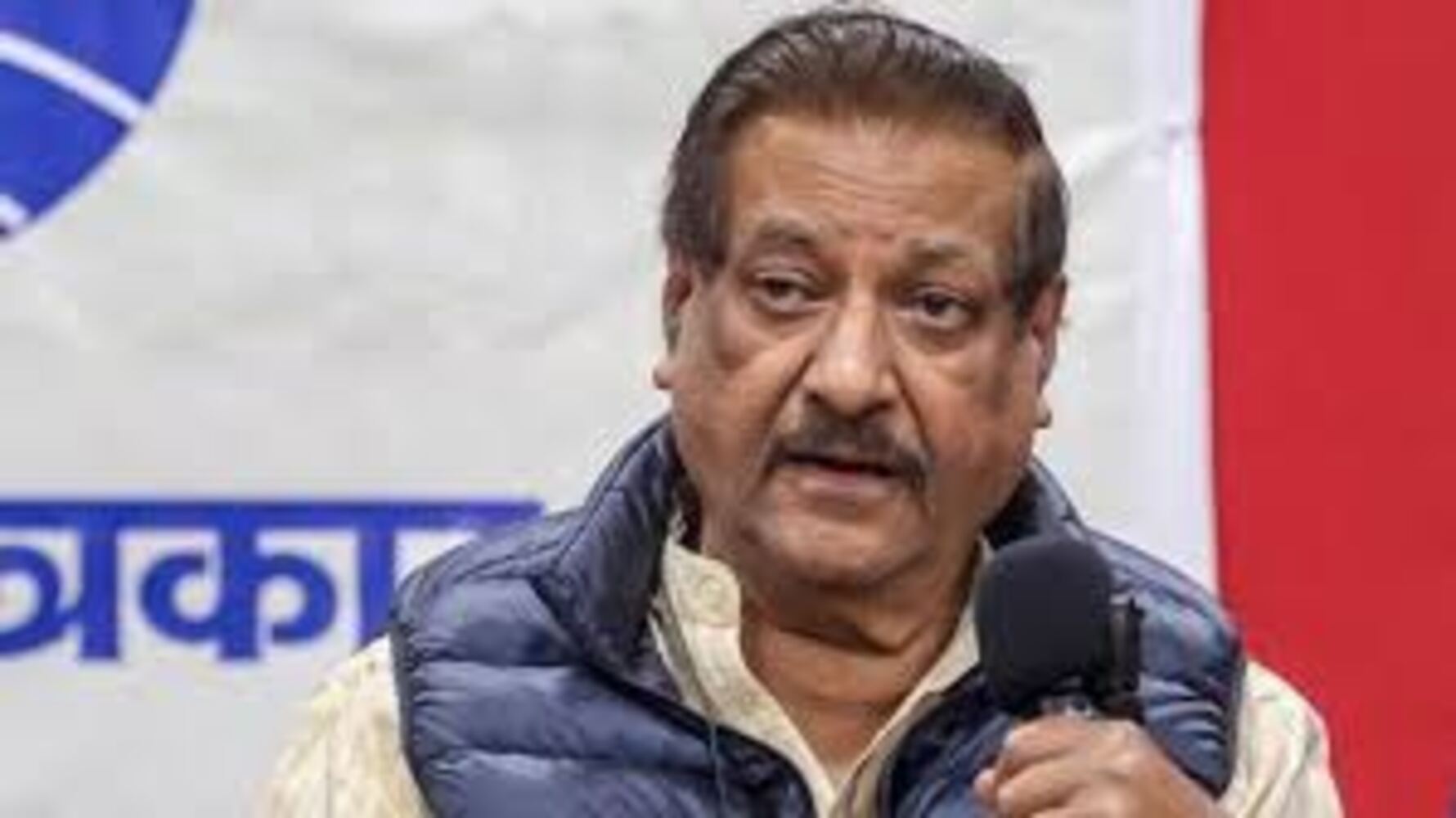
Poonam Sharma
In moments of geopolitical tension, words can become weapons. When those words come from individuals who have held constitutional office, their impact travels far beyond television studios and social media timelines. Recent remarks by a former Chief Minister Prithvi Raj Chauhan —aired and amplified by Pakistani media—claiming that the Indian Army “lost on the first day” of a military operation are not merely controversial opinions. They represent a deeper and more troubling pattern in India’s political discourse, one with serious national security implications.
This is not about partisan disagreement. It is about the responsibility that comes with power, memory, and history.
When Domestic Politics Feeds Foreign Propaganda
Pakistan’s information warfare strategy has long relied on exploiting internal Indian dissent. Statements made inside India—especially by senior political figures—are selectively picked up, edited, and projected globally to build a narrative of Indian weakness. When a former Chief Minister of a major Indian state appears on Pakistani channels or provides soundbites that question India’s military performance, it becomes instant diplomatic ammunition.
At international forums, including the United Nations, such remarks are cited as “Indian admissions.” The distinction between criticism and collaboration collapses. What may be framed domestically as political commentary becomes, internationally, strategic self-harm.
The issue is not the right to question the government. That right is fundamental in a democracy. The issue is whether questioning the morale, credibility, and battlefield performance of the armed forces—without evidence and without institutional backing—crosses a constitutional and ethical line.
Civilian Control Does Not Mean Civilian Contempt
India’s Constitution places the armed forces under civilian control, not civilian contempt. Article 19 guarantees freedom of speech, but it is not absolute. Reasonable restrictions exist in the interests of sovereignty, security of the state, and public order. Democracies across the world—whether the United States, France, or the United Kingdom—maintain unwritten but strictly enforced conventions when it comes to military conduct during or after operations.
Professional armed forces do not fight narrative battles alone. They rely on political leadership to shield them from reckless commentary that can undermine morale and embolden adversaries. When leaders blur this line, they weaken the very institutions that protect the nation.
A Historical Pattern of Strategic Indifference
The controversy does not exist in isolation. It echoes a long historical pattern where military realities were subordinated to political idealism or expediency.
Jawaharlal Nehru’s early belief that India did not require a strong standing army, rooted in post-colonial moral idealism, proved costly during the 1962 conflict. Despite brave soldiers, political miscalculation led to national humiliation. The lesson should have been permanent.
In 1971, India achieved a decisive military victory against Pakistan, leading to the creation of Bangladesh. Yet the Shimla Agreement that followed is still debated for squandering strategic leverage. Over 90,000 Pakistani prisoners of war were released. Indian pilots captured by Pakistan did not all return. Military pensions were cut soon after the war. Victory on the battlefield was not matched by institutional respect afterward.
These decisions were not tactical errors by soldiers; they were political choices made far from the front lines.
The Moral Weight of Sacrifice
Nothing exposes the irresponsibility of casual military commentary more than the memory of fallen soldiers. In 2013, Lance Naik Hemraj was brutally beheaded by Pakistani troops along the Line of Control. The act violated every norm of professional warfare. Videos were circulated. Yet even then, sporting ties continued, diplomatic restraint was preached, and accountability was avoided.
For soldiers and their families, statements suggesting that the army “lost” without context or evidence reopen wounds that never fully heal. Military operations are complex, phased, classified, and strategic. Judging them through television debates or political rivalries insults not only the institution but the blood that sustains it.
Democracy, Dissent, and Discipline
A healthy democracy encourages dissent. But dissent must be informed, responsible, and nationally conscious. Democracies do not collapse because of criticism; they collapse because of cynicism weaponized against the state itself.
When political leaders appear to echo narratives that enemy states actively promote, the line between dissent and damage blurs. This is especially dangerous in an era where hybrid warfare—combining military pressure, cyber operations, and information manipulation—is the norm.
Pakistan may lose wars on the battlefield, but it invests heavily in winning perception wars. It does not matter to its propagandists whether a statement is true; it matters that it is said by an Indian voice.
Bangladesh, Memory, and Strategic Amnesia
The recent surge of anti-India sentiment in Bangladesh also serves as a cautionary tale. India played a decisive role in Bangladesh’s liberation, yet decades later, that history is fading—or being rewritten. Political overreliance on individual leaders, corruption fatigue, demographic shifts, and foreign interference have all contributed to resentment.
This is what happens when history is not defended, documented, and communicated. Narratives do not vanish; they are replaced.
Responsibility Beyond Party Lines
Criticizing the government is legitimate. Criticizing the armed forces in ways that empower hostile states is not. The Indian Army does not belong to any party, ideology, or election cycle. It belongs to the Constitution and the people.
Political leaders—past or present—must recognize that their words carry institutional weight long after microphones are switched off. National security is not strengthened by silence alone, but it is certainly weakened by reckless speech.
In a democracy as large and diverse as India, unity does not mean uniformity. It means knowing when debate must end and responsibility must begin. The soldier on the border cannot clarify soundbites on international television. That burden falls on those who speak in the name of the nation.
And history, as always, will remember who spoke wisely—and who spoke carelessly.
