
PM’s Address through the Lens of Needonomics: GST Reforms and Atmanirbhar Bharat


Prof. Madan Mohan Goel, Proponent Needonomics & Former Vice-Chancellor
Prime Minister Narendra Modi’s address to the nation on September 21, 2025, revolved around two critical themes—GST reforms and Atmanirbhar Bharat. Both are perfectly aligned with the Needonomics School of Thought (NST), which advocates aligning policies and practices with the real needs of people rather than the greed-driven compulsions of markets. The Prime Minister’s emphasis on simplification of taxes and strengthening self-reliance reflects the spirit of needs-based economics, where efficiency, transparency, and welfare must go hand in hand.
The address must be seen not merely as a policy announcement but as a strategic direction for Bharat’s economic future. By bringing GST reforms and Atmanirbhar Bharat into focus, the Prime Minister has laid down a roadmap to strengthen the economy, empower consumers, and make Bharat resilient in an era of global uncertainties.
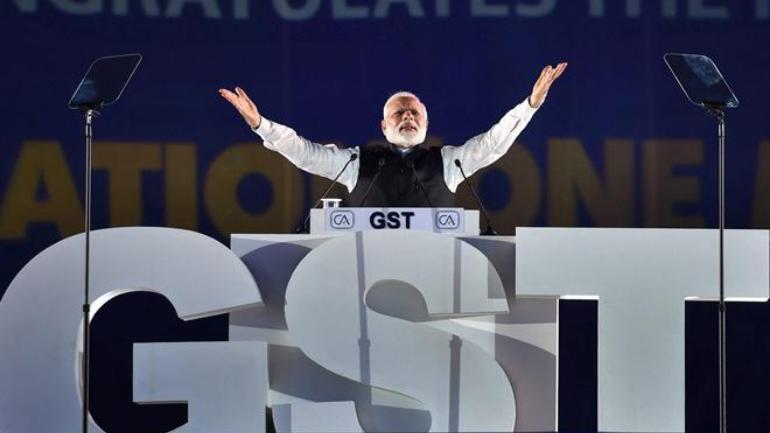
Eight years ago, GST was heralded as the “one nation, one tax” regime. In principle, it was supposed to be simple, predictable, and equitable. However, in practice, GST has evolved into a multi-rate structure—5%, 12%, 18%, and 28%—with numerous exemptions and special cases. While intended to balance revenue needs and social priorities, this complexity has undermined the original promise of simplicity and fairness. The removal of 12% and 28% GST slabs, with most goods and services streamlined into two rates-5% for essentials and 18% for luxuries. . From the perspective of Needonomics School of Thought (NST), this is both rational and essential, as it reflects the NST mandate that taxation must promote equity and inclusivity.
GST Reforms and Needo-Consumption
From September 22, 2025, the new phase of GST reforms takes effect. While the government projects these reforms as a way to reduce compliance costs, widen the tax base, and bring uniformity across states, their real impact depends on how well consumers and businesses adopt them.
The middle class, often described as the backbone of the economy, will play a decisive role here. Unlike free riders, they carry the burden of both taxes and the rising cost of living. For them, needo-consumption—a principle central to NST-becomes crucial. This means prioritizing essentials over excesses, sustainability over showmanship, and prudence over impulsive spending.
GST reforms will truly succeed only when the benefits are passed on to consumers. Lower compliance costs for producers should translate into fairer prices. Similarly, input tax credits and streamlined taxation should reduce cascading effects and enhance affordability. But this will not happen automatically. Vigilant monitoring, ethical business practices, and consumer awareness are essential to ensure the spirit of reforms is realized on the ground.
To stimulate demand sustainably, NST recommends adopting the NAW (Need, Affordability, Worth) approach to marketing. Products and services must meet genuine needs, be priced within affordability levels, and provide lasting worth. This is in contrast to Greedonomics, where demand is artificially created through aggressive advertising, emotional manipulation, and planned obsolescence. The NAW model aligns demand creation with ethics, utility, and responsibility.
Atmanirbhar Bharat and Federal Economy
The second theme of the Prime Minister’s address—Atmanirbhar Bharat—is not just a slogan but a philosophy of self-reliance. It resonates with the Needonomics mandate of needs-based development where self-reliance is achieved by fulfilling basic and strategic requirements before pursuing luxuries or prestige projects.
Atmanirbhar Bharat requires a federal economic model, where the Centre and States work in close coordination. Fiscal and administrative collaboration is vital to ensure reforms are not only announced but implemented effectively. Federalism in economic governance is particularly important in areas like taxation, industrial promotion, infrastructure, and agriculture. Without cooperative federalism, Atmanirbhar Bharat risks being reduced to a centralized slogan rather than a grassroots movement.
At its core, Atmanirbhar Bharat is about resilience—the ability to withstand external shocks and disruptions. Whether it is supply chain bottlenecks, geopolitical tensions, or economic slowdowns in developed nations, Bharat’s ability to bounce back depends on strengthening domestic production, empowering local entrepreneurs, and reducing overdependence on imports. Here again, NST provides direction: self-reliance is not autarky or isolation but strategic self-sufficiency based on needs.
Navigating Global Headwinds
The global economy today is marked by turbulence. From shifting alliances to protectionist policies, Bharat must tread carefully. One such challenge comes from the “Tariff Terrorism” of Trump—a reference to renewed protectionist moves in the United States. Such measures, while aimed at securing domestic industries, disrupt the principles of free and fair trade.
In this environment, Bharat cannot afford to blindly follow Greedonomics, which seeks short-term gains at the cost of long-term sustainability. Instead, Needonomics as a diplomatic strategy offers a better alternative. By holding firm to need-based policies, Bharat can avoid being lured into exploitative deals. For example, trade negotiations must prioritize access to essential technologies, food security, and energy sustainability rather than being swayed by temporary market incentives.
Needonomics teaches that diplomacy, like economics, must be guided by needs over greed. Strategic partnerships should serve national interests, secure critical supplies, and enhance long-term resilience. This requires caution, vigilance, and value-based engagement in international forums, ensuring Bharat does not compromise its autonomy under external pressures.
R&D and Innovation: A Call for a Fundamental Shift
One of the most important points in the Prime Minister’s address was the need for a stronger research and development (R&D) ecosystem. While government initiatives have laid the foundation, the real breakthrough will come when the private sector steps up.
Bharat’s private sector must shift from profit-centric innovation to need-centric innovation. Too often, resources are diverted into vanity projects, brand competition, or superficial technologies. What Bharat urgently needs is innovation in healthcare, sustainable agriculture, renewable energy, affordable housing, water conservation, and digital empowerment.
NST insists that research must be guided by social responsibility and human needs. For example:
- Healthcare innovation should focus on low-cost treatments and indigenous solutions.
- Agricultural R&D must prioritize climate-resilient crops and sustainable practices.
- Energy research should accelerate the transition to renewables to reduce dependence on imports.
- Digital innovation must empower ordinary citizens rather than widen the digital divide.
By aligning R&D with Needonomics, Bharat can not only solve domestic challenges but also position itself as a global leader in inclusive innovation.
Needonomics: The Only Option Ahead
The world today is increasingly guided by Greedonomics—where profit maximization, consumerism, and exploitation dominate. This approach has led to inequality, environmental degradation, and fragile economies. In contrast, Needonomics emerges as the only pragmatic alternative.
For Bharat, Needonomics is not just an academic philosophy but a survival strategy. It provides a compass to withstand global headwinds, ensure inclusive growth, and chart a sustainable development path. By committing to needs over greed, values over vanity, and prudence over profligacy, Bharat can transform challenges into opportunities.
The Prime Minister’s emphasis on GST reforms and Atmanirbhar Bharat fits neatly into NST framework. GST reforms provide a transparent and efficient tax system that strengthens consumer trust, while Atmanirbhar Bharat enhances economic resilience through self-reliance and federal cooperation. Together, they represent a shift towards an economy rooted in Needonomics principles.
As Bharat moves forward, the challenge will be to institutionalize these principles into every sphere—policy, governance, business, and daily life. Only then can Bharat not only withstand the shifting global sands but also emerge as a lighthouse for the world, showing how need-based economics can lead to prosperity, peace, and sustainability. NST portrays PM Namo as a Jiwan-Mukti personality-one who attains liberation not through renunciation but through noble deeds and dedicated service to society, as emphasized in the Anu-Gita.
