

Poonam Sharma
Prime Minister Narendra Modi’s three-nation tour beginning December 15, spanning Jordan, Ethiopia and Oman, is not merely a sequence of diplomatic engagements. It is a carefully choreographed geopolitical arc that links India’s ancient civilisational ethos with contemporary strategic priorities in West Asia, the Horn of Africa and the Indian Ocean region. Timed with landmark anniversaries of diplomatic relations, the visit underlines how India’s foreign policy today blends history, constitutional values and forward-looking realism.
Jordan: Revisiting a 75-Year Partnership Rooted in Stability
The Prime Minister’s first stop, Jordan, marks 75 years of diplomatic relations between the two nations. India–Jordan ties have traditionally been characterised by mutual respect, moderation and a shared commitment to regional stability in a turbulent West Asian landscape.
By holding detailed discussions with King Abdullah II ibn Al Hussein, Prime Minister Jafar Hassan, and Crown Prince Al Hussein bin Abdullah, Mr. Modi signals India’s intent to deepen political trust at the highest level. Jordan occupies a unique strategic position — geographically at the crossroads of West Asia and diplomatically as a voice of balance amid regional conflicts.
India’s engagement with Jordan has historically gone beyond transactional diplomacy. From supporting the Palestinian cause through peaceful dialogue to cooperation in education, defence training and cultural exchanges, the relationship reflects India’s constitutional commitment to peaceful coexistence and respect for sovereignty. The Prime Minister’s visit reinforces India’s role as a stabilising partner that does not export ideology but builds bridges.
Ethiopia: Democracy, History and the Global South
Prime Minister Modi’s first-ever visit to Ethiopia carries deep symbolic and strategic weight. Addressing a joint session of the Ethiopian Parliament, he will articulate India’s democratic journey — describing India as the “Mother of Democracy” — while highlighting how India–Ethiopia cooperation can shape the aspirations of the Global South.
Ethiopia is not only Africa’s diplomatic nerve centre, hosting the African Union, but also a nation with which India shares centuries-old civilisational ties through trade, religion and cultural exchange. In the post-colonial era, both countries emerged as strong advocates of non-alignment and South–South cooperation.
By engaging with Prime Minister Abiy Ahmed Ali and the Indian diaspora, Mr. Modi’s visit underlines India’s evolving Africa policy: partnership rather than patronage. Constitutionally, India’s outreach resonates with its commitment to international cooperation, social justice and democratic values, particularly relevant for countries navigating development alongside political transformation.
Oman: Seventy Years of Trust Across the Indian Ocean
The final leg of the tour takes the Prime Minister to Oman, marking 70 years of diplomatic relations — among India’s oldest partnerships in the Gulf. India and Oman are bound not just by geography across the Indian Ocean but by enduring people-to-people links, trade, and maritime cooperation.
Discussions with the Sultan of Oman will focus on strengthening the strategic partnership and expanding commercial and economic ties. Oman has long been a trusted interlocutor for India in the Gulf, providing strategic access, energy security and support for India’s expatriate community.
The Prime Minister’s planned interaction with the Indian diaspora acknowledges a constitutional reality often overlooked: the Indian state’s moral responsibility toward its overseas citizens. The diaspora in Oman has played a pivotal role in the country’s development while serving as a living bridge between the two nations.
A Foreign Policy Anchored in Civilisation and Constitution
Taken together, the three-nation visit reflects a coherent foreign policy vision. Jordan represents stability in West Asia, Ethiopia embodies the aspirations of the Global South, and Oman anchors India’s maritime and economic interests in the Indian Ocean.
What distinguishes this outreach is its human dimension — a diplomacy that speaks of civilisational continuity, democratic values and mutual respect. Rather than episodic engagement, the visit reinforces India’s constitutional ethos of peaceful international relations and its aspiration to be a trusted global partner.
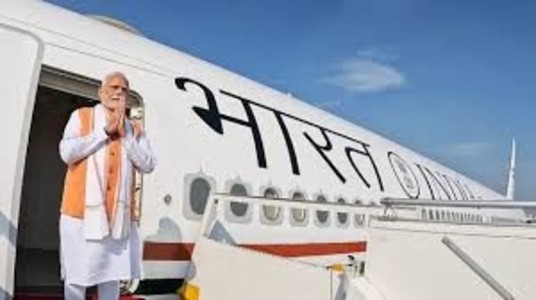
As Prime Minister Modi embarks on this journey, the message is clear: India’s diplomacy today is not just about navigating power equations, but about shaping a world order where history, democracy and development move forward together.
