
PM Modi Calls for Global Push on Traditional Medicine
Addressing WHO Global Summit closing ceremony, PM stresses balance, yoga and future-ready healthcare

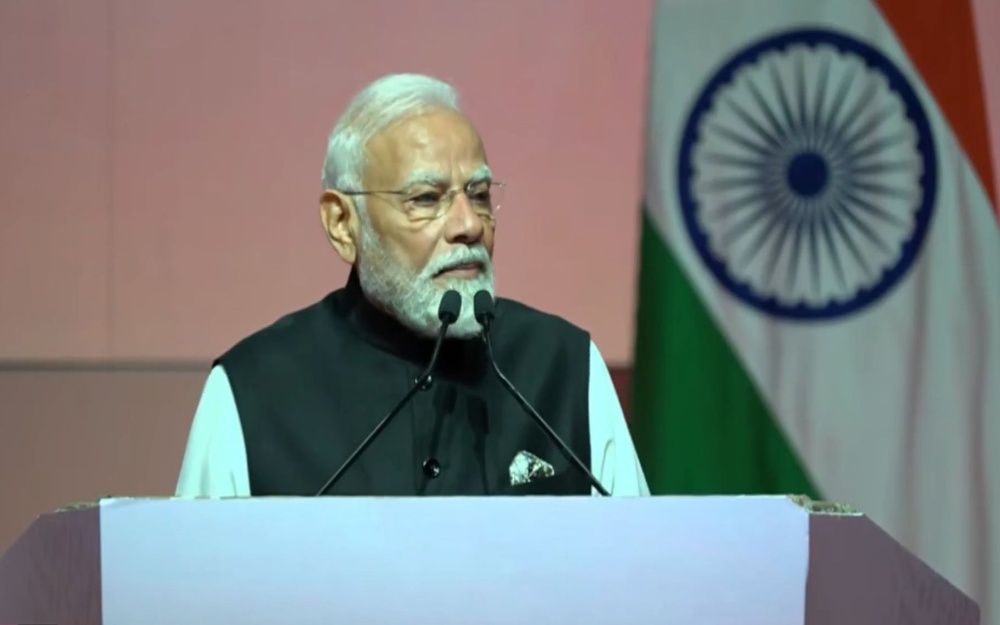
- PM Modi addresses closing ceremony of 2nd WHO Global Summit on Traditional Medicine
- Highlights global role of yoga, Ayurveda and traditional healthcare systems
- Lauds WHO Global Centre for Traditional Medicine in Jamnagar
- Calls restoring health balance a global urgency, not just a cause
GG News Bureau
New Delhi, 19th Dec: Prime Minister Narendra Modi on Friday addressed the closing ceremony of the Second WHO Global Summit on Traditional Medicine at Bharat Mandapam in New Delhi, calling for accelerated global action to integrate traditional medicine with modern healthcare systems.
The Prime Minister said it was India’s privilege and a matter of pride that the WHO Global Centre for Traditional Medicine has been established in Jamnagar, recalling that during the first summit in 2022, the world had entrusted India with this responsibility. He noted that the growing global influence of the Centre and the success of the summit reflected rising confidence in India’s leadership in the field.
Modi said the summit witnessed meaningful dialogue among global experts, health ministers and policymakers, opening new avenues for joint research, simplified regulations, digital integration and capacity building. He underlined that cooperation among nations would help make traditional medicine safer, evidence-based and globally trustworthy.
Highlighting yoga as an integral part of traditional medicine, the Prime Minister said it has guided humanity toward health, balance and harmony. He recalled that through India’s initiative and the support of over 175 countries, the United Nations proclaimed June 21 as International Yoga Day. Over the years, yoga has spread across the world, touching lives in every corner, he said, while congratulating recipients of the Prime Minister’s Awards for Yoga.
The Prime Minister welcomed steps taken to institutionalise outcomes of the summit, including the launch of the Traditional Medicine Global Library, which will serve as a global repository of scientific data and policy documents. He said the Delhi Declaration adopted at the summit would act as a shared roadmap for the future.
Modi also inaugurated the WHO South-East Asia Regional Office in Delhi, calling it a humble gift from India that will serve as a global hub for research, regulation and capacity building. He highlighted new collaborations, including a Centre of Excellence for BIMSTEC countries and a partnership with Japan to integrate science with traditional practices.
Reflecting on the summit theme, “Restoring Balance: The Science and Practice of Health and Well-being,” the Prime Minister said Ayurveda teaches that balance is the essence of health. He noted that lifestyle-related imbalances are at the root of many modern diseases and stressed that restoring balance has become a global urgency.
He warned that rapid technological advances, coupled with reduced physical exertion, pose new challenges to human health. Traditional healthcare, he said, must look beyond immediate needs and prepare for the future.
Addressing concerns over safety and evidence, Modi said India is advancing traditional medicine through research and validation, citing Ashwagandha as an example. He also highlighted new initiatives in integrative cancer care, combining traditional systems with modern treatment, and ongoing clinical studies on chronic diseases.
Calling traditional medicine a shared global responsibility, the Prime Minister urged nations to advance it with trust, respect and responsibility. WHO Director-General Dr Tedros Adhanom Ghebreyesus and Union Ministers J.P. Nadda and Prataprao Jadhav were among those present at the event.
