
Partition Horrors Remembrance Day: A Nation Recalls Its Deepest Wounds

By Poonam Sharma
New Delhi, 14th August: On the eve of India’s Independence Day, the country pauses to mark Partition Horrors Remembrance Day, a solemn occasion to reflect upon one of the darkest chapters in the nation’s history — the 1947 partition of India. The day serves as both a tribute to the millions who suffered and as a reminder of the resilience that rose from the ashes of displacement and violence.
Instituted by Prime Minister Narendra Modi in 2021, the day falls annually on August 14, coinciding with the date Pakistan was carved out of undivided India. It is meant to keep alive the memory of those who lost their homes, their loved ones, and in many cases, their lives during the chaotic and bloody division of the subcontinent.
Related Posts
PM Modi: “A Day to Remember the Pain”
Prime Minister Narendra Modi, in a heartfelt post on social media platform X, described August 14 as a day of collective remembrance.
“India observes Partition Horrors Remembrance Day, recalling the upheaval and suffering endured by countless individuals during that tragic chapter of our history. It is a day to honor their resilience, the unimaginable losses they endured, and their capacity to begin anew,” he wrote.
Modi emphasised that the victims and survivors of partition were not just passive sufferers — many rebuilt their lives from scratch, contributing to the nation’s progress despite having been uprooted from their ancestral homes.
“This day also reminds us of our enduring responsibility to strengthen the bonds of harmony that unite our nation,” the Prime Minister added, linking the memory of partition to the broader goal of safeguarding unity and peace in a diverse India.
Amit Shah: “Congress Broke the Nation into Pieces”
Union Home Minister Amit Shah’s message carried both empathy and political sharpness. While paying tribute to the victims, Shah also placed historical blame squarely on the Congress leadership of the time.
“On this day, we remember the pain of those who suffered during the partition and express our heartfelt empathy toward them. Congress broke the nation into pieces, wounding the self-respect of Mother India,” Shah stated.
He stressed that the partition was not just a geopolitical event but a human tragedy of unimaginable proportions, and the sacrifices of those who perished or were displaced would never be forgotten.
Shah’s words reflected the government’s broader narrative that the partition was the result of political compromises and shortsightedness, and that remembering it is essential to understanding the cost of disunity.
The Scale of the Tragedy
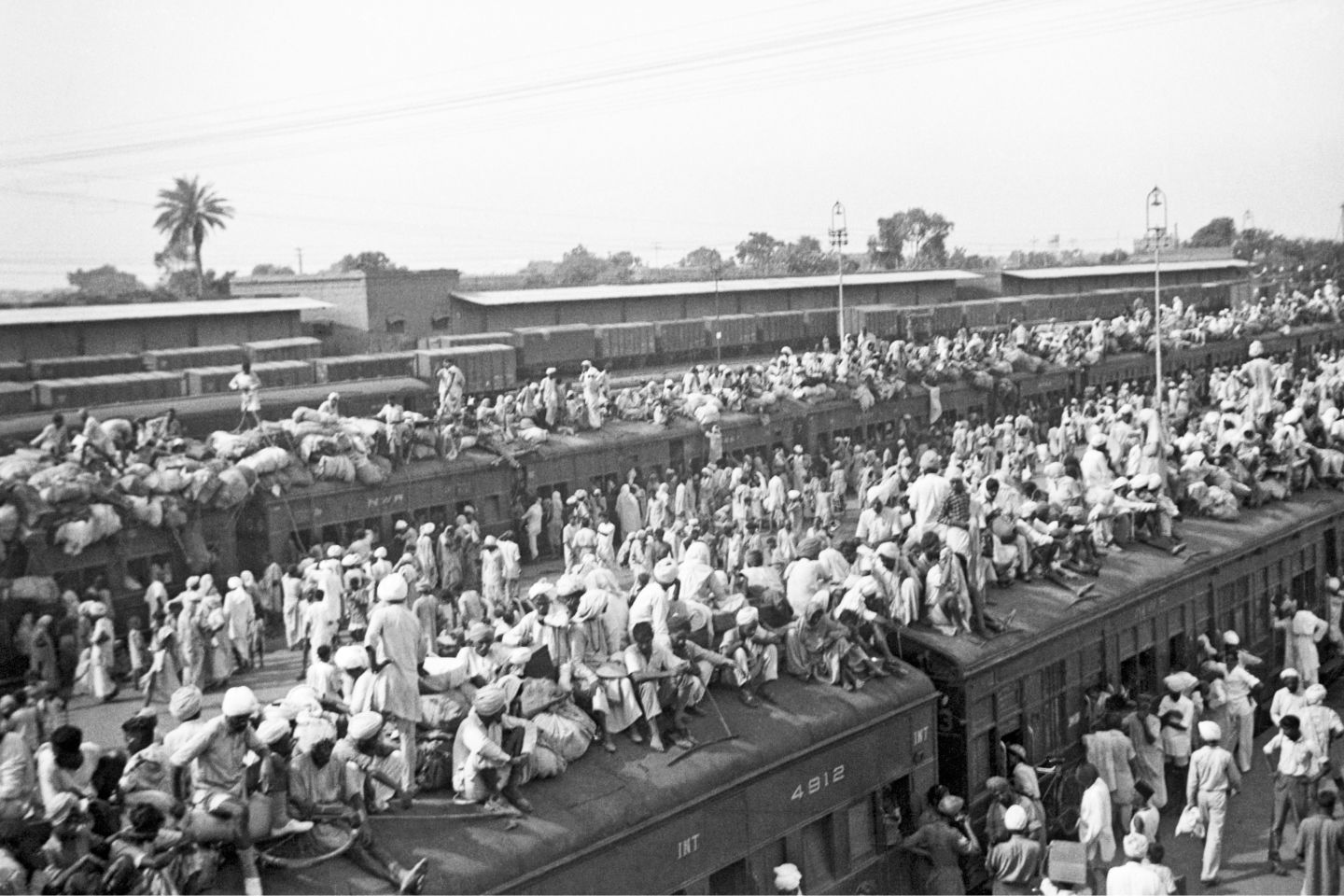
The 1947 partition created two sovereign nations — India and Pakistan — and led to one of the largest and bloodiest migrations in human history. Estimates suggest that over 14 million people were displaced as Hindus and Sikhs fled Pakistan for India, and Muslims moved in the opposite direction.
What should have been a political transition instead descended into chaos. Families were torn apart, entire villages wiped out, and trains full of refugees were found arriving at stations with no survivors. Communal riots, abductions, and massacres turned the newly drawn borders into zones of unending horror.
While official estimates put the death toll at around one million, many historians believe the real number was much higher. Countless others lived with the psychological scars of losing their homes, their identities, and their communities forever.
Why a Day of Remembrance Matters
Before 2021, India had no official day dedicated to recalling the partition’s human cost. Historians and survivors had long argued that, without such recognition, the nation risked forgetting the scale of the tragedy.
By instituting Partition Horrors Remembrance Day, the Modi government signalled an intent to keep alive the personal and collective memories of 1947. Schools, cultural organisations, and state institutions are encouraged to host exhibitions, discussions, and storytelling sessions. Survivor accounts, archival photographs, and historical documents are shared to help younger generations connect with a past that is no longer within living memory for most.
Supporters of the initiative believe that remembering the partition fosters resilience and unity, serving as a warning against the dangers of divisive politics. Critics, however, caution against politicising the commemoration, warning that selective retellings risk deepening present-day communal divides.
Panchjanya’s Special Series
On this year’s occasion, Panchjanya, a prominent nationalist weekly, has launched a special editorial series chronicling true stories of atrocities against Hindus during the partition. These accounts, drawn from survivor testimonies and historical archives, aim to humanise the staggering numbers by revealing individual journeys of loss, courage, and recovery.
The series not only documents the trauma but also celebrates the resilience of those who rebuilt their lives in refugee camps, resettled in unfamiliar towns, and contributed to the economic and cultural life of independent India.
A Day to Look Back — and Ahead
For many families in India, the partition is not just history but lived experience, passed down through stories told by parents and grandparents. For them, August 14 is a day of mourning as well as pride — mourning for what was lost, pride in how survivors endured.
Prime Minister Modi’s call to “strengthen the bonds of harmony” and Home Minister Shah’s insistence on remembering the political mistakes that led to partition both underscore the idea that the tragedy holds lessons for the present.
In a time when global politics is once again marked by polarisation and identity-based conflicts, the partition stands as a stark warning of how quickly political disagreements can spiral into humanitarian catastrophes.
Conclusion
Partition Horrors Remembrance Day is more than just a historical commemoration. It is an act of national introspection — a moment to acknowledge the human cost of political division and to renew the commitment to unity. As India remembers the millions who suffered in 1947, the message from its leaders is clear: the past must be remembered, not to reopen old wounds, but to ensure they are never inflicted again.
