

GG News Bureau
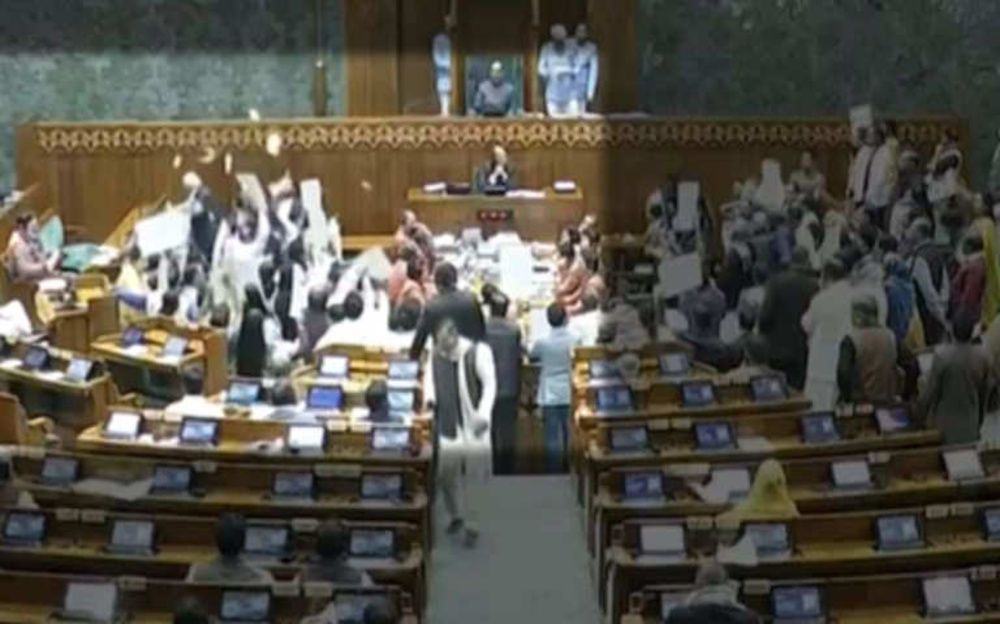
New Delhi, 19th Dec: Parliament early Friday passed the G RAM G Bill amid vociferous objections from opposition parties over its name, funding structure and changes to India’s flagship rural employment guarantee programme.
The legislation, formally titled the Viksit Bharat–Guarantee for Rozgar and Ajeevika Mission (Gramin), cleared both Houses within 48 hours and is set to become law following Presidential assent. It replaces the Mahatma Gandhi National Rural Employment Guarantee Act (MNREGA) enacted in 2005 by the Congress-led UPA government.
Opposition lawmakers protested both the renaming of the scheme—invoking Lord Ram instead of Mahatma Gandhi—and what they described as “feudal” provisions that weaken job guarantees for the rural poor. Congress MP P. Chidambaram said the bill “kills livelihood and security,” arguing that it undermines the very idea of a statutory employment guarantee.
A major flashpoint was the revised funding structure, under which states will now bear 40 per cent of wage costs, with the Centre contributing 60 per cent. Hill states and northeastern states will pay 10 per cent, while Union Territories will continue to receive full central funding. The opposition said most states lack the fiscal capacity to absorb the higher burden, potentially shrinking the scope of the scheme.
Defending the bill, the government said MNREGA had become inefficient and prone to corruption over two decades. Agriculture Minister Shivraj Singh Chouhan, who tabled the bill in the Lok Sabha, said the Congress itself had added Mahatma Gandhi’s name to the scheme only in 2009. He stressed that G RAM G expands the minimum guaranteed workdays from 100 to 125 per rural household.
Under the new law, states and Union Territories will generate employment, but the Centre will determine annual fund allocations based on “objective parameters” rather than demand. The Centre will also have the power to suspend funds in cases of serious irregularities. An unemployment allowance, fully funded by states, will be paid if work is not provided within 15 days, though a 60-day “no work” window has been built into the scheme.
The bill also narrows the scope of permissible work into four categories—water security, core rural infrastructure, livelihood-related assets and climate resilience—with standards and designs set by the Centre. Critics argued this reduces flexibility for panchayats, which earlier decided projects based on local needs.
The government maintained that the reforms will not impose undue financial stress on states and will strengthen accountability and efficiency. The opposition, however, termed the legislation “anti-poor” and warned it could dilute one of India’s most important social safety nets.
