
OPS Breaks Away: Why BJP Must Rethink Its Tamil Nadu Strategy

Poonam Sharma
A Political Fallout Long in the Making
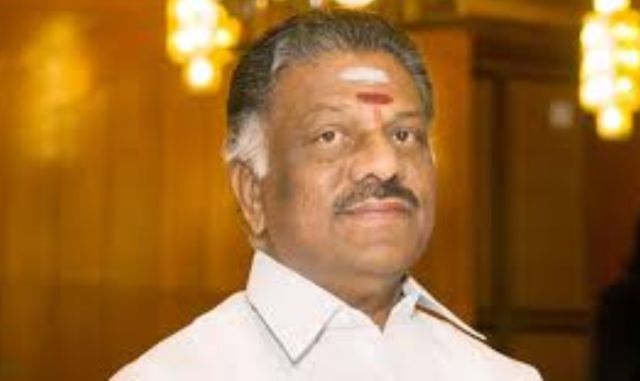
Former Tamil Nadu Chief Minister O. Panneerselvam (OPS) officially broke ties with the BJP-led National Democratic Alliance (NDA) on Thursday, bringing an end to a tense alliance plagued by neglect, changing loyalties, and a succession of political missteps. His exit, while not unexpected, is a watershed moment in Tamil Nadu politics—and a possible alarm bell for the BJP as it gears up for the 2026 Assembly elections in a state where its presence remains shallow.
OPS’s complaints arise from what his faction calls “political humiliation” at the hands of the BJP central leadership, the culmination of which was Prime Minister Narendra Modi not agreeing to meet him on account of his recent Chennai trip. This snub was interpreted as the last affront in a series of perceived slights, particularly given the role OPS played in splitting the AIADMK on what some feel was due to BJP’s prodding.
The Sangh Parivar’s Gamble: EPS Over OPS
OPS’s alienation from the BJP is as much a matter of optics as of political calculations within. Everybody believes that the BJP had initially stood with OPS in his rebellion against Edappadi K. Palaniswami (EPS) with the expectation of dominating the AIADMK playing both sides. But as EPS gained legislative and popular ascendancy, the BJP shifted to him, leaving OPS politically alone.
As per close officials, OPS felt “used and betrayed”—having staked his career on BJP’s promise, only to be set aside when he became troublesome. The BJP’s accession to EPS is now complete, but OPS’s exit undermines the facade of NDA unity in the state and may cost the BJP crucial vote segments in south Tamil Nadu, where OPS retains some clout.
The Impending Realignments
OPS has made no new alliance announcement, but sources indicate that negotiations with actor Vijay’s Tamilaga Vettri Kazhagam (TVK) are ongoing. An OPS-TTV Dhinakaran combine—another veteran AIADMK strongman who was given the cold shoulder—could unite anti-EPS groups and present a third front in polarized Tamil Nadu.
The DMK, meanwhile, is playing it safe. While there were whispers of an informal meeting between OPS and CM M.K. Stalin, both parties have rejected any political activity. The DMK probably realizes little to be gained by allying itself with a weakened OPS, but might keep the door open in the event he can alter electoral equations.
BJP’s Tamil Nadu Dilemma
OPS’s exit has to be placed in the context of BJP’s weak position in Tamil Nadu. The party has not been able to develop an organic base in the Dravidian stronghold but has had to depend on alliances and symbolic allowances. With AIADMK split between EPS and the rump of the OPS camp, BJP has picked the more stable EPS camp, but what price?
By sidelining OPS, the BJP has lost a possible southern Tamil Nadu and moderate AIADMK loyalist bridge and is also dubious about EPS’s centralizing stranglehold. While EPS provides a well-oiled electoral mechanism, OPS provided emotional legitimacy and a measure of connect with the AIADMK’s core ethos.
In addition, BJP’s use of ceremonial politics—denying or giving audiences to Modi, say—has begun to thin out. Tamil Nadu electors are sharp, and symbolic insults are not easily forgotten. Publicly snubbing an erstwhile Chief Minister, while receiving fellow travelers who are less well-known, has tarnished BJP’s reputation as a party of square play.
Election 2026: A Test of Strategy
The timing of the departure of OPS is crucial. The 2026 Assembly polls are far away, but Tamil Nadu’s political chessboard never remains still. The BJP, having missed the anti-incumbency bus in 2021, now risks being seen as a North-facing, opportunistic force caring little for its regional allies.
OPS’s move to take a state-wide tour is a sign that he’s not politically done—only shifting gears. His likely coalition with TVK or even a comeback with TTV Dhinakaran can cut into a portion of disappointed AIADMK voters from the EPS-BJP camp.
In addition, if OPS’s drama of “Delhi betrayal” takes root, it may provide a rich issue for both regional challengers and national opposition—portraying BJP as a calculating entity that abandons partners once used.
A Pattern or a Strategy?
Witnesses cite a disquieting pattern in BJP’s treatment of regional satraps: elevate a leader to divide opposition, then discard them when their usefulness expires. OPS is not alone in a list of regional leaders—such as Mehbooba Mufti in Kashmir or Nitin Naveen in Bihar—who’ve made similar comments. In Tamil Nadu’s intensely emotional political culture, such strategies might not merely boomerang—they might further cement the image of BJP as an “outsider.
The BJP cannot afford to be perceived as destabilizing regional parties only to consolidate power through court decisions or internal coups. In a state such as Tamil Nadu, where identity, loyalty, and legacy count as much as development narratives, this could prove to be a kamikaze move.
Time for a Course Correction
OPS’s withdrawal from NDA is not an aside—somewhat, it is a symptom. While the BJP readjusts its Tamil Nadu game plan before 2026, it has to decide between short-term opportunistic mergers and true long-term political bets.
Union with EPS can provide strategic benefits, but alienating OPS and his hardcore support base may deny the BJP a larger, more expansive narrative in Tamil Nadu.
Ultimately, Tamil Nadu politics is a game of heart as much as it is a game of mind. If the BJP does not realize that, it can continue to stay a peripheral actor in one of India’s most politically conscious states.
