
Operation Sindoor and the Duty of Grateful Citizenship: Needonomics in Action


Prof. Madan Mohan Goel Proponent of Needonomics and Former Vice-Chancellor
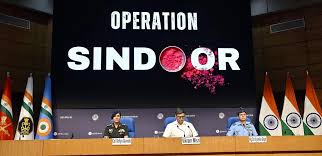
On the night of 6–7 May 2025, the Indian Armed Forces carried out Operation Sindoor, a bold and precision-driven airstrike aimed at dismantling terrorist infrastructure located deep within Pakistan and Pakistan-occupied Kashmir (PoK).This proactive action was not just a response to cross-border threats—it was a resolute message of India’s commitment to sovereignty, national security, and zero tolerance for terror. Beyond its tactical brilliance, Operation Sindoor invites citizens to reflect on their role in the larger fabric of national security and service. The Needonomics School of Thought (NST), rooted in ethical economics and responsible living, interprets this operation not merely as an act of military might but as a moral awakening for the entire nation. It calls upon us to embody the duty of grateful citizenship, where defense of the nation is not solely left to the soldiers, but becomes a collective commitment shaped by conscious consumption, national values, and civic integrity.
Needonomics and Nationalism: A Conscious Alternative
Needonomics, a term conceptualized by Prof. M.M. Goel, is a framework that promotes consumption based on need rather than greed, sustainable development, and moral responsibility. It offers a meaningful alternative to the current global economic systems that often promote excess, waste, and apathy. Through the lens of Needonomics, nationalism is not a slogan but a conscious economic and civic behavior anchored in dharma (duty), not desire.
Operation Sindoor serves as a symbolic reminder that peace and liberty are upheld by sacrifice, discipline, and ethical conduct. In this light, the NST perspective urges every Indian to go beyond passive patriotism and embrace active, responsible citizenship. A truly grateful nation does not remember its soldiers only on ceremonial occasions, but lives in a way that honours their courage — through conscious choices, mindful resource use, and support for national unity.
Attitude of Gratitude: From Emotion to Action
In the Needonomics worldview, gratitude is a public ethic, not merely a personal emotion. Our military protect us in conditions that test the very limits of human endurance—extreme climates, psychological strain, and the threat of death—without seeking applause or attention. What do we owe them in return?
NST asserts that our gratitude must be expressed in tangible, sustained ways:
- Support for martyrs’ families through community initiatives and policies.
- Honest tax contributions, which directly fund defense and development.
- Demanding transparency and accountability in defense spending and veterans’ welfare.
- Avoiding wasteful, ostentatious consumption in favour of national priorities.
This is the true attitude of gratitude—not one of charity or performative nationalism, but one of shared responsibility and moral solidarity.
Needonomics as a Preventive Philosophy
Operation Sindoor, while successful, also reminds us of the cost of unpreparedness and systemic complacency. Terrorism is a symptom of larger geopolitical failures, but also of domestic vulnerabilities in planning, coordination, and public resilience.
Needonomics offers preventive tools to address these gaps:
- Need-based budgeting across ministries to allocate more for national security and strategic infrastructure.
- Disaster-resilient development, especially in border and conflict-prone zones.
- Empowered local communities trained for civic defense and disaster response.
- Public awareness campaigns focused on reducing resource waste and enhancing national readiness.
By shifting from reactive to preventive strategies, Needonomics empowers the nation to not just survive threats—but to preempt them.
Reviving Civic Nationalism through NST
A prevailing challenge in India today is the passive understanding of nationalism, where it is seen as the government’s or the army’s job alone. NST refutes this limited view. It envisions civic nationalism—a participatory model where:
- Citizens conserve national resources like water, energy, and public funds.
- Youth are educated in ethical economics and moral reasoning.
- Public discourse is grounded in truth, needs, and social responsibility, not populism or materialism.
Operation Sindoor, in this context, becomes a moral wake-up call—reminding us that patriotism is not just shown during war or conflict, but through our daily duties as civilians.
A Call for Educational Integration
NST strongly advocates for the integration of Value Education, Military Awareness, and Needonomics into mainstream education. Operation Sindoor is not just a news headline—it is a case study in courage, ethics, and conscious national behavior.
The following must become part of our curricula:
- The economics of “need” over “greed”
- Understanding the life, challenges, and role of soldiers beyond the battlefield
- Emotional intelligence, gratitude, and responsible citizenship
When young minds are shaped by such narratives, they grow into citizens who value service, sacrifice, and simplicity.
The Way Forward: National Duty in Daily Life
We may not all serve in the military, but every Indian can serve the nation meaningfully. Needonomics teaches us that:
- Paying taxes honestly is an act of nationalism.
- Saving energy and public funds is an act of nationalism.
- Promoting local enterprises and consuming mindfully is an act of nationalism.
- Voting, obeying laws, respecting diversity, and preserving public spaces are acts of true patriotism.
These everyday actions form the foundation of what NST calls Economic Patriotism—a practice of loving and serving the nation not through rhetoric, but through ethical behavior and rational living.
Conclusion:
Operation Sindoor is not just a military operation—it is a national moral milestone. It teaches us that while soldiers defend our borders, we must defend our national values within society. The Needonomics School of Thought, through its framework of conscious consumption and ethical living, gives us a model to translate our gratitude into grounded action.
Let us remember:
- The sacrifice of the few should awaken the responsibility of the many.
- Emotional gratitude must evolve into practical contribution.
- Nationalism is not a department or designation—it is a collective, daily duty.
As citizens of a grateful nation, let us go beyond saluting soldiers—Let us be the kind of nation they are proud to protect.
