
Only One AIIMS Then, 23 Today: Nadda
Union Health Minister highlights decade-long expansion of medical education at KGMU convocation

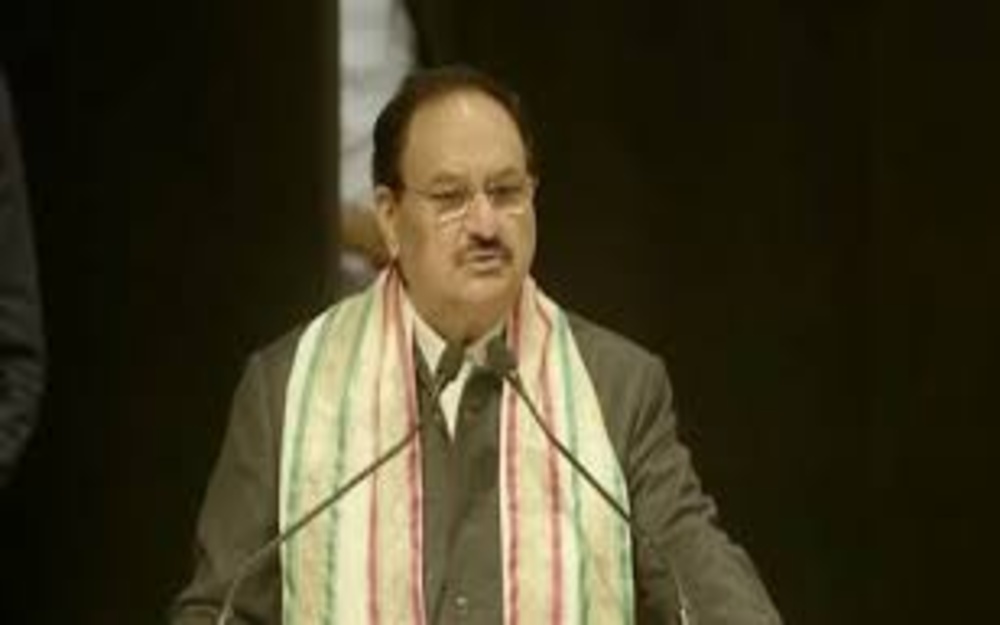
- J P Nadda addresses 21st convocation of KGMU in Lucknow
- Says India now has 23 AIIMS, up from just one earlier
- Medical colleges rise from 387 to 819 in 11 years
- 81 students and one faculty member honoured
GG News Bureau
Lucknow, 20th Dec: Union Health Minister Jagat Prakash Nadda on Saturday said India has witnessed an unprecedented expansion in medical infrastructure and education over the past decade, with the number of AIIMS institutions rising from just one at the end of the last century to 23 today.
Addressing the 21st annual convocation of King George’s Medical University (KGMU), Nadda said the growth reflects the government’s commitment to ensuring quality healthcare and medical training across all regions of the country. He congratulated the graduating students and lauded KGMU’s contribution to medical education, research and patient care.
“KGMU is ranked 8th in the NIRF 2025 rankings, and 12 of its faculty members feature among the world’s top 2 per cent scientists identified by Stanford University. This is a remarkable achievement,” the Health Minister said.
Highlighting infrastructure expansion, Nadda said the number of medical colleges has increased from 387 to 819 in the last 11 years. Undergraduate medical seats have grown from 51,000 to 1.19 lakh, while postgraduate seats have risen from 31,000 to 80,000. He added that under the leadership of Narendra Modi, another 75,000 UG and PG seats will be added by 2029, with over 23,000 seats already created in the past year.
The Union Minister said over 1.82 lakh Ayushman Arogya Mandirs are now operational across the country, delivering comprehensive primary healthcare services. He also highlighted that more than 62 crore people — over 40 per cent of India’s population — are covered under the Ayushman Bharat–PMJAY scheme, the world’s largest health insurance programme.
Stressing the responsibility that comes with professional education, Nadda said while basic education is a right, professional education is a privilege supported by society. He noted that the government spends nearly ₹30–35 lakh on every MBBS student and urged young doctors to give back to society with dedication and integrity.
Calling upon graduates to uphold KGMU’s legacy, Nadda encouraged them to actively contribute to academics, medical research and innovation, and to maintain the highest ethical standards in their careers.
Deputy Chief Minister of Uttar Pradesh Brajesh Pathak said KGMU has served as a pillar of medical education for over 120 years. He highlighted that Uttar Pradesh now has 81 fully functional medical colleges, compared to 40 in 2017, with all 75 districts equipped with dialysis facilities and CT scan services.
On the occasion, 81 students and one faculty member were honoured for excellence in academics, clinical work and research across MBBS, BDS, MD/MS, DM/M.Ch., MDS, M.Sc. Nursing and faculty categories. Awards included gold and silver medals, certificates of merit, cash prizes, and honours for best thesis and best resident.
The event was attended by Uttar Pradesh Governor Anandiben Patel, Principal Scientific Adviser Ajay Kumar Sood, KGMU Vice-Chancellor Sonia Nityanand, and senior officials from the Union and state governments.
