

Poonam Sharma
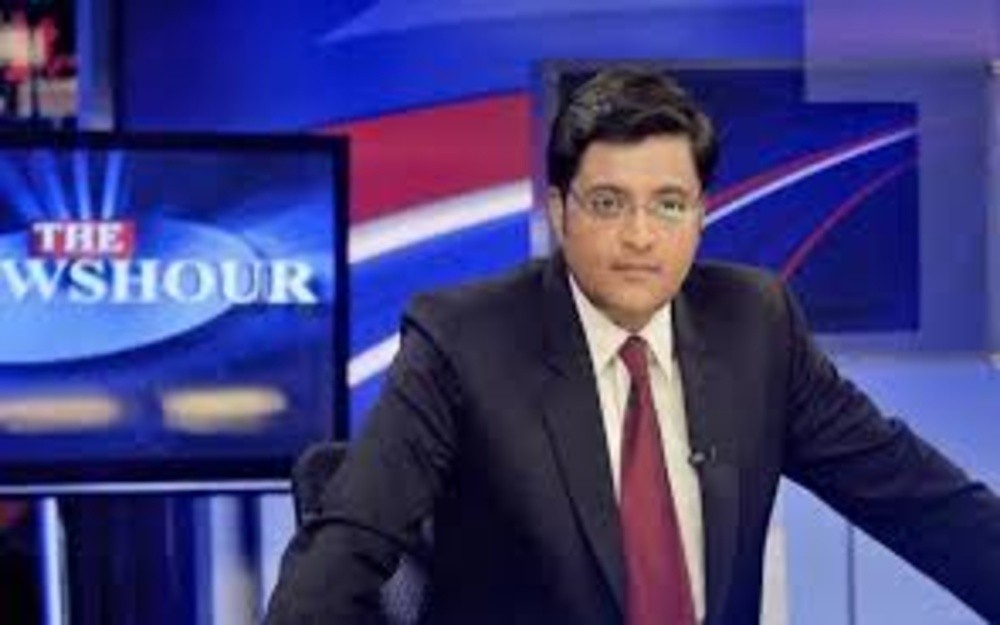
Sometimes, a single sentence is enough to expose deep fault lines in politics, media, and public psychology. Arnab Goswami’s recent remark — “What will happen by making Dhurandhar? If you have guts, make a movie on Unnao” — did exactly that. What followed was not just outrage, but a full-blown media and social media spectacle, with journalists, YouTubers, and political commentators lining up on either side of the debate.
To understand why this one line caused such turbulence, we must look beyond the surface-level controversy and examine the layers beneath it.
Aditya Dhar’s “Dhurandhar” is being projected as more than a film. For its supporters, it represents a cultural break from what they see as decades of ideological hesitation in Indian cinema. The movie’s hype has been framed as the end of a “70-year slavery mindset” — a bold narrative that has resonated strongly with nationalist audiences. Whether one agrees with that claim or not, the buzz around the film is undeniable.
Against this backdrop, Arnab Goswami’s dismissive comment landed like a provocation.
His reference to Unnao, a case involving a BJP MLA accused of rape (still sub judice and not proven in court), immediately shifted the discussion from cinema to political morality. Critics found the comparison jarring. Supporters of Dhurandhar felt the remark trivialized a cultural moment, while others accused Goswami of selectively invoking social justice.
The irony, according to many observers, lies in Goswami’s own public image. For years, he has been widely perceived as sympathetic to the BJP and the Modi government. That perception made his statement even more puzzling. Why would a journalist known for backing nationalist narratives appear to undermine a nationalist film? And why invoke a case that critics argue has often been politically weaponized?
This is where speculation begins — and speculation, not facts, must be clearly identified as such.
Some commentators believe Goswami’s statement reflects professional frustration rather than ideological disagreement. In recent months, other journalists have gained international visibility and institutional access. Anjana Om Kashyap’s interview with Russian President Vladimir Putin, for instance, became a widely discussed milestone in Indian journalism. For critics, this symbolized a shifting media hierarchy — one in which Goswami may no longer enjoy the exclusivity he once did.
Others argue that Goswami is reacting to a gradual erosion of influence. Republic TV still commands attention, but the media ecosystem has changed. Digital creators, alternative news platforms, and even rival TV anchors now compete for the same spotlight. In such an environment, a provocative statement can function as both disruption and self-assertion.
The backlash also revived long-standing criticisms of Goswami’s style of journalism. Social media users repeated familiar accusations: aggressive debates, minimal speaking time for guests, theatrical confrontations, and what critics describe as “media trials.” The phrase “chicken fight journalism” trended again — shorthand for chaotic shouting matches where noise replaces nuance.
More controversially, some critics went further, suggesting Goswami suffers from what they call “God Syndrome” — a popular, non-clinical term used online to describe excessive self-importance. A few even invoked Narcissistic Personality Disorder, though mental health professionals repeatedly warn against diagnosing individuals from afar. What is clear, however, is that many viewers perceive Goswami as someone who positions himself above both guests and audiences — as judge, jury, and narrator.
That perception matters, because it shapes how every statement is received.
When Goswami questioned the value of Dhurandhar, many didn’t hear a critique of cinema. They heard arrogance. They heard dismissal. They heard a man used to setting the agenda refusing to accept that a cultural moment could exist outside his approval.
The Unnao reference, instead of strengthening his argument, intensified suspicion. Critics asked: was this genuine concern for justice, or a tactical provocation? Was it moral outrage, or media one-upmanship?
There are no definitive answers — only interpretations.
What is undeniable is that Goswami’s remark exposed the fragile balance between power, relevance, and perception in Indian media today. In an era where narratives no longer belong to a few anchors, even the loudest voice can be challenged.
This is not just the story of a controversial sentence. It is the story of a media ecosystem in transition — and of a man navigating a space where authority must now be negotiated, not assumed.
And perhaps that is why the storm refuses to die down.
