

By Anjali Sharma
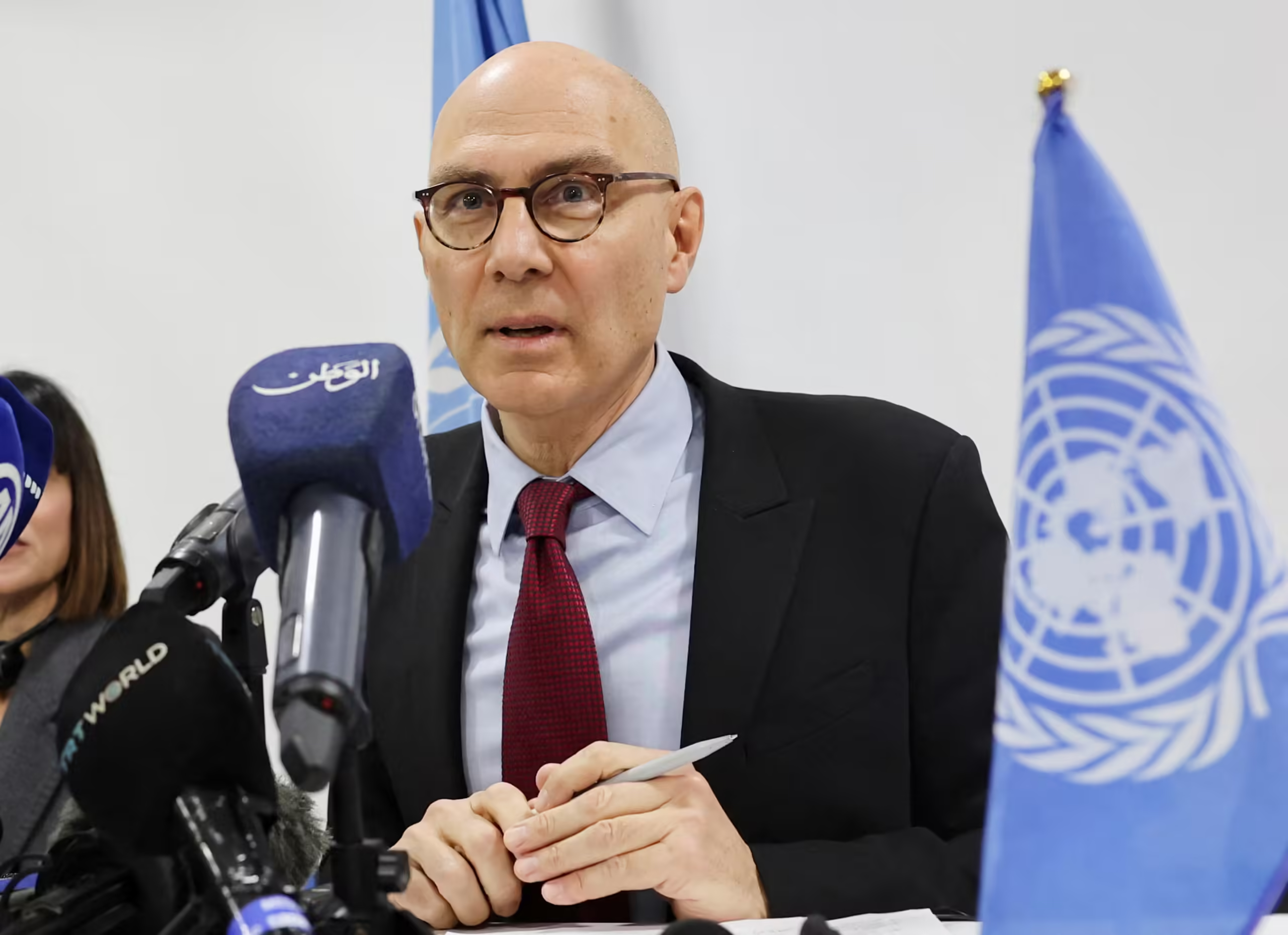
UNITED NATIONS – UN High Commissioner for Human Rights Volker Türk on Thursday warned over the growing toll on civilians, warning of mass displacement and regional instability as deadly missile exchanges between Israel and Iran enter a second week.
Türk called for “maximum restraint” and reiterated that both Israel and Iran are bound by international humanitarian law.
“The wide scale, continuing attacks by Israel across Iran, and the missile and drone strikes launched in response by Iran, are inflicting severe human rights and humanitarian impacts on civilians, and risk setting the whole region ablaze,” he said in a statement.
“The only way out of this spiraling illogic of escalation is maximum restraint, full respect for international law, and return in good faith to the negotiating table,” he stressed.
He expressed deep concern over the impact on civilians.
“It is appalling to see how civilians are treated as collateral damage in the conduct of hostilities,” he said.
He added that threats and inflammatory rhetoric by senior officials on both sides suggest a “worrying intention” to inflict harm on civilians.
According to media reports the airstrikes, missile and drone attacks launched by both Israel and Iran since 13 June have caused heavy damage to civilian infrastructure and claimed hundreds of lives.
According to Iranian authorities, at least 224 people have been killed, and human rights groups report significantly higher figures.
In Israel, officials report 24 deaths and more than 840 injuries so far.
The warnings from both governments have also prompted widespread panic among civilians.
Israel’s call for civilians to evacuate triggered panic across Tehran, resulted in heavy traffic jams on highways.
Movement has been hampered across the country by fuel shortages, leading to hours-long queues at petrol stations.
The Office of the UN High Commissioner for Refugees expressed grave concern over the deteriorating humanitarian situation, adding that it is monitoring reports that people are on the move within Iran and that some are leaving for neighboring countries.
UNHCR Spokesperson Babar Baloch cautioned that the situation remained fluid and hard to verify.
“Iran has long hosted the largest Afghan refugee population in the world. Now, its own people are experiencing devastation and fear,” Mr. Baloch added.
He emphasized the principle of non-refoulement, called on neighboring countries to grant protection to anyone fleeing violence, and not turn them back.
Iran hosts 3.5 million refugees and those in refugee-like situations, including some 750,000 registered Afghans and over 2.6 million undocumented individuals.
OCHA said that there is already regional fallout, with missile launches from Yemen towards Israel and the Occupied Palestinian Territory and heightened tensions reportedly involving armed groups in Iraq.
“This escalation takes place as the region already grapples with mounting humanitarian needs, sharply reduced funding, and constrained operational space for humanitarian action,” the Office said in a flash update issued earlier.
OCHA underscored “De-escalation is vital to preventing further suffering of civilians and population displacements”.
