
OCHA says violence forces thousands to flee, strains aid efforts in northern Mozambique

By Anjali Sharma
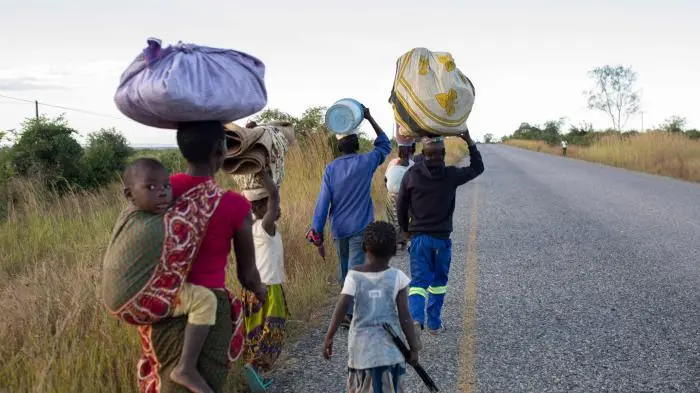
UNITED NATIONS – OCHA on Sunday reported that the recent attacks by armed groups in northern Mozambique displaced tens of thousands in July threatened dire humanitarian crisis in Cabo Delgado and straining limited aid supplies.
The displacement is the latest consequence of a cascade of overlapping emergencies in the country – including armed violence, climate shocks, disease outbreaks and a severe funding shortfall, OCHA said.
Over 95,000 people have fled insecurity in Cabo Delgado and humanitarian access is becoming increasingly fragile.
According to the UN Office for the Coordination of Humanitarian Affairs attacks by armed groups between 20 and 28 July triggered the displacement of at least 46,667 people across the districts of Chiúre, Ancuabe and Muidumbe.
Chiúre was the hardest hit, with more than 42,000 people uprooted – over half of them children.
“Insecurity persists, and people on the move often lack civil documentation,” OCHA said in a humanitarian bulletin on Saturday.
“These challenges may impact the ability of displaced people to move freely, safely access basic services and maintain their livelihoods.”
OCHA stressed that attacks in Chiúre Velho, Ocua and Mazeze have driven families to Chiúre Sede, where they are sheltering in overcrowded conditions in the neighbourhoods of Bairro Micone and Bairro Namicir.
The reports indicate a high number of unaccompanied or separated children.
Food, shelter and essential non-food items are reported as the most urgent needs, according to humanitarian partners.
The security situation in Ancuabe district also deteriorated rapidly.
According to the UN International Migration agency the number of displaced families nearly tripled in one week, reaching 444 households (1,946 people), including over 1,200 children.
The violence forced residents of Nanduli village to seek refuge in Chiote and Ancuabe Sede.
In Muidumbe, fighters torched homes in Magaia village and opened fire near Mungue.
Over 500 families fled to nearby displacement sites, where humanitarian access remains limited.
OCHA stressed that under international law, civilians must be allowed to seek safety and freely choose their destination. But insecurity, lack of documentation and involuntary relocations are compounding protection risks.
The aid response remains severely underfunded.
OCHA added that as of July, only 19% of Mozambique’s 2025 Humanitarian Response Plan has been funded.
Out of $352 million requested, just $66 million has been received forced agencies to reduce their response targets by over 70 per cent.
They are trying to assist only 317,000 people, down from the target of 1.1 million at the start of the year.
“Urgent and sustained funding is essential to prevent further deterioration and address the escalating humanitarian needs that remain as acute and widespread as ever,” the OCHA report warned.
