
Nuclear Reforms to Accelerate Rare Earth Development: Jitendra Singh
Magnet production target set at 5,000 tonnes by 2030; exploration underway nationwide

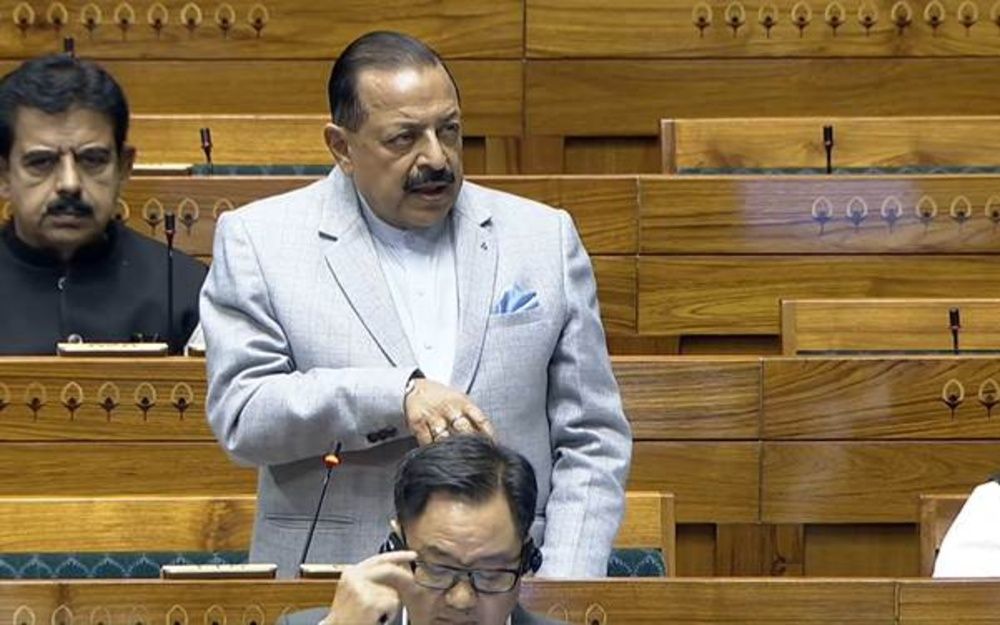
- Nuclear sector reforms and Shanti Act measures to accelerate rare earth development
- India’s magnet production target set at 5,000 tonnes by 2030 from current 4,000 tonnes requirement
- Four rare earth corridors announced in Odisha, Tamil Nadu, Andhra Pradesh and Kerala
- Exploration underway in Bihar’s Nawada region, completion expected by September-October 2026
GG News Bureau
New Delhi, 11th Feb: Union Minister of State (Independent Charge) for Science & Technology, Earth Sciences, MoS PMO, Personnel, Public Grievances, Pensions, Atomic Energy and Space, Dr Jitendra Singh on Wednesday said that recent nuclear sector reforms, including measures under the Shanti Act, will accelerate the development of Rare Earth Elements (REE) in the country.
Responding to a question during the Question Hour in the Lok Sabha by Shri Vivek Thakur, Member of Parliament from Nawada, Bihar, the Minister said policy initiatives taken in recent years have opened new opportunities in mining and processing of rare earth minerals, including participation of the private sector in areas not containing uranium and thorium, thereby strengthening India’s strategic and industrial capabilities.
The MP referred to the distinctive geological formations in Nawada and adjoining districts such as Sheikhpura, Jamui, Nalanda and Gaya, which form part of the extension of the Chotanagpur Plateau and are characterised by granite and pegmatite rock structures. He also referred to the presence of mica deposits and associated minerals such as beryl, columbite-tantalite, and lithium, which have significant industrial applications including in electric vehicle batteries and advanced electronics. He sought information on whether the Government proposes to conduct surveys in these districts and the timeline for submission of related reports.
Dr Jitendra Singh informed the House that exploration activities are already underway in parts of Bihar, particularly in and around Koderma district. With regard to Sheikhpura and other areas mentioned, he stated that studies to assess future possibilities can be undertaken. He added that the Atomic Minerals Directorate for Exploration and Research (AMD), which operates through seven centres across the country, is conducting reconnaissance radiometric surveys and G4 stage geological mapping in the Nawada region. The current phase of exploration in the referred areas is expected to be completed within five to six months, likely by September or October 2026.
The Minister said that the importance of rare earth elements has grown significantly in view of their applications in electric mobility, semiconductors, defence equipment, and emerging technologies. He stated that in the Union Budget this year, four dedicated rare earth corridors have been announced in Odisha, Tamil Nadu, Andhra Pradesh, and Kerala. In addition, customs duty concessions have been provided for import of equipment required for nuclear power plants, and reforms have been undertaken to expand the role of private players in mining of rare earth minerals that do not contain uranium and thorium.
Dr Jitendra Singh also referred to the commissioning of India’s first rare earth permanent magnet plant in Visakhapatnam, inaugurated by the Prime Minister in 2023 after a gap of several decades. The plant is expected to support strategic sectors including defence and high-technology manufacturing. India’s current annual requirement of permanent magnets is around 4,000 tonnes, and the Government has set a target of achieving production capacity of 5,000 tonnes by 2030, ensuring self-reliance and surplus capability.
Exploration activities are being carried out in both beach sand minerals and hard rock formations across multiple states. Coastal beach mineral exploration is underway in Tamil Nadu, Kerala, Odisha, Andhra Pradesh, Gujarat, and Maharashtra, while hard rock exploration is progressing in Rajasthan, Gujarat, Chhattisgarh, Tamil Nadu, and Karnataka. The Minister said these coordinated efforts are aimed at expanding the national resource base and enhancing domestic value addition in critical minerals essential for India’s growth trajectory.
