
Nepal’s New ₹100 Note Revives Map Row with India
Nepal Issues New ₹100 Note with Revised Map, Note depicts Kalapani, Lipulekh and Limpiyadhura; India reiterates these areas belong to it

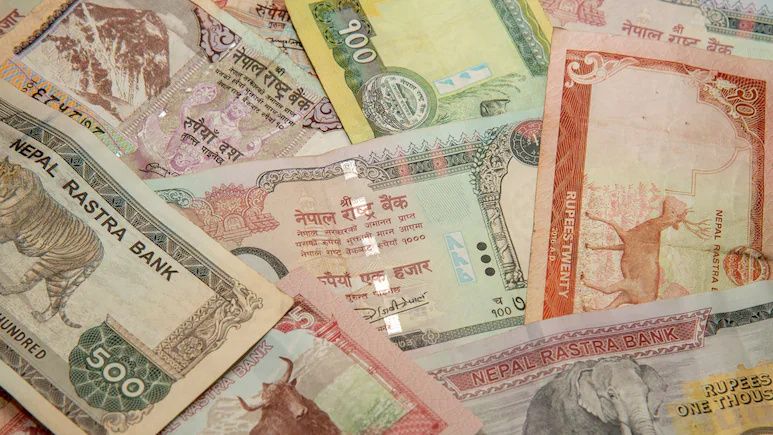
- Nepal’s central bank issues new ₹100 note carrying revised political map.
- Map includes Kalapani, Lipulekh and Limpiyadhura, disputed by India.
- NRB says note updated as per government decision; only ₹100 note bears the map.
- India earlier termed Nepal’s map update a unilateral act.
GG News Bureau
Kathmandu, 27th Nov: Nepal’s central bank on Thursday issued new ₹100 currency notes featuring a revised map that includes Kalapani, Lipulekh and Limpiyadhura — territories India asserts are part of its own domain.
The redesigned note, issued by Nepal Rastra Bank (NRB), carries the signature of former Governor Maha Prasad Adhikari and bears the issuance date of 2081 BS, corresponding to 2024. According to the NRB, the map had appeared on earlier versions of the ₹100 note and has now been updated in line with the government’s directive.
The map was first revised in May 2020 when the then K P Sharma Oli-led government unveiled a new political map incorporating the three territories as part of Nepal, a move later endorsed by Parliament. India had strongly objected, calling the update a “unilateral act” and warning that such “artificial enlargement” of territorial claims was unacceptable.
NRB officials clarified that among Nepal’s currency denominations — ₹10, ₹50, ₹500 and ₹1,000 — only the ₹100 note features the national map.
The new bank note depicts Mt Everest on the left and a watermark of Nepal’s national flower, the Rhododendron, on the right. A faint green map appears at the centre, accompanied by an image of the Ashoka Pillar with the inscription, “Lumbini, the birthplace of Lord Buddha.” The reverse side features a horned rhino. Additional design elements include a security thread and an embossed black dot to aid visually impaired users.
Nepal shares an 1,850-km border with five Indian states — Sikkim, West Bengal, Bihar, Uttar Pradesh and Uttarakhand — where boundary issues occasionally surface in bilateral ties.
